Steps After a Car Accident: Your Complete Guide to What to Do Next
Disclaimer: This guide is for general information only and is not legal, insurance, or medical advice. Talk with a licensed professional about your specific situation.

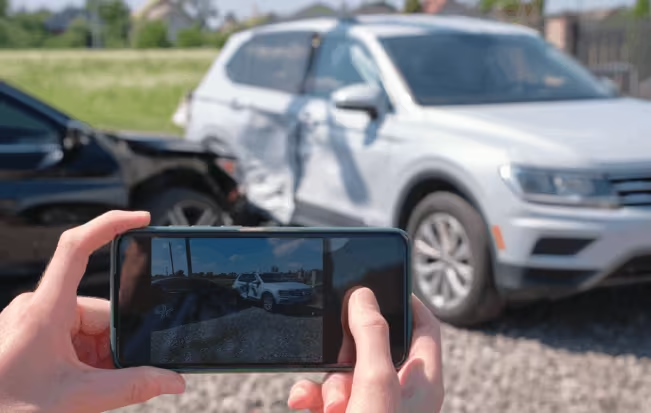
After a minor crash, move vehicles to a safe spot and focus on people before property.
The crash itself happens in a blink. The moments right after can feel like slow motion horns blaring, people staring, your heart racing while a dozen questions hit you at once.
Whether it’s a low-speed fender-bender or a serious collision, knowing the right steps after a car accident can protect your health, your rights, and your finances. According to the National Highway Traffic Safety Administration (NHTSA), there were about 5.9 million police-reported traffic crashes in the U.S. in 2022, so you’re far from alone if you’re dealing with one now.
This guide walks through what to do at the scene, what to handle in the next 24–72 hours, and how to get your official police accident report without chasing down multiple police portals.
TL;DR: Fast checklist if you’re reading this at the scene
- Check for injuries and move to a safe location if you can.
- Turn on hazard lights and call 911 (or local emergency number).
- Exchange names, contact, insurance, and vehicle details.
- Take photos and short notes about what happened.
- Request a police report number from the responding officer.
- Get medical care, even if you feel “okay” right now.
- Notify your insurance company as soon as you can.
- Request your official accident report through Accident Report Help to keep your records straight.
Table of contents
- Quick checklist: first 10 minutes
- Step 1: Move to safety and check for injuries
- Step 2: Call 911 and report the crash
- Step 3: Exchange information the right way
- Step 4: Document the scene like an adjuster
- Step 5: Get medical care and track symptoms
- Step 6: Contact your insurance company
- Step 7: Why your police accident report matters
- When to talk with a lawyer
- Common questions about what to do next
- Next step: Get your official report
Quick checklist: what to do in the first 10 minutes
If you’re still at the scene, here’s a simple order that keeps things from spinning out:
- Check yourself and passengers for injuries.
- Move vehicles out of traffic if they’re drivable and it’s safe.
- Turn on hazard lights; set out cones or triangles if you have them.
- Call 911 and follow the dispatcher’s questions.
- Exchange basic information with the other driver(s).
- Take photos and a short video of the scene.
- Ask the officer how to get the police accident report.
Once everyone is out of immediate danger, you can slow down and move through the rest of the steps below.
Step 1: Move to safety and check for injuries
Your first priority is simple: people before property. Cars can be repaired or replaced. You and your passengers cannot.
- If anyone is badly hurt, do not move them unless they’re in immediate danger (for example, from fire or traffic).
- If vehicles are drivable, move them to the shoulder or a nearby parking lot.
- Turn on hazard lights; at night, use interior lights so your vehicle is easier to see.
If you have kids in car seats, leave them buckled while you quickly check for visible injuries. The best thing you can do now is stay as calm as possible so you can make good decisions.
Step 2: Call 911 and report the crash
Even for what looks like a minor accident, calling 911 (or the local non-emergency number) helps create an official record. The dispatcher will decide whether to send police, fire, and EMS based on what you describe.
Details to share with the dispatcher
- Location (street names, mile markers, nearby landmarks).
- Number of vehicles involved.
- Any obvious injuries or hazards (leaking fuel, blocked lanes).
If another driver leaves the scene, do not chase them. Try to note their license plate, make, model, color, and direction of travel, then call 911 right away and share what you saw with the dispatcher.
When law enforcement responds, they usually create an official traffic collision report. This police accident report often becomes the key document for insurance claims and, in some cases, legal claims later on. You’ll want a copy for your own records more on that below.
For general safety guidance after a crash, agencies like the National Highway Traffic Safety Administration (NHTSA) also publish helpful checklists.
Step 3: Exchange information the right way
Once everyone is as safe as possible and help is on the way, exchange information with the other driver or drivers.
Information to collect
- Full name and best phone number.
- Driver’s license number (take a clear photo if they agree).
- License plate number, make, model, and color of each vehicle.
- Insurance company name and policy number.
- Registered owner’s name if different from the driver.
What not to say at the scene
- Skip arguments about who was at fault.
- Avoid saying things like “It was all my fault” or “I’m totally fine” before you’ve seen a doctor.
- Keep the conversation short and respectful; let the facts speak through the report and evidence.
If there are witnesses, politely ask for their names and numbers. Their statements can matter later if stories change.
Step 4: Document the scene like an adjuster
Your phone is one of your best tools after a crash. Photos and short videos capture details that are easy to forget later.
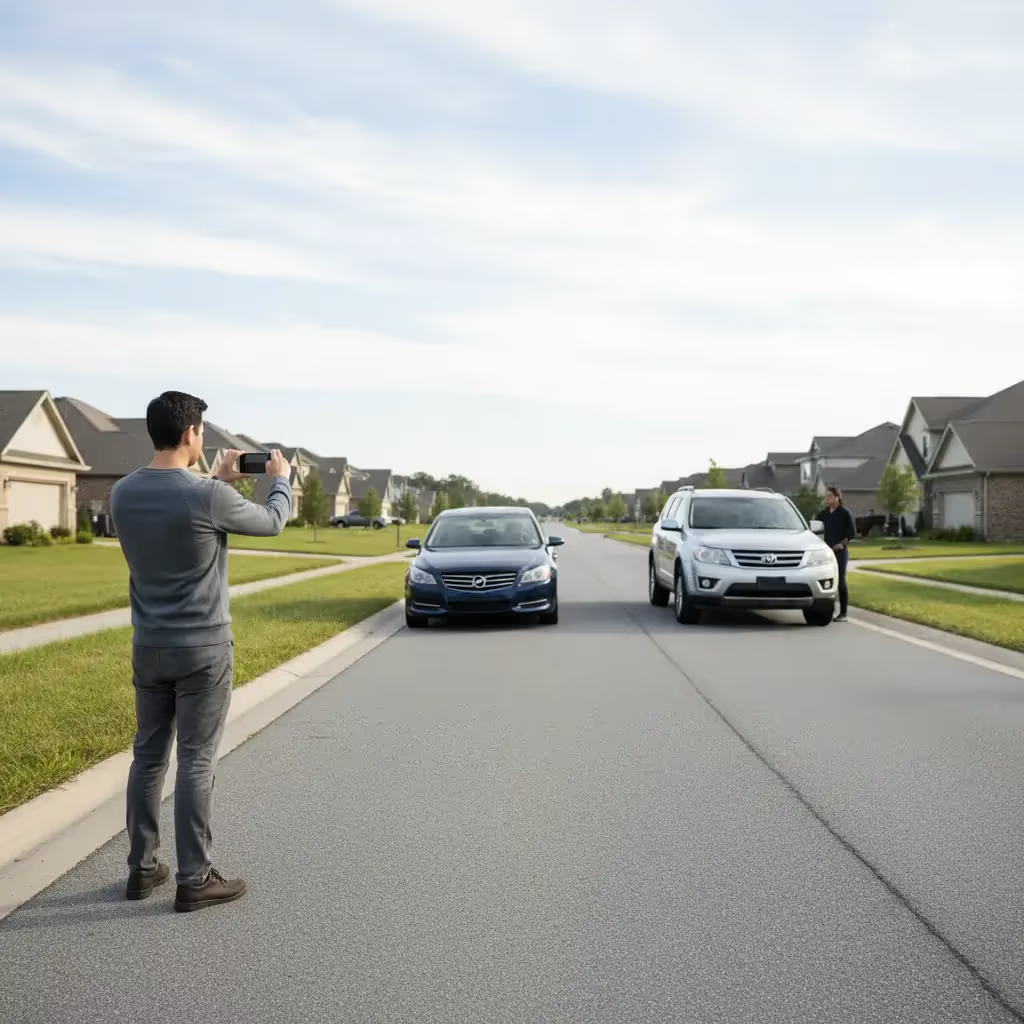
Use your phone to capture wide photos of the vehicles, road, and surroundings after a crash.
Photos to take
- Wide shots of the whole scene, including traffic lights and signs.
- Damage to all vehicles (close-ups and wider angles).
- Skid marks, broken glass, or debris on the road.
- Weather conditions and road surface (wet, icy, under construction).
- Visible injuries (if the injured person agrees).
Notes to jot down
- Date, time, and exact location.
- Direction each vehicle was traveling.
- What you remember just before impact.
- Any comments you overheard from the other driver (“I didn’t see the light,” etc.).
Step 5: Get medical care and track symptoms
Many people walk away from a crash feeling “shaken up but fine,” then wake up the next day with neck pain, headaches, or dizziness. Adrenaline hides a lot.
- Let paramedics check you out at the scene if they offer.
- Consider a same-day visit with urgent care or your primary doctor.
- Tell them it was a motor-vehicle accident so they can document it correctly.

Even if you feel okay, follow up with a medical professional and document any new symptoms.
Some crash injuries don’t show up until hours or days later, so treat new pain or symptoms seriously and get checked out.
Keep a simple symptom journal for the next few days: pain levels, stiffness, sleep problems, missed work, and anything else that feels different. This helps your medical providers and may also help with an insurance claim later.
For general injury information, you can review resources from the Centers for Disease Control and Prevention (CDC), then follow up with your own doctor.
Step 6: Contact your insurance company
Most auto policies require you to report any accident “promptly” or “as soon as reasonably possible.” You can usually do this through an app, website, or phone call.
Have this ready when you call
- Policy number (from your ID card or app).
- Date, time, and location of the crash.
- Names and contact info for other drivers.
- Police report number, if you already have it.
Your insurer may ask for photos or a recorded statement. If you feel unsure especially after a serious injury crash consider speaking with an attorney before you give detailed statements. The Insurance Information Institute and major insurers like State Farm also publish helpful guides on what to do after a crash and how claims work.
Step 7: Why your police accident report matters and how to get it
An official police accident report is often the central record of what happened in a crash. It typically includes:
- Names and contact info for drivers, passengers, and witnesses.
- Insurance and vehicle details.
- A diagram of the crash and the officer’s observations.
- Citations issued, if any, and sometimes the officer’s opinion on contributing factors.
Insurers, employers, and injury attorneys usually ask for this report. The trouble is, every city, county, and state agency seems to have its own portal, form, or fee. Many drivers aren’t even sure which department handled their crash.

Having your police accident report in hand makes insurance and follow-up paperwork much simpler.
Accident Report Help was built to solve exactly that headache. You share the basics names, date, and city of the crash, or a case number if you have it and the team tracks down the right agency, submits the request, and emails the certified report as a secure PDF. They only pass through the official fee usually charged by the police department and provide updates along the way.
That means you don’t have to guess between city police, county sheriff, or state patrol portals or spend your lunch breaks on hold.
When to talk with a lawyer
You don’t need a lawyer for every bump in a parking lot. But in some situations, getting legal advice from a licensed attorney in your state is a smart move:
- Anyone in your vehicle has serious or lasting injuries.
- The crash involved a drunk driver, commercial truck, or multiple vehicles.
- You’re being blamed for a crash you don’t think you caused.
- The other driver’s insurer is pressuring you to settle quickly or sign forms you don’t understand.
Accident Report Help is a private service supported by Cirrus Law Group, a personal-injury law firm. It isn’t a government agency, and submitting a request doesn’t automatically create an attorney–client relationship. If your situation calls for legal guidance, the right attorney can explain your options under your state’s law and timelines.
Common questions about steps to take after a car accident
What are the first steps to take after a car accident?
Start with safety: check for injuries, move out of traffic if you can, and call 911. Turn on your hazard lights, then exchange information, document the scene, and request a police report. Once you’re home, get medical care, notify your insurer, and request a copy of the official report either directly from the agency or through a service like Accident Report Help.
Do I always need to call the police for a minor accident?
Every state has its own reporting rules, often based on injury and property-damage amounts. Even if the crash seems minor, calling the police can protect you if the other driver later claims new injuries or damage. When in doubt, call and let the dispatcher decide how to handle it.
How long does it take to get a police accident report?
Timing varies by agency. Some departments release reports in just a few days; others take several weeks, especially for serious collisions. With Accident Report Help, you can submit your request once and let the team track status with the agency for you.
Can I get my report without a case number?
Usually, yes. Many agencies can search by name, date, and location. Accident Report Help often uses this kind of search along with VIN or license plate when needed to locate the right report, even when you were never given a case number at the scene.
Next step: Get your official accident report
If you’ve made it this far, you’ve already handled the hardest parts. The final step is requesting your official police accident report.
Instead of guessing which law-enforcement portal to use or waiting weeks to find out you asked the wrong agency you can start a single, simple request through Accident Report Help. Our service covers agencies across all 50 states and keeps you updated until your report is ready.
About the author
Sarah Martinez is a legal content writer with years of experience helping drivers, law firms, and insurance professionals understand the nuts and bolts of police accident reports and claims paperwork. She works with the team at Accident Report Help to break down confusing processes into clear, practical steps.