
How Police Reports Help in Diminished Value Claims After a Car Accident
This article shares general information for drivers in the United States. It is not legal advice. For specific guidance on your claim, speak with a licensed attorney in your state.
You get your car back from the body shop. The repairs look good, but the story follows the car forever: “in an accident”. When you try to trade or sell it later, buyers may offer less even though the car drives just fine. That gap in value is what people mean when they ask for a diminished value report.
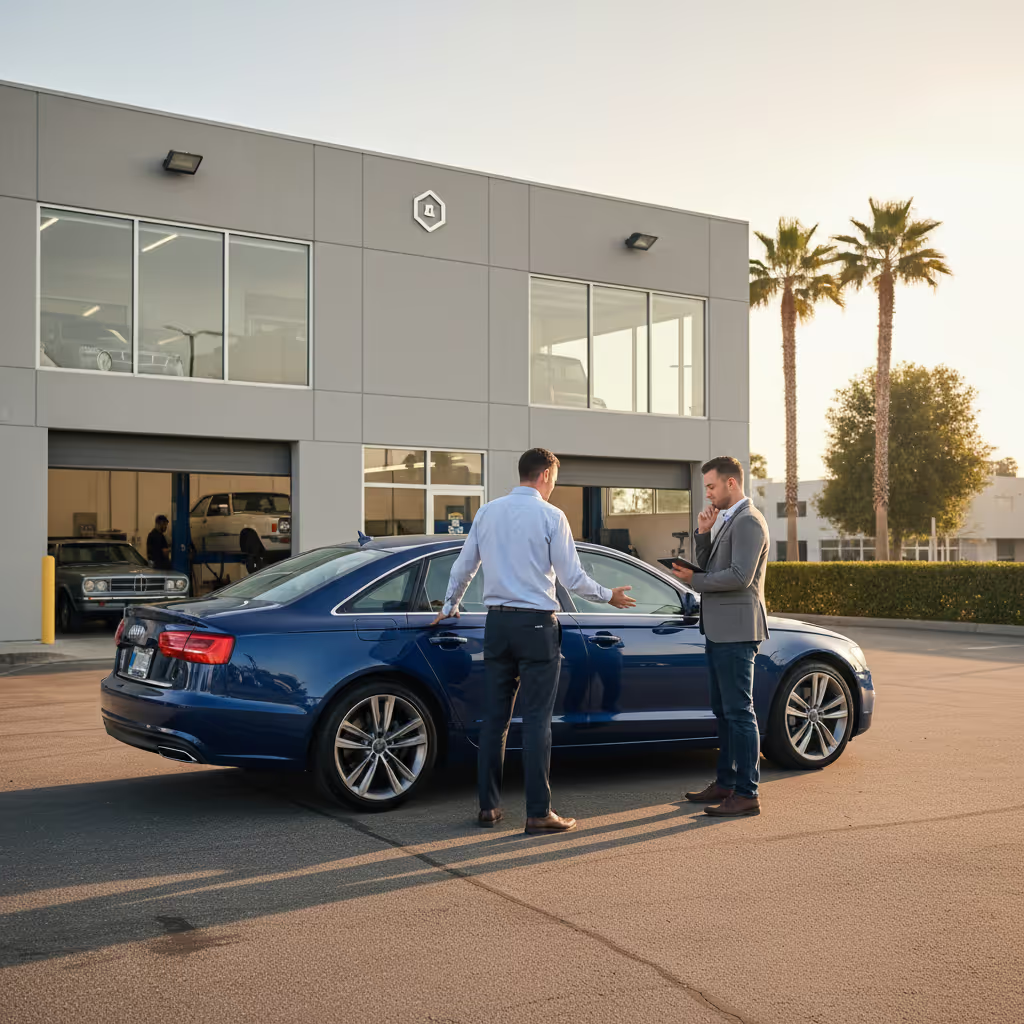
A professional diminished value report can help quantify the loss in value after quality repairs.
Here’s the part many drivers miss: your police crash report can be just as important as the appraiser’s paperwork, and you can request your report online instead of calling every local agency. Adjusters, diminished value experts, and even courts rely on what the officer wrote to decide how much your car lost in value and whether they’ll pay you for it.
In this guide, we’ll walk through how police reports support diminished value claims, where a diminished value report fits in, and simple steps to get both documents working together for you.
TL;DR
- Your police crash report is a neutral record that backs up the story your diminished value report tells.
- Insurers and diminished value appraisers read the police report to confirm impact severity, fault, and repair-related details.
- You can order a diminished value report online from independent appraisers, but they will almost always want a copy of your police report.
- Services like Accident Report Help make it simple to request your report online from the right agency.
Table of Contents
- What is a diminished value report?
- Where can I get a diminished value report (and can I order one online)?
- Why the police report matters so much
- How insurers and appraisers use your police report
- Step-by-step: using your police report in a diminished value claim
- Common mistakes that weaken diminished value claims
- How Accident Report Help fits into the process
- Quick FAQ: police reports & diminished value
What is a diminished value report?
Diminished value is the loss in your vehicle’s market value after repairs are finished. Even with quality work and genuine parts, many buyers prefer cars with no crash history, so that hesitation shows up in trade‑in quotes, private‑sale offers, and online pricing tools.
A diminished value report is a written opinion that measures that loss. Typically, it includes:
- Basic vehicle details (year, make, model, mileage, VIN).
- A short summary of the accident and damage areas.
- Repair estimates and final invoices, especially frame or structural work.
- Comparable sales for similar cars with and without accident histories.
- An expert opinion on how much value your car lost because of the crash.
Independent appraisers and diminished value specialists usually prepare these reports, though some insurers use their own experts or formulas. In either case, they will almost always ask for your police crash report to verify the facts.
Where can I get a diminished value report (and can I order one online)?
Many drivers search for “diminished value report online” as soon as the body shop finishes repairs. Here are common ways to get one:

You can request a diminished value report online by sharing repair records and your police crash report.
Common sources for a diminished value report
- Independent diminished value appraisers.
These businesses focus on vehicle valuation and prepare written opinions for insurers. - Local auto appraisers.
Some valuation experts, especially those who handle high‑value or classic cars, also offer diminished value reports. - Online diminished value services.
Several companies let you upload your police report, photos, and repair paperwork and deliver the report by email. Compare sample reports, pricing, and reviews before you commit.
No matter which appraiser you choose, expect them to ask for your police crash report. Sending a clear copy up front saves time and limits back‑and‑forth.
Why the police report matters so much
A police accident report (also called a crash report or traffic collision report) is usually the first neutral, official record of your crash. Instead of weighing two different stories, the officer documents:
- Date, time, and exact location of the crash.
- Weather, lighting, and road conditions.
- Points of impact and visible damage on each vehicle.
- Statements from drivers, passengers, and witnesses.
- Citations or contributing factors such as speeding or distraction.
For a diminished value claim, that report does three big jobs: it proves the crash happened, shows how serious it was, and ties the damage to this specific incident. When the facts in your police report, repair records, and diminished value report all match, your claim is much easier to take seriously.
How insurers and appraisers use your police report
Insurance adjusters and diminished value appraisers read the police report with a very specific lens: they’re checking whether the facts in the report match your claim and your repair paperwork.

Adjusters compare your police report with repair records and your diminished value report to evaluate the claim.
Key details insurers look for
- Liability: Who the officer believed caused or contributed to the crash.
- Impact severity: Whether this was a low‑speed tap in traffic or a high‑energy, multi‑vehicle collision.
- Damage location: Whether the reported point of impact lines up with the repairs on your estimate and invoices.
- Injuries reported: Serious injuries can suggest a harder impact, which may support more extensive damage.
- Consistency: Whether your photos, body shop records, and diminished value report tell the same story as the officer’s narrative.
Independent diminished value experts also rely on the report when choosing comparable vehicles and deciding how aggressive their opinion should be. A crash with heavy front‑end damage and airbag deployment will usually support a larger diminished value number than a light cosmetic scrape.
Step-by-step: using your police report in a diminished value claim
Here’s a simple way to pull everything together once your car is repaired.
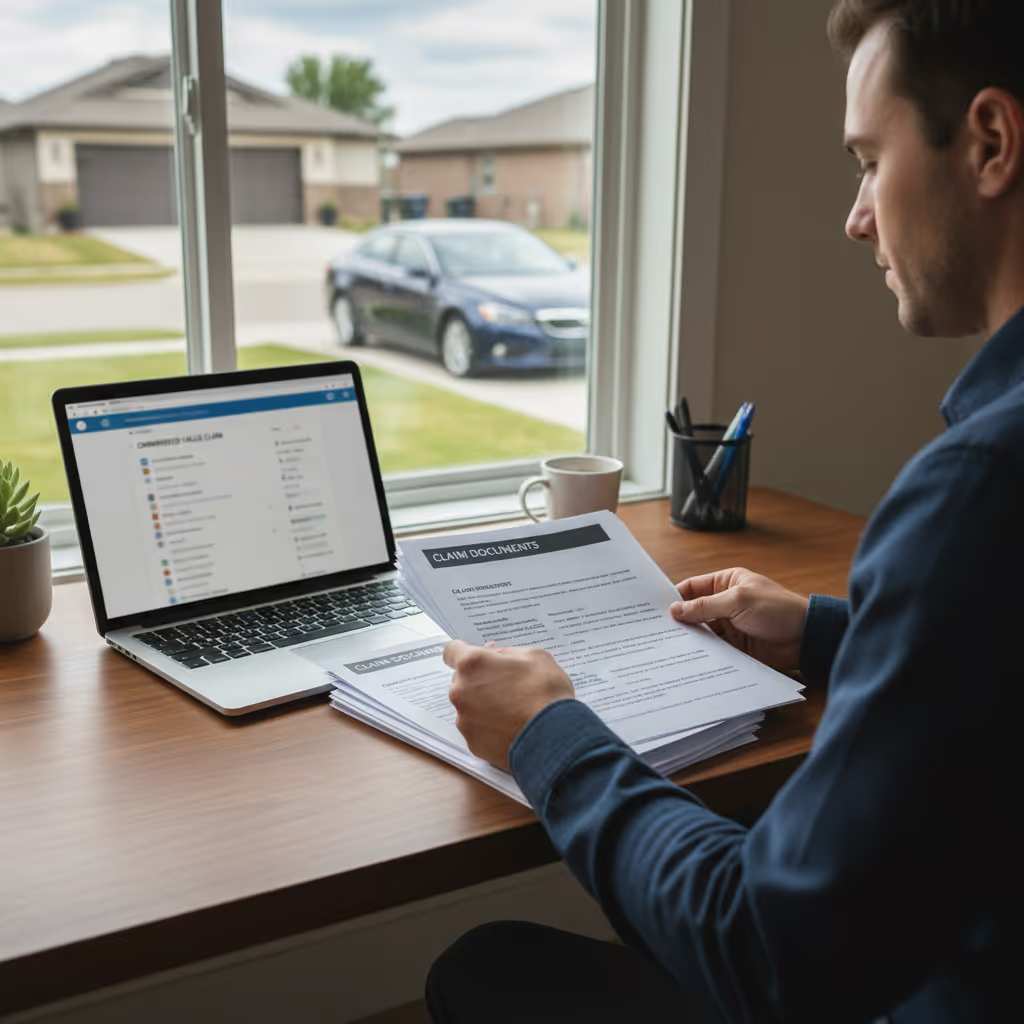
Organizing your police report, repair records, and diminished value report makes your claim easier to review.
- Get the official police crash report.
If you don’t already have it, request it from the law enforcement agency that handled the scene or use our Find My Report tool to track it down. - Review the report for errors.
Check your name, VIN, insurance information, and the basic description of what happened. If something is seriously off, ask a local attorney whether it makes sense to request a supplement or clarification. - Gather your repair documentation.
Keep the original estimate, any supplements, and the final invoice from the body shop. If frame, structural parts, or airbags were involved, flag those pages. - Request a diminished value report.
Share the police report, repair records, and photos with a qualified diminished value appraiser. - Submit your diminished value claim to the insurer.
When you send your claim, include the police report, diminished value report, repair records, and a short cover letter connecting the dots. - Negotiate and document everything.
Keep emails, letters, and phone call notes. If the insurer counters with a lower number, ask which facts or assumptions they disagree with in your reports.
DV claim document stack
- Police crash report
- Repair records
- Diminished value report
- Claim packet to the insurer
If you need help understanding what’s in your crash report before you send it, our article on read a police report breaks down the most common fields and codes.
Common mistakes that weaken diminished value claims
After thousands of crash reports have passed through our system, we see the same missteps again and again:
- Waiting too long to request the police report. Access to older reports may be more limited, and memories fade.
- Relying only on repair estimates. Add a police report and diminished value report so your claim rests on more than the shop’s opinion.
- Sending incomplete paperwork. Missing supplements, photos, or key pages makes it harder for an appraiser or adjuster to follow your story.
- Letting factual errors linger. Wrong vehicles, locations, or sides of impact in the police report can undercut your diminished value argument.
If you’re not sure what’s missing, compare your file with our insurance claim timeline and its document checklist.
How Accident Report Help fits into the process
Accident Report Help makes it easy for drivers, insurers, and law offices nationwide to request and retrieve official police accident reports. You share a few basics about your crash, and we handle the rest. We don’t prepare diminished value appraisals; we make sure you have the certified crash report that appraisers and insurers rely on.
- You share driver names, crash date, and where it happened.
- We identify the correct law enforcement agency and submit the request.
- We obtain the certified report and deliver it to you as a secure PDF.
You pay the official agency fee, and if the report can’t be released, you get your money back. Once it’s in your inbox, you can send it to your diminished value appraiser or attach it to your insurance claim.
Ready to get started? Find My Report or learn more about how it works.
Quick FAQ: police reports & diminished value
What if no officer came to the scene?
If officers were not called, or they decided not to write a report, you may still have options. Some states allow drivers to file a driver’s crash report or self‑report the collision with the DMV. For example, New York’s DMV crash‑report rules require motorists to submit a written report when injuries are involved or property damage exceeds a set dollar amount. Check your state’s rules or talk with a local attorney or your insurer about what they’ll accept when a traditional police report doesn’t exist.
Will the other driver’s insurer send me the police report?
Sometimes they will, but you shouldn’t count on it. In most states you can request the report yourself or request your report online so you are not relying on another person’s insurance company. If you need help understanding the document once you have it, our guide on read a police report walks through the most common sections.
What if the insurance company disagrees with my diminished value report?
Ask the adjuster which facts or assumptions they disagree with and how they calculated their number. If there is still a large gap, consider getting a second opinion or speaking with a personal‑injury or consumer law attorney about your options in your state.
For more general questions about obtaining crash reports, see the FAQ section on our homepage.
About the Accident Report Help Editorial Team
The Accident Report Help Editorial Team works closely with drivers, insurance professionals, and law offices across the United States to explain how police crash reports fit into real‑world claims. Our goal is simple: make it easier for you to get the documents you need and understand how they affect your case.

.avif)