

How to Handle a Hit-and-Run: Step-by-Step Guide to Your Hit and Run Police Report
For informational purposes only, not legal advice. Laws and procedures differ by state. Speak with a licensed attorney about your specific situation.
Being hit by a driver who suddenly speeds away is shocking and confusing. This guide walks you through what to do in the first few minutes, how to file a hit and run police report, what to expect when you talk with police, and how to get the official crash paperwork you will probably need for insurance or legal questions later.
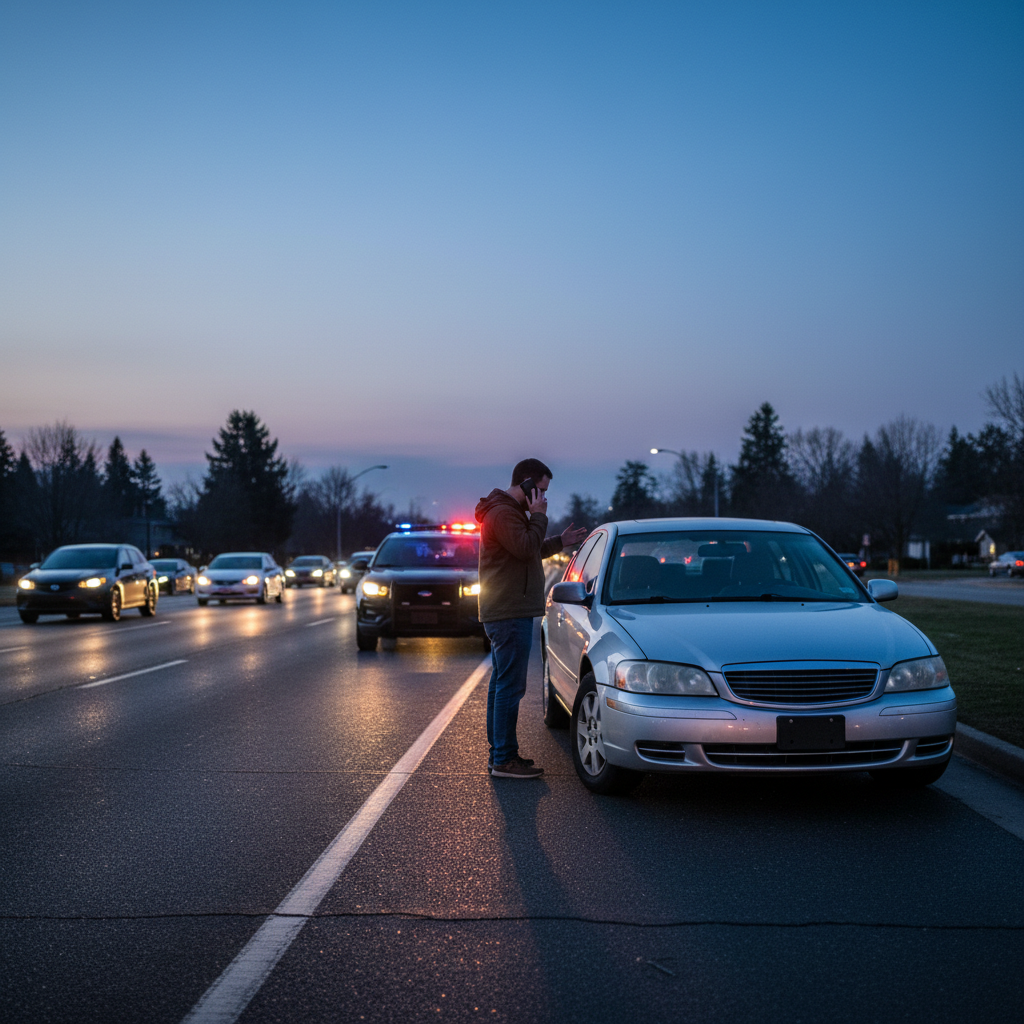
A wide roadside scene shortly after a hit-and-run, as the driver calls police to start a hit and run police report.
TL;DR: What to Do After a Hit-and-Run
- Move to a safe place and call 911. Tell the dispatcher it is a hit-and-run and whether anyone is hurt.
- Take quick photos and notes: the other vehicle’s color, make, damage, direction of travel, and any plate details you caught.
- Get witness names and contact information if anyone stopped to help.
- File a police report about the hit-and-run with the responding officer or, if no one comes, by contacting the agency later.
- Ask when and how you can get a copy of the report and write down the case or incident number.
- Once the report is ready, request it from the agency or use the Find My Report service to have it located and emailed to you as a PDF.
- For questions about your rights, insurance, or possible charges, talk with a local attorney.
Table of Contents
- 1. First Steps: Stay Safe and Call 911
- 2. What Counts as a Hit-and-Run?
- 3. How to File a Hit and Run Police Report
- 4. Details to Collect for Your Report
- 5. How to Get a Copy of the Hit and Run Police Report (Including Online)
- 6. Timelines and Common Questions
- 7. How Accident Report Help Fits In
- 8. Key Takeaways
1. First Steps: Stay Safe and Call 911
A hit-and-run can feel overwhelming, but a few quick steps help keep you safe and protect your claim.
Before worrying about paperwork, check for injuries. If anyone is hurt or vehicles are blocking traffic, call 911 right away and tell the dispatcher:
- Your location (street, cross street, or nearby landmark).
- That the other driver left the scene.
- Whether anyone appears injured or trapped.
Remember the S.A.F.E. steps
- S – Stay safe: Move yourself and passengers out of traffic if you can do so safely.
- A – Alert 911: Call for medical help and report that the other driver left.
- F – File a report: Cooperate with the responding officer or follow the agency’s instructions for reporting the crash.
- E – Evidence collection: Take photos, notes, and witness information while details are still fresh.
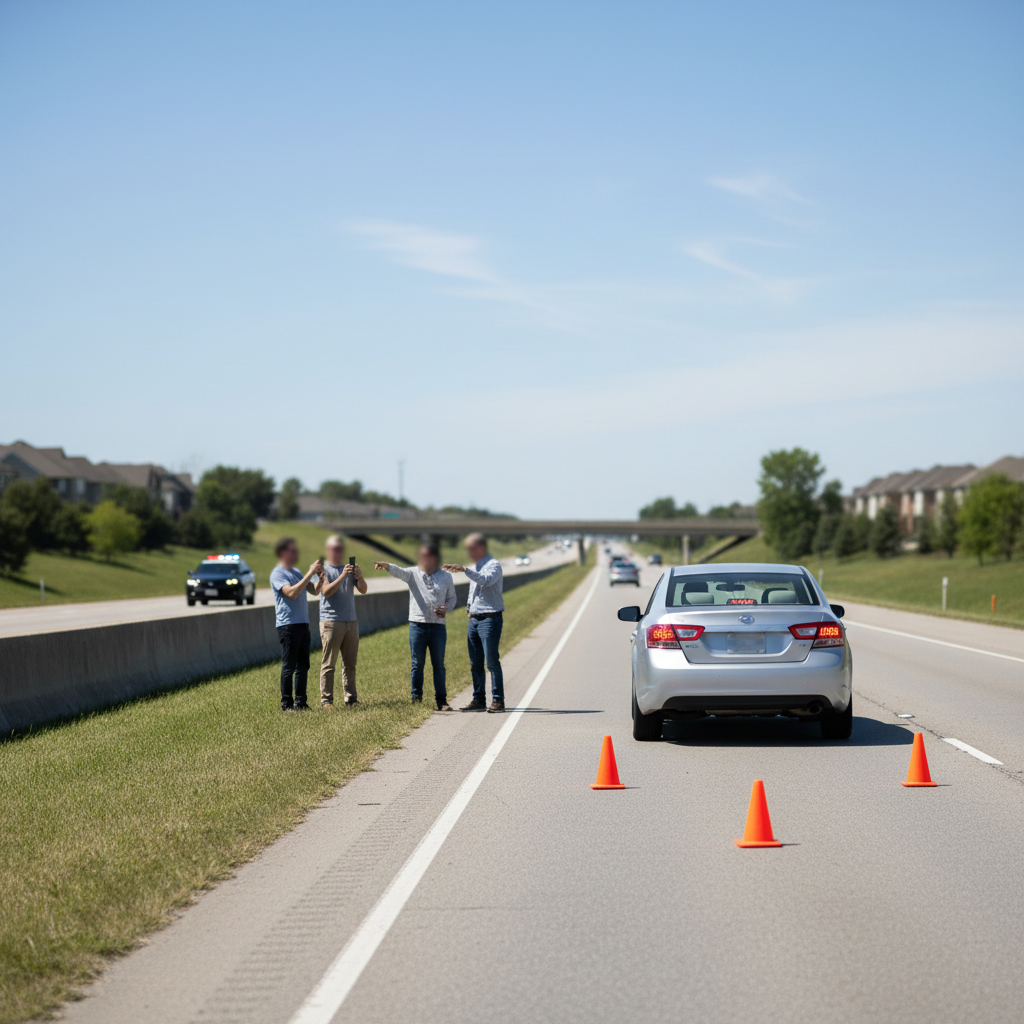
A safe roadside setup after a hit-and-run, showing a stopped vehicle and approaching police, reflecting the S.A.F.E. steps.
Do not chase the other driver. Staying at the scene keeps you safer and helps the officer document what happened. While you wait, take photos of vehicles, skid marks, and surroundings if you can do so safely.
If this happens in a parking lot or on private property and there are no injuries, the dispatcher may send you to a non-emergency number or tell you to file a report through the agency’s online form or at the station. Follow the instructions they give for your area.
For broader safety guidance around hit-and-run crashes, you can read general information from the National Highway Traffic Safety Administration (NHTSA).
2. What Counts as a Hit-and-Run?
In most states, a hit-and-run is any crash where a driver leaves without stopping to share information or help, whether they hit another vehicle, a parked car, or someone walking or biking.
Penalties are usually much more serious when someone is hurt or killed, and some injury cases are treated as felonies, so if you are worried about criminal charges or liability, talk with a local lawyer.
Hit-and-run crashes are also a major safety problem nationwide. NHTSA reports that in 2023, 7,314 pedestrians were killed in U.S. traffic crashes and roughly one in four of those pedestrians was struck by a hit-and-run driver, according to its pedestrian safety data. Filing a police crash report creates a record of what happened and can help with insurance and any later legal questions; you can find more crash report basics on the Accident Report Help blog.
3. How to File a Hit and Run Police Report
People who search for “how to file a hit and run police report” are usually worried they missed a step. The details differ by agency, but the core process is to contact police quickly, give a clear statement, and follow up if you need to self-report later.
Step 1: Contact police as soon as you can
If you have not already called 911, contact the local police department, sheriff’s office, or highway patrol as soon as you realize the other driver left. The dispatcher will tell you whether an officer is coming to the scene or whether you should file the report later at the station or online.
Step 2: Give a clear, honest statement
When you speak with the officer, share what you saw and remember, even if it feels incomplete. It is fine to say you are not sure instead of guessing. The officer will usually document vehicle damage and injuries, note any witnesses, and assign a case, incident, or report number.
Step 3: Self-report at the station or online if needed
In some areas, especially for minor property damage, you may be asked to file the hit and run police report yourself at the front desk or through the agency’s online reporting portal. Use your notes about the other vehicle, the scene, and any witnesses so your written report is as accurate and complete as you can reasonably make it.
4. Details to Collect for Your Report
Memory fades quickly after a scare. Jotting down what you remember, even on your phone’s notes app, helps you give a clearer statement.
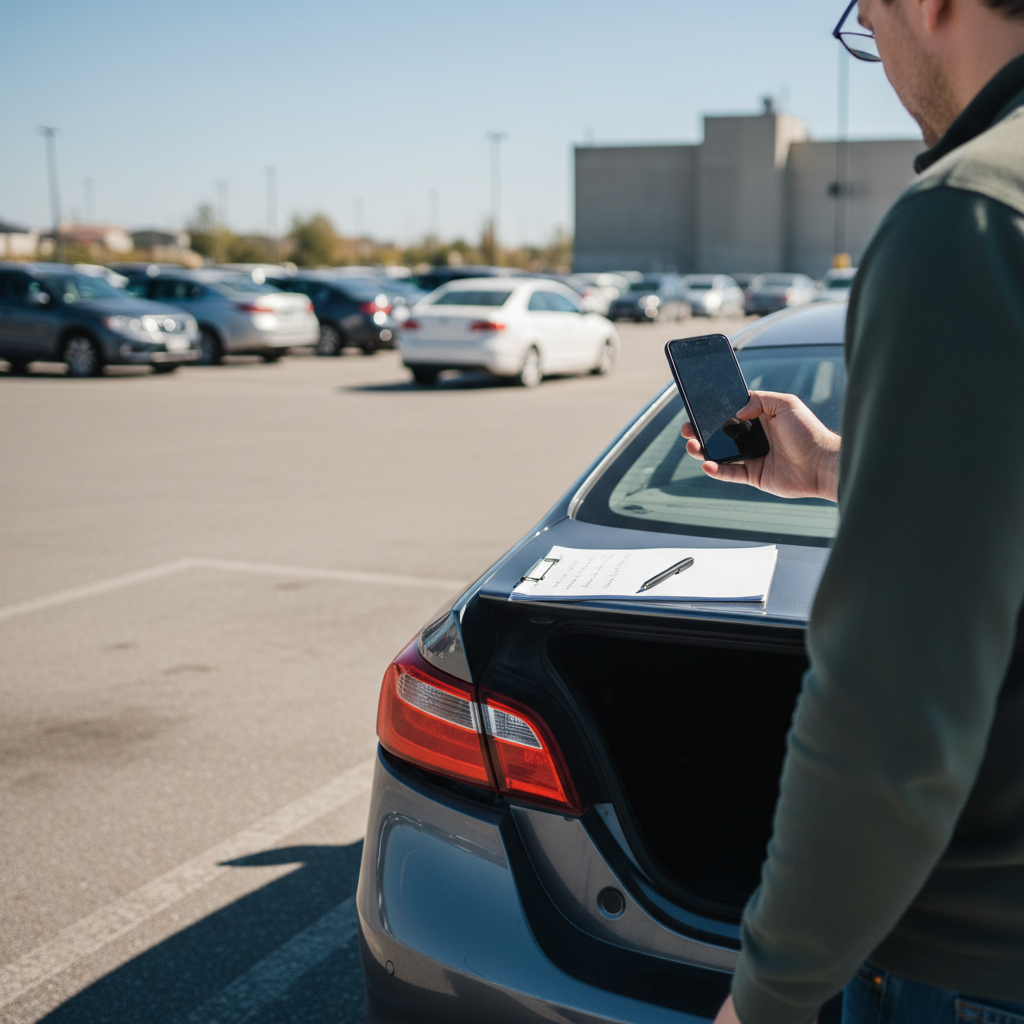
Collecting photos and written notes about vehicle damage and the scene to support your hit and run police report.
Information about the other vehicle
- License plate number (even a partial plate can help).
- Vehicle color and type (sedan, pickup, SUV, etc.).
- Make and model, if you recognized it.
- Any unique features, such as stickers, decals, a roof rack, obvious damage, or custom wheels.
- Direction of travel when the driver left.
Details about the scene
- Date and time of the crash.
- Street names or nearest intersection.
- Weather and lighting conditions.
- Photos of the vehicles, roadway, and any traffic signals or signs.
- Dashcam or security camera footage, if available.
People and injuries
- Names and contact information for passengers.
- Names and phone numbers for any witnesses who stopped.
- Any visible injuries, even if they seem mild at first.
Share this information with the officer or include it in your written statement. It helps any investigation and supports any insurance claim you file later.
5. How to Get a Copy of the Hit and Run Police Report (Including Online)
After you give your statement, the officer’s report usually has to be reviewed and approved before you can order it. Many agencies release reports within a few days, while others may take a few weeks, especially for crashes involving serious injuries or multiple vehicles.

Many drivers retrieve a copy of their hit and run police report online from home or through a retrieval service.
You will typically get your copy in one of three ways:
- Online: Use the city, county, state police, or DMV crash-report portal, enter your crash details, and pay a small fee.
- By phone or mail: Call the agency’s records unit for instructions, then mail in any required form and payment.
- In person: Visit the records or front desk at the police, sheriff, or highway patrol office that handled the crash.
If you would rather not navigate multiple portals or agencies, you can use a retrieval service. The Find My Report tool searches for your hit and run police report using your crash details, passes through the official agency fee, and emails a secure PDF once the report is released.
6. Timelines and Common Questions
How long do you have to file a hit and run police report?
It is safest to report a hit-and-run as soon as you can, ideally while you are still at or near the scene. Many states require drivers to report crashes with injuries or significant property damage immediately or “without unnecessary delay,” and waiting can make it harder for police to find witnesses or video. Your insurance policy may also have its own reporting deadlines, so call your insurer or check the “duties after loss” section of your policy.
Can you file and get a copy of a hit and run police report online?
In many areas, you can file a non-emergency hit-and-run report online when no one is injured, the vehicles are drivable, and the other driver has already left. Most agencies also let you order an existing crash report online through a city, county, state police, or DMV portal for a small fee. If you are unsure whether online reporting applies to your situation, call the agency’s non-emergency number and ask.
Do you need a police report for insurance after a hit-and-run?
Many insurers expect some form of police documentation for hit-and-run claims, especially when you use uninsured motorist or medical payments coverage. A hit and run police report gives them a neutral summary of what happened and confirms another vehicle was involved. Only your insurer can say exactly what they require, so give your adjuster the case or incident number and tell them how you requested the report.
How long does it take to get a copy of the report?
For many routine crashes, agencies release police accident reports in about 3–10 business days, but serious or complex crashes can take several weeks. Online portals often make reports available as soon as they are approved, while mailed or in‑person requests add processing and delivery time; our police accident report timeline guide explains typical ranges in more detail. If your crash was in another state or you are not sure which agency has the report, a retrieval service like Accident Report Help can track it down and email a PDF once it is released.
What if you left the scene yourself?
If you were the driver who left, speak with a criminal defense or traffic attorney in your state before giving detailed statements to police or insurers. Penalties and options depend on your state’s laws, whether anyone was hurt, and how quickly you come forward. A local lawyer can explain your specific risks and next steps.
7. How Accident Report Help Fits In
Law enforcement has to create the hit and run police report no private company, including Accident Report Help, can file it or change what the officer writes.
Once the report exists, Accident Report Help helps you understand your accident report and get a copy without chasing multiple agencies. Our team:
- Identifies the correct police, sheriff, or highway patrol agency using your crash details.
- Submits a request through the agency or its approved report vendor and passes through the official agency fee.
- Emails you a secure PDF copy of your police accident report as soon as it is released.
- Helps you keep information consistent when you share the report with insurers, repair shops, or attorneys.
Typical scenario: a driver sideswiped in another state files a hit-and-run report with local police, then later uses Accident Report Help to locate the out‑of‑state report and email a copy for their uninsured motorist claim and legal questions.
If the agency confirms that your report cannot be released or your crash report cannot be found, our money-back guarantee means you receive a full refund you do not pay for a report you never receive. For more on how the process works, you can read the FAQs on our homepage or use the contact form to reach our team.
8. Key Takeaways
- Stay at the scene, get everyone to a safe place, and call 911 when a hit-and-run happens.
- Remember the S.A.F.E. steps: Stay safe, Alert 911, File a report, and Evidence collection.
- Write down details about the other vehicle, the driver, and the scene while they are fresh in your mind.
- File a hit and run police report through the responding officer, at the station, or through the agency’s online form, depending on local rules.
- Ask for your case or incident number and how to request a copy of the report.
- Use official agency channels or a retrieval service like Accident Report Help to get your hit and run police report online for insurance, legal, or personal records.
- For questions about rights, time limits, or possible charges, speak with a licensed attorney in your state.
About the Author
This article was prepared by the Accident Report Help Editorial Team, which focuses on clear, practical guidance for drivers dealing with the aftermath of a crash. Accident Report Help works with police, sheriff, and highway patrol systems in all 50 states and is backed by trusted legal professionals who understand how accident reports fit into insurance claims and potential legal matters.
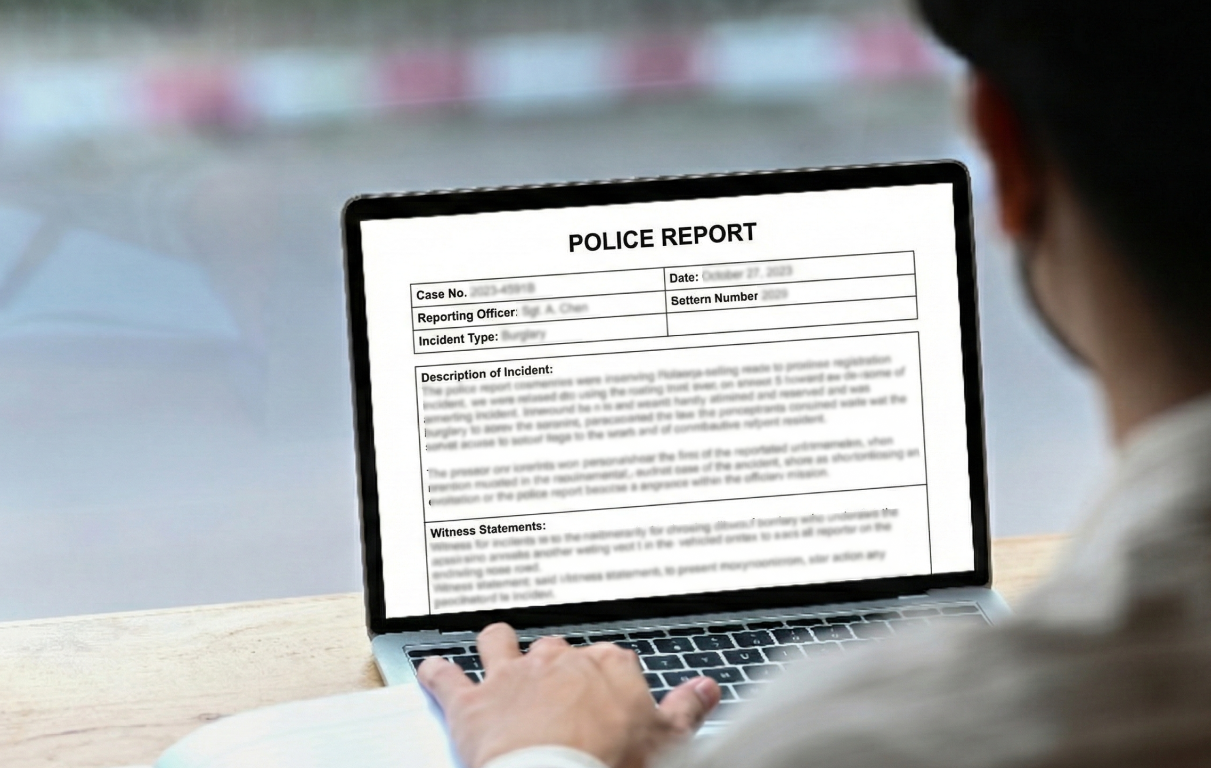

.webp)