
Incorrect Police Report After a Crash? How to Fix It and Protect Your Claim
For general information only, not legal advice. Talk with a licensed attorney in your state about your specific situation.
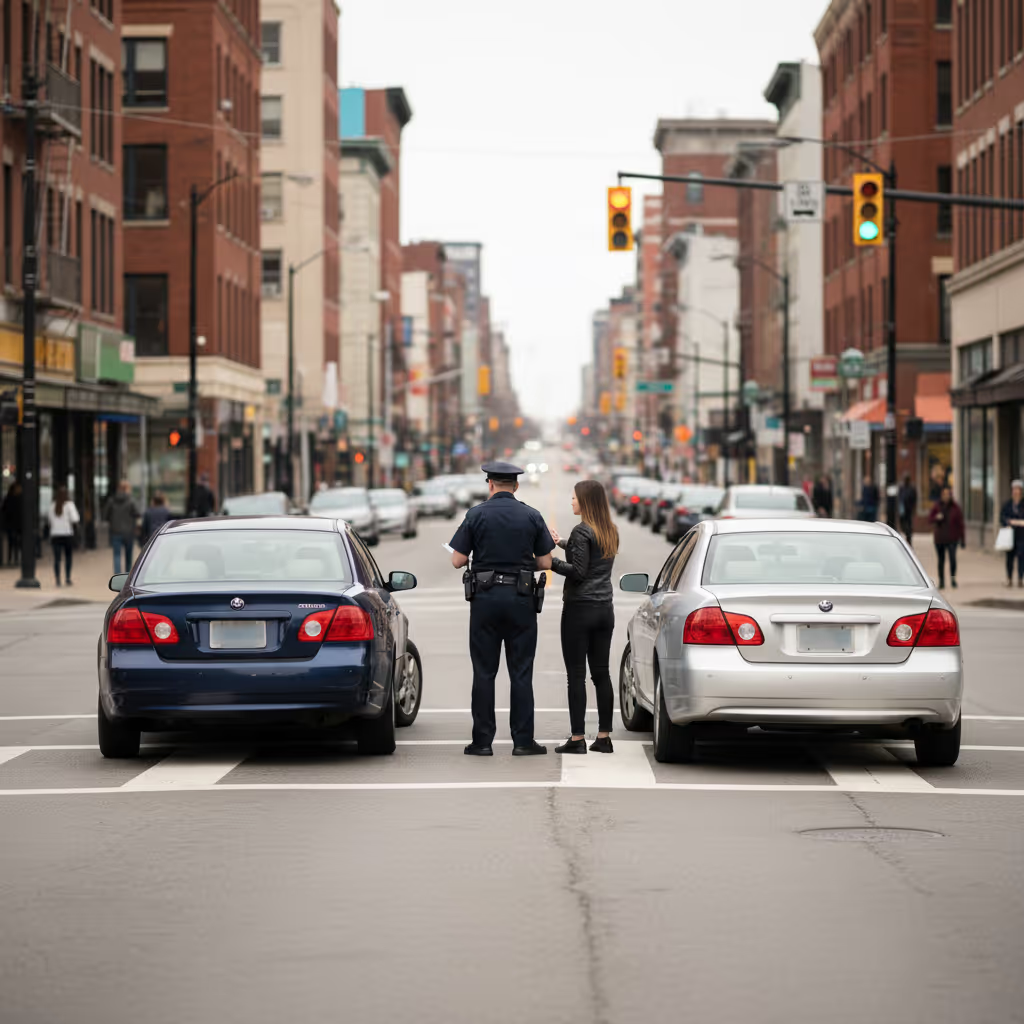
A minor crash scene with a police officer documenting what happened for the official accident report.
You finally get your crash report, sit down to read it, and your stomach drops. A license plate number is off, a box about injuries is unchecked, or the officer’s summary doesn’t match what you remember. When an incorrect police report is sitting between you and your insurance claim, it’s easy to feel like the deck is stacked against you.
The good news: a police report is powerful, but it isn’t the last word on what really happened. In many cases, you can ask the agency to correct factual mistakes or add your own statement, and you can still rely on your other evidence even if the report never changes.
This guide explains what errors in a crash report really mean, how to request fixes, and where a service like Accident Report Help fits into the process.
TL;DR: If your police report is wrong
- Get a full, readable copy of the crash report and review every page, not just the narrative.
- List each error and collect proof for it (ID, photos, medical and repair records, witness info).
- Ask the reporting officer or records unit how to submit corrections or a short supplemental statement.
- Objective typos and data mistakes are usually much easier to fix than an officer’s opinion about fault.
- Even if nothing changes, you can still build a strong injury claim with photos, medical records, witness statements, and help from our Find My Report tool.
Table of Contents
- Step 1: Get and read the full accident report
- What happens if a police report is incorrect?
- Common errors in car crash police reports
- How do you fix an incorrect police report? Step-by-step
- What can usually be changed (and what’s harder)
- How to protect your claim even if the report never changes
- Where Accident Report Help fits in
- FAQs about wrong or incomplete police reports
Step 1: Get and read the full accident report
Before you can challenge anything, you need a full, legible copy of the document the officer filed with their agency or state DMV. In most states, that’s a standardized crash report form.

Carefully reviewing a complete copy of your police accident report helps you spot every error.
If you are still waiting on the report, our police report timing guide explains typical release windows and what to do if it is delayed.
A typical traffic collision report includes:
- date, time, and location of the crash
- driver, passenger, and witness information
- vehicle and insurance details for each driver
- road, weather, and traffic control details
- a diagram and written narrative of what the officer believes happened
Go through the report slowly with a pen or highlighter. Mark anything that seems wrong, incomplete, or confusing. If the copy you received is cut off, blurry, or missing pages, request another one or a certified copy.
If you are not even sure which agency holds your report (city police, sheriff, state highway patrol, or out of state), a service like Accident Report Help’s online request form can track it down and email you a readable PDF so you can spot issues clearly.
What happens if a police report is incorrect?
A car accident police report usually:
- documents the basic facts of the crash for state records
- gives insurance adjusters a starting point when they evaluate claims
- provides attorneys and courts a snapshot of what the officer saw and heard
When key details are wrong, the report can:
- list you as “at fault” when you believe the other driver caused the crash
- downplay injuries that got worse a day or two later
- leave out a witness who supports your version of events
- mix up vehicle positions or directions in a way that changes how the crash looks on paper
Insurance adjusters often lean heavily on the report when they first assign fault and value, as practitioners such as Rosenthal Levy note, but they still have to consider your photos, medical records, repair estimates, and witness statements. In court, many states limit crash reports that contain hearsay or officer opinions, so judges focus more on live testimony and independently proven facts, a point discussed in FindLaw’s explanation of police report admissibility.
Common errors in car crash police reports
Not every mistake carries the same weight. Some are simple typos; others cut straight to liability or injuries.
Factual details that are usually easy to fix
- misspelled name, address, or contact information
- incorrect driver’s license number or date of birth
- wrong vehicle details (make, model, color, plate, or VIN)
- minor errors in the date, time, or exact location of the crash
These are mostly clerical, and when you can prove the correct information, departments are often willing to correct them.
Bigger errors that affect fault or injuries
- who had the green light or right of way
- notes that you were “speeding,” “following too closely,” or “failed to yield”
- a narrative or diagram that reverses vehicle positions or directions
- missing injuries or witnesses you reported at the scene
These go to the officer’s judgment, so agencies are more reluctant to rewrite them; you may need a supplemental statement rather than a full correction.
How do you fix an incorrect police report? (LIST & PROVE method)
Every state and agency has its own procedures, but the playbook is usually similar. Think of it as the LIST & PROVE method: first list each error, then back it up with proof.
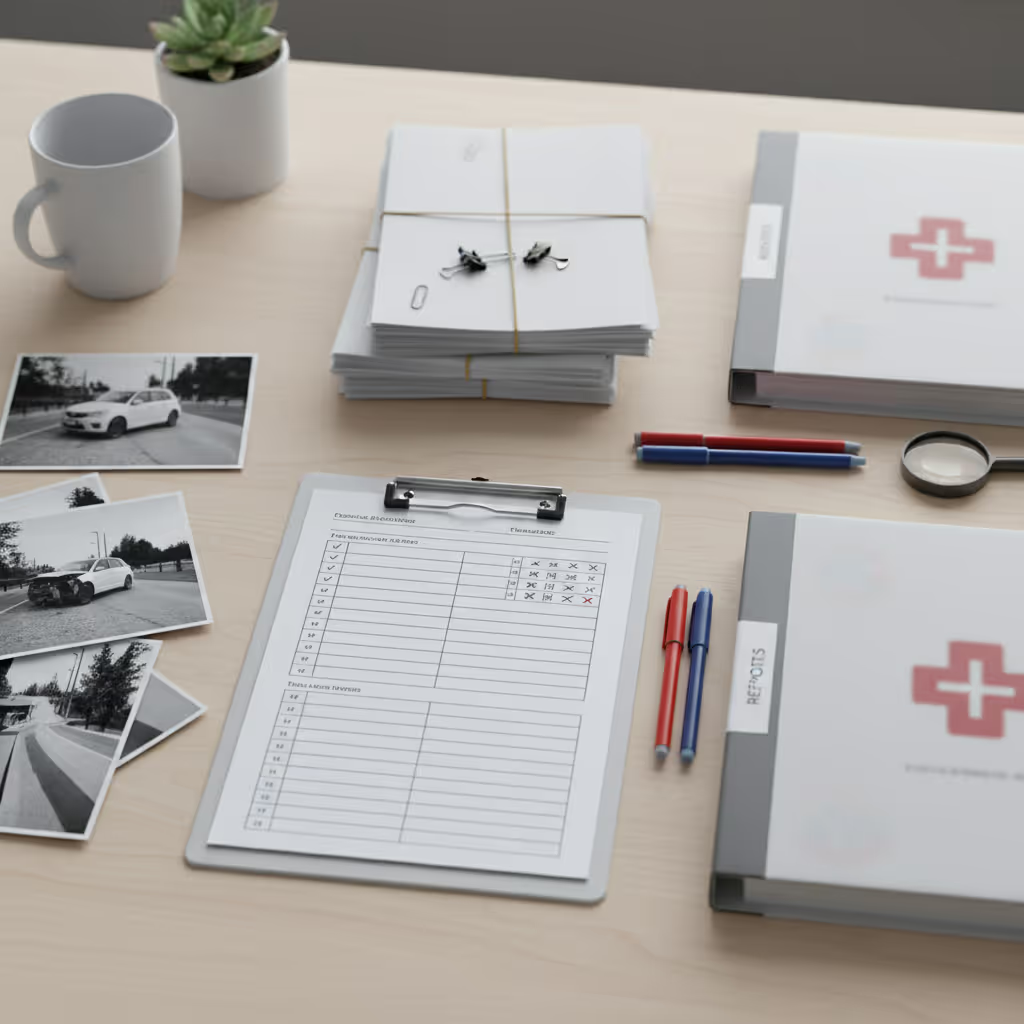
Organizing documents and evidence makes it easier to list each error and prove the correct information.
Step 1: List every error clearly
On a separate sheet (or in a note on your phone), write down:
- the report number, agency, and date
- the specific line, box, or section that’s wrong
- what it says now and what you believe it should say instead
Keeping things organized shows you are focused on specific facts, not just arguing over fault.
Step 2: Gather proof for each mistake
Corrections go smoother when you can back them up. Helpful supporting documents include the basics any car accident evidence guide recommends:
- driver’s license, registration, and insurance card
- photos or video of the scene and vehicle damage
- medical records or visit summaries that show injuries
- written or recorded witness statements
- repair estimates or tow records showing where the cars ended up
Step 3: Contact the reporting officer or records unit
Look near the bottom of the report for the officer’s name, badge number, and agency, then find the non‑emergency or records number for that department.
When you call, briefly explain that you believe there are factual errors, ask whether the officer or a records clerk handles corrections, and confirm how they prefer to receive requests (email, letter, in‑person visit, or online form).
Step 4: Send a short, written request
Even if you have spoken by phone, follow up in writing. Keep it brief:
- identify the report (number, date, location, names involved)
- list each specific error and the correct information
- reference any attached proof (copies of license, registration, photos, etc.)
- politely ask for a correction or supplemental report
Save a copy of what you send, along with the date and how you sent it (email, mail, portal upload).
Step 5: Ask whether you can add a supplemental statement
Many departments will not erase the original narrative, but they will attach your written statement or a supplemental report that becomes part of the official file. That way, anyone reviewing the claim sees both the officer’s version and yours, a process outlined in resources like Nolo’s overview of disputing police reports.
Step 6: Loop in a car accident lawyer if the stakes are high
If the report squarely blames you for a serious crash or leaves out injuries that led to big medical bills, talk with a personal‑injury attorney in your state. Many offer free consultations and deal with crash reports and amendment requests every week.
A lawyer can help frame the errors in a way officers and insurers take seriously, submit a formal request for correction or a supplemental report, and be ready to challenge the report during settlement talks or in court if needed.
What can usually be changed (and what’s harder)?
Usually easier to correct
Usually harder to change
- misspelled names or wrong contact details
- wrong vehicle information (plate, VIN, make/model)
- incorrect insurance company or policy number
- wrong date, time, or street name
- missing witness contact info you can document
- officer’s opinion on who caused the crash
- contributing factors like “speeding” or “failed to yield”
- interpretation of skid marks, damage patterns, or road layout
- whether a citation should have been issued
When an agency says, “We won’t change the report, but we’ll attach your statement,” that is common. The key is getting your corrected facts and supporting proof into the same file the insurer will review.
How to protect your claim even if the report never changes
Sometimes you do everything right and the agency still declines to change the report. If that happens, focus on strengthening the rest of your claim file:
- Share your evidence directly with insurers. Send photos, medical records, repair estimates, and witness info with a short note explaining what the report gets wrong so the adjuster sees the full picture.
- Track your symptoms over time. Keep a pain and recovery journal a simple notebook or digital file with dates, symptoms, missed work, and expenses so there is a day‑by‑day record of how the crash affected you.
- Use your own diagram or timeline. A simple sketch or written timeline attached to your claim file can clarify confusing portions of the official diagram.
- Let your attorney tell the full story. If you hire a lawyer, they can highlight the weaknesses in the report and rely on better evidence, such as medical experts and independent witnesses, when negotiating or litigating.
Where Accident Report Help fits in
You cannot ask for changes to a report you do not have yet and in plenty of cases, people are not even sure which agency they should be calling. That is the gap Accident Report Help was created to fill. Our team retrieves official crash reports nationwide, so we see many of the same errors drivers worry about in their claims.

Online tools can help you quickly locate and request the official police accident report for your crash.
With just basic details (names, date, city, maybe a VIN), our team:
- pinpoints the right police, sheriff, or highway patrol agency
- submits the request for your official crash report
- monitors status and delivers the report to you as a secure PDF
We also maintain local hub pages, such as our St. Louis accident report guide, to explain how specific cities and agencies handle crash records.
Once your report is in hand, you and your attorney can decide whether to seek corrections, add a supplemental statement, or simply use your own evidence to counter any errors.
Ready to see what your report actually says? Use our Find My Report page to get started in a few minutes.
FAQs about wrong or incomplete police accident reports
What happens if a police report is incorrect?
An inaccurate report can push insurers to see you as more at fault or less injured than you really are, especially at the start of a claim. The report, however, usually does not legally decide fault on its own. Adjusters still have to weigh your photos, medical records, repair estimates, and witness statements, and courts often limit parts of the report that contain hearsay or officer opinions. Getting clear factual errors fixed and adding your own written statement, if allowed, helps make sure your side of the story sits in the same file as the officer’s.
How do you fix an incorrect police report?
First, get a full, readable copy of the report. Then make a list of each specific error, where it appears, and what it should say instead, and collect proof such as your ID, photos, medical records, and witness contact information. Call the reporting officer or records division to learn who handles corrections and how they want you to submit a written request. In that request, clearly identify the report, spell out the corrections you are asking for, and reference your attachments. If they will not change the narrative, ask whether they will attach your own statement or a supplemental report to the file.
Can a police report be used against me if it’s wrong?
An adjuster may lean on a report that lists you as contributing to the crash or having “no injuries” to argue for a lower settlement. In many courts, though, crash reports are limited because large portions are hearsay or opinion, so judges and juries focus more on witnesses, experts, and other admissible evidence. Correcting factual mistakes early, building a strong file of photos and medical records, and keeping a clear timeline of your symptoms can reduce the damage from a bad checkbox or off‑hand comment. A car accident lawyer can also explain the problems in the report and highlight better evidence when negotiating or litigating your case.
Key takeaways and quick checklist
- Get a clean, complete copy of your crash report and mark every error or missing detail.
- Focus your correction request on clear factual mistakes names, dates, vehicles, locations, and missing witnesses or injuries.
- Back up each requested change with proof such as photos or video, medical and repair records, and witness contact info.
- Send a short written request to the officer or records unit, and ask whether they will add a supplemental statement if they will not change the narrative.
- Even if the report never changes, you can still pursue your claim using your own evidence and Accident Report Help can handle getting the official report for you.
About the author
The Accident Report Help Editorial Team focuses on clear, practical guidance about police crash reports and related records. Our content is developed with input from personal‑injury attorneys at Cirrus Law Group, so readers understand how these documents fit into real‑world claims. This article was reviewed for legal accuracy by Don Worley, J.D., lead attorney at Cirrus Law Group. All articles are periodically reviewed and updated as practices and agency procedures change.
This article is for general informational purposes only and does not create an attorney‑client relationship. Laws and procedures differ by state and can change. For advice about your specific situation, consult a licensed attorney in your jurisdiction.


.avif)