
How to Maximize Your Insurance Settlement After an Accident

A calm, documented response to a crash helps set up a stronger insurance settlement.
TL;DR: Quick Guide to a Strong Insurance Settlement
- Use the Safety–Document–Claim–Negotiate framework: stay safe, collect evidence, open the claim promptly, then negotiate using your records.
- Get medical care and call the police so there is an official record of the crash.
- Gather proof: photos, witness names, medical bills, and your police accident report.
- Report the claim on time and give accurate, consistent information.
- Know what your policy covers before you decide how to respond to the first offer.
- Be polite but firm with adjusters, and consider talking to an attorney if the offer seems too low.
- If you don’t have your police report yet, Accident Report Help can request it for you online.
Table of Contents
- What is an insurance settlement?
- Safety–Document–Claim–Negotiate overview
- Step 1: Safety and first steps after a crash
- Step 2: Document everything that supports your claim
- Why your police accident report matters
- Step 3: Start the claim the right way
- Step 4: Negotiate without underselling yourself
- How do I know if an insurance settlement offer is fair?
- Common mistakes that shrink settlements
- FAQs about insurance settlements
- How Accident Report Help fits into the process
- Key takeaways
After a crash, you are suddenly juggling pain, repairs, and calls from insurance. On top of that, working out what a fair insurance settlement should look like can feel overwhelming.
This guide uses a four-step Safety–Document–Claim–Negotiate framework so you can rely on documentation and a clear story to push for a payout that reflects your losses.
Safety Check for injuries, move to a safe place, and call 911.
Document Capture photos, contact details, medical records, and your police report.
Claim Report the crash, get a claim number, and share key facts.
Negotiate Compare offers to your documented losses before you decide.
What Is an Insurance Settlement and How Does It Work?
An insurance settlement is the money an insurance company offers to resolve your claim after a car accident. It can cover vehicle damage, medical bills, and sometimes lost wages and pain-related losses, depending on your policy and your state’s laws.
In most cases, an adjuster looks at:
- Who was at fault (sometimes shared between drivers)
- How badly vehicles were damaged
- The type and cost of medical treatment
- Policy limits and deductibles
- Evidence such as the police accident report and photos
The first offer is usually a starting point, not the final word. Your job is to back up your losses with proof and speak up for yourself, or with help from a lawyer if you choose.
The stakes can be high. Federal safety data show that 40,901 people were killed in U.S. traffic crashes in 2023 alone, with many more seriously injured, so even a “typical” auto claim can involve significant medical bills, lost income, and vehicle costs.
Step 1: Put Safety and Basic Information First After a Crash
What you do in the first hour after a collision sets the stage for your claim. Focus on:
- Checking for injuries and calling 911 if anyone is hurt
- Moving to a safe location if possible
- Calling the police so there is an official crash report
- Exchanging names, contact details, insurance information, and license plate numbers
Many states require you to report crashes with injuries or a certain level of property damage. Check your state’s rules on your Department of Motor Vehicles or Department of Insurance website, or through resources like the National Association of Insurance Commissioners.
Even for what seems like a minor fender-bender, calling the police gives you a neutral record that can help later if stories change.
Step 2: Document Everything That Supports Your Claim
Adjusters rely on documentation. The more organized your file, the easier it is to push for a fair number and maximize your settlement.

Photos and organized paperwork are core evidence in maximizing an insurance settlement.
Photos and video at the scene
- Damage to all vehicles, from multiple angles
- Skid marks, debris, road signs, and traffic lights
- Weather, lighting, and anything that affected visibility
- Bruises, cuts, and visible injuries (as you are able)
Medical records and bills
Get checked by a doctor promptly, even if symptoms seem mild, and keep:
- Emergency room or urgent care records
- Follow-up visit notes, specialist reports, and imaging results
- Physical therapy or rehabilitation summaries
- Itemized bills, receipts, and copay records
Witness information and personal notes
- Write down each witness’s name, phone number, and email.
- Note briefly what each person saw or heard.
- Within a day, write your own account of what happened and how your pain or limitations change over the first few days.
“The stronger your documentation, the harder it is for an adjuster to undercut your claim.”
Why Your Police Accident Report Matters for Your Settlement
For many claims, the police collision report is one of the anchor documents an adjuster leans on. It often includes:
- Date, time, and location of the crash
- Diagrams of how the collision happened
- Citations issued, if any
- Statements from drivers and witnesses
- The officer’s initial observations about fault
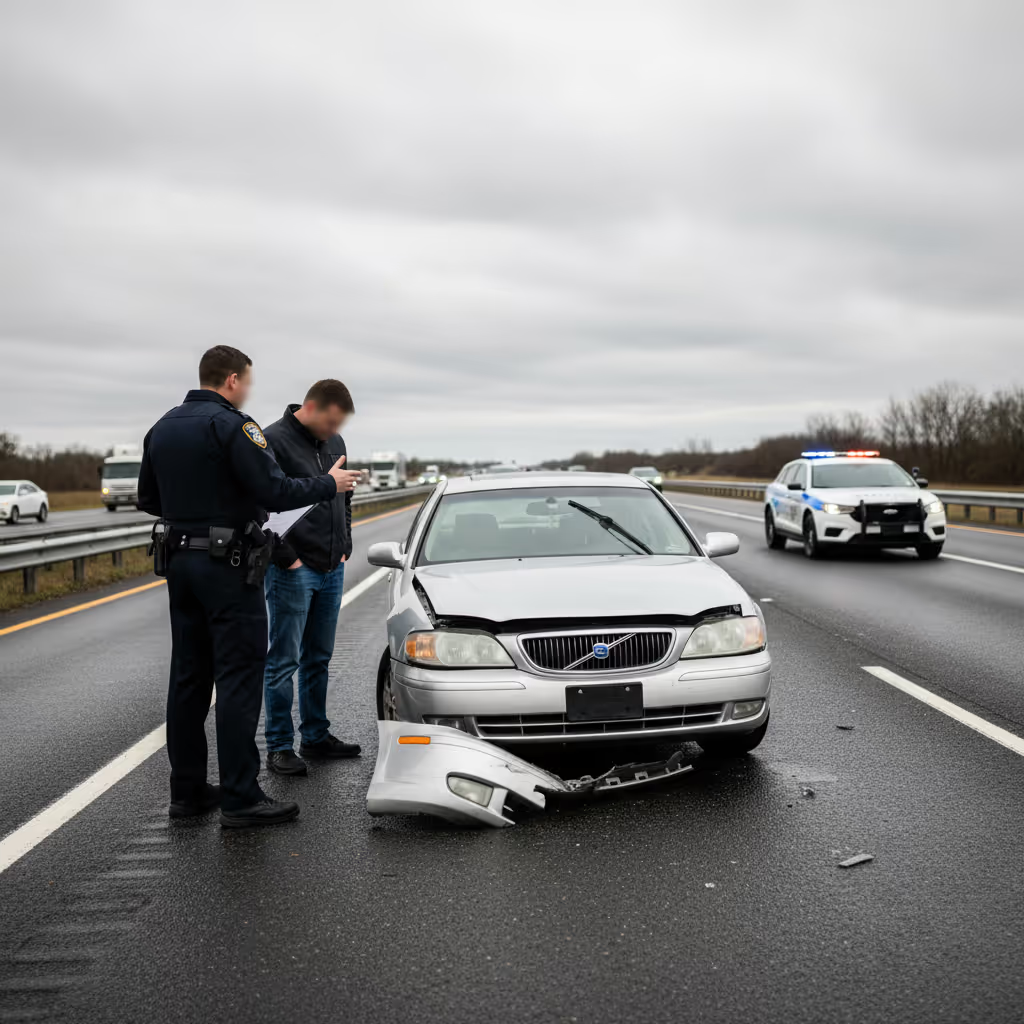
The police accident report often becomes a key document in insurance settlement negotiations.
When there is a dispute about what happened, having this report on hand can help you challenge an offer that downplays the other driver’s responsibility. Many law firms and insurers will not seriously negotiate until they have a certified copy.
Case example: when a report changed the offer
A driver in a rear-end collision was first offered only part of her repair costs because the other insurer claimed she had “stopped suddenly.” After she obtained the police report, it showed the other driver admitted looking at his phone and was cited for following too closely. Once her attorney sent the report and updated medical bills, the settlement offer increased by several thousand dollars. Details vary by case, but strong documentation can quickly shift negotiations.
If you are not sure which police, sheriff, or highway patrol agency handled your crash, services like Accident Report Help can track down the right department and request the report for you using your name, date, and crash location.
For a deeper dive into how insurers use your crash report, see our police crash report guide.
Step 3: Start the Claim the Right Way
Most policies require you to report an accident within a “reasonable” time. Check your insurance card or online account for claim instructions, review general guidance from the Insurance Information Institute, and see our insurance claim timeline for what usually happens after a wreck.
When you contact the insurer:
- Stick to the facts: date, time, location, vehicles involved, injuries reported
- Be consistent with what is in the police report and your medical records
- Do not guess about things you do not know; it is fine to say “I am not sure yet”
- Ask for your claim number and the adjuster’s direct contact details
Some companies ask for a recorded statement. Before agreeing, many people feel more comfortable speaking with an attorney, especially if injuries are involved or fault is disputed. If you decide to give a recorded statement, keep it short, factual, and calm.
Step 4: Negotiate Without Underselling Yourself
Know what your policy covers
Before you react to the first number the adjuster shares, review your policy limits and coverages (liability, collision, comprehensive, MedPay/PIP, uninsured/underinsured motorist). Knowing the ceiling and floor for your claim helps you decide whether an offer makes sense.

Reviewing bills, estimates, and policy limits helps you evaluate whether an insurance settlement offer is fair.
Insurance Information Institute data put the average auto liability claim for bodily injury nationwide in the mid-$20,000s and property-damage liability claims in the mid-$6,000s. Serious crashes can cost far more, so thin policy limits may be used up quickly.
Use your documentation as leverage
To strengthen negotiations, line up your proof:
- Repair estimates or total-loss valuation for your vehicle
- Medical bills and records showing diagnosis and treatment
- Proof of lost wages (pay stubs, employer letters)
- Your police accident report and photos
When you respond to an offer, refer to these documents specifically: “The attached physical therapy bills total $4,200,” or “The police report notes the other driver ran the red light.”
Should you ever accept the first offer?
Do not accept the first offer until you understand the full extent of your injuries and total losses. Once you sign a bodily injury settlement release, you usually give up the right to ask that insurer for more money from that crash, even if new bills appear. If you are unsure, especially with significant injuries, talk with a personal-injury attorney in your state before you sign.
Attorney involvement is common: A 2024 survey by LexisNexis Risk Solutions of auto injury claimants found that about 70% hired an attorney, and 93% of those said they would likely do so again. You do not have to hire a lawyer, but these numbers show how often people feel they need extra help when serious injuries and larger settlements are on the line.
How do I know if an insurance settlement offer is fair?
Start by comparing the offer to your documented losses: repair or replacement value for your vehicle, medical bills (including expected future care), lost wages, and other out-of-pocket costs. If the offer is below what you can prove with records, or requires you to sign a release while you are still treating, it may not be fair.
Also consider fault. In many states, your share of fault reduces what you can recover. If the adjuster is assigning you more blame than the police report or witnesses support, that is a red flag and a good time to get legal advice before agreeing to a final number.
Common Mistakes That Can Shrink Your Insurance Settlement
- Delaying medical care. Waiting days to see a doctor lets insurers argue your injuries were minor or unrelated.
- Posting about the crash on social media. Photos or comments can be used to question your pain, activity limits, or version of events.
- Guessing about speed or fault. Casual statements like “I might have been speeding” can be treated as admissions against you.
- Signing forms you do not understand. Broad releases or medical authorizations can give insurers more access and leverage than you intended.
- Throwing away paperwork. Losing bills, letters, or emails makes it harder to prove what the crash actually cost you.
FAQs About Insurance Settlements After a Car Accident
How long does an insurance settlement take after a car accident?
Timelines vary. Property-only claims may settle in weeks, while injury claims often take months, especially if you are still treating. Ask your insurer or a local attorney about typical timelines and lawsuit deadlines in your state.
Can I maximize my insurance settlement without a lawyer?
Yes, many people handle small, clear property-only claims on their own by staying organized and using solid documentation. For serious injuries, long-term limitations, or a death, it is usually wise to at least consult an experienced personal-injury attorney.
Do I need a police report to settle my claim?
You can sometimes settle minor claims without a police report, but having one usually helps when stories conflict. If you never received yours, request it from the agency that responded to the crash or use a retrieval service like the Find My Report tool from Accident Report Help.
How Accident Report Help Fits Into the Process
Accident Report Help is a nationwide service that identifies the correct police, sheriff, or highway patrol agency for your crash, requests the official report, and emails you a secure PDF once it is released. You pay only the pass-through agency fee, with a full refund if the report cannot be retrieved. The service is supported by Cirrus Law Group, but using it does not create an attorney–client relationship. To start, visit the Find My Report page.
Key Takeaways for Maximizing Your Insurance Settlement
- Use the Safety–Document–Claim–Negotiate framework: protect safety first, document key evidence, start the claim promptly, then negotiate from your records.
- Build a strong paper trail with photos, medical records, witness details, and a certified police accident report.
- Know your coverages and policy limits before responding to settlement offers.
- Match every part of your claim from repairs to lost income to specific documents.
- Be cautious about quick settlements and releases, especially while you are still treating for injuries.
- When you need your police report, services like Accident Report Help can save you time and guesswork.
About Accident Report Help
Accident Report Help is a private online service that helps drivers, law firms, and insurers request official police crash reports from the correct agency in all 50 states. Supported by the personal-injury team at Cirrus Law Group, the Accident Report Help editorial team focuses on practical resources that explain how police reports connect to insurance, medical documentation, and next steps after a wreck.
For more guides, visit our Accident Report Help resource center.