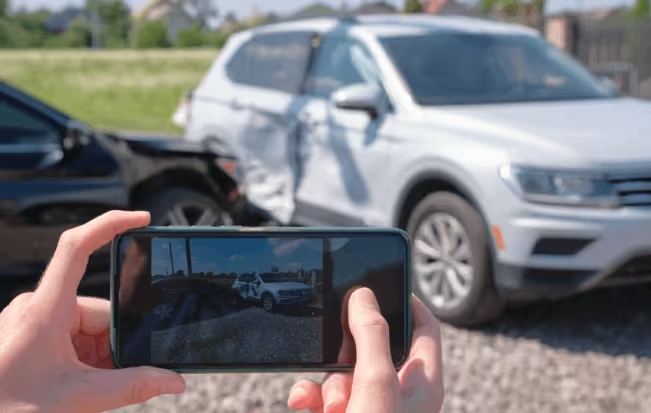
How Do Police Determine Fault in an Accident?
After a crash, the police report can feel like a verdict. One box checked the wrong way, one phrase in the narrative, and suddenly an insurance adjuster is treating you as “the at‑fault driver.” No wonder so many people search “how do police determine fault in an accident” and how much weight that decision really carries.
In 2023, police recorded an estimated 6.1 million traffic crashes nationwide, with more than 40,000 people killed and about 2.4 million injured, according to the National Highway Traffic Safety Administration’s Traffic Safety Facts 2023 report. Those police reports shape how insurers, attorneys, doctors, and employers view what happened to you.
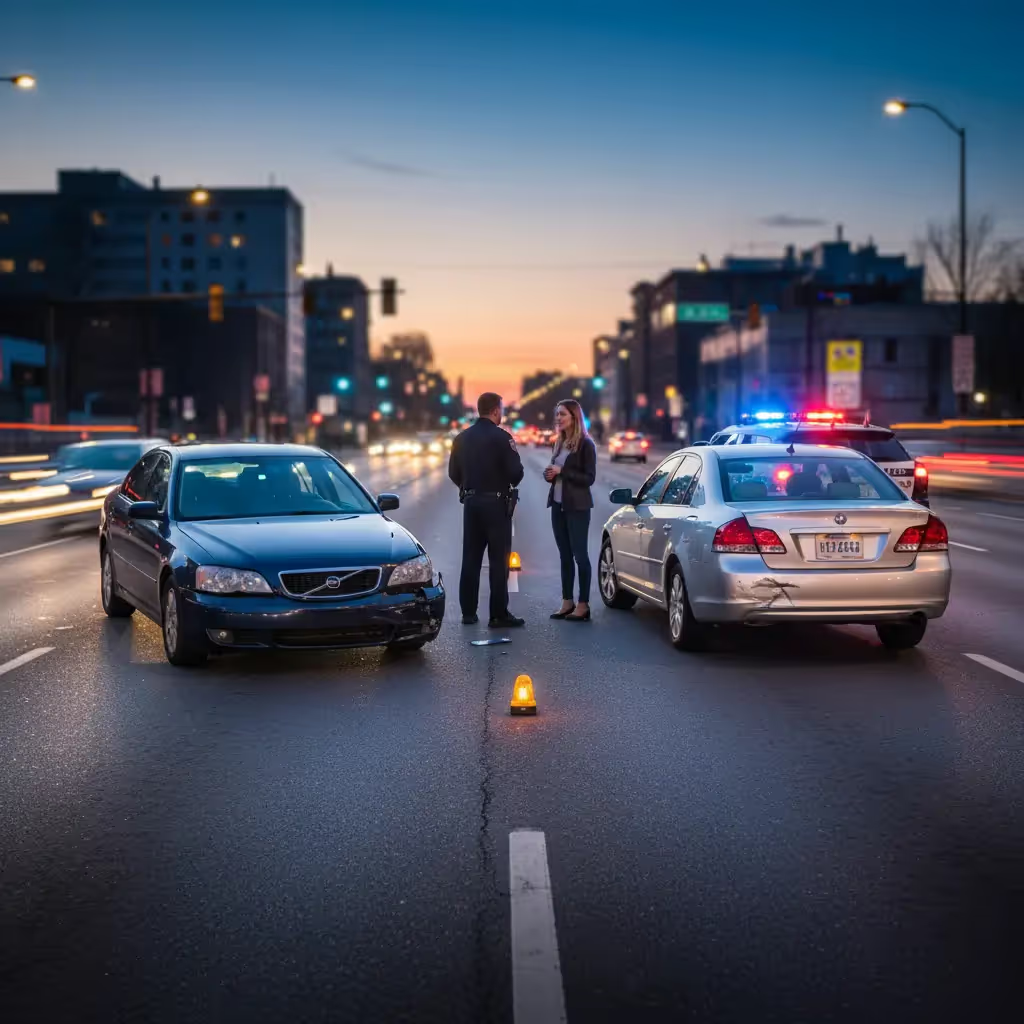
A police crash scene, where officers begin documenting evidence that later appears in the accident report.
TL;DR: What you’ll learn
- Police do not make the final legal decision on who pays; they record facts and give an initial opinion.
- Officers rely on physical evidence, statements, diagrams, and traffic laws to reach that opinion.
- Your crash report can heavily influence insurance decisions, even when it’s incomplete or mistaken.
- You can get your report, request corrections, or add your own statement to fix clear factual errors before they spread.
Why fault on a police report matters
In most claims, the police report is more than paperwork. It can quickly shape:
- Insurance decisions: Adjusters often treat the report as the first “official story” when assigning fault and deciding payment.
- How much you can recover: Most states use comparative or contributory negligence rules, so your percentage of fault can reduce — or even bar — compensation. Cornell Law School explains comparative negligence and contributory negligence in plain English.
- Settlement talks and lawsuits: Lawyers, judges, and even employers and doctors review your report when they evaluate what happened.
- Your ability to correct mistakes: Getting your own copy early — or using Accident Report Help’s Find My Report tool — gives you a chance to spot and fix errors before they spread.
Do police actually decide who was at fault?
Officers give an opinion, but they don’t have the final say on civil fault or who pays for damages. Their job is to document what they see and hear and apply your state’s traffic laws.
In a typical crash, the responding officer will:
- Document basic facts (who, what, when, where) and conditions (weather, lighting, road surface).
- Record statements from drivers and witnesses.
- Note contributing factors and, sometimes, issue one or more traffic citations.
- Complete a written narrative and diagram based on that information.
A ticket is evidence that the officer believes a law was broken, but it doesn’t automatically make that driver 100% at fault. Insurance companies and, if necessary, courts look at the whole file — including medical records, photos, and expert opinions — before deciding legal liability.
An officer’s view carries a lot of weight with insurers, but it isn’t the same as a judge’s ruling. That also means you can challenge how an adjuster is reading the report, especially if it omits key facts or contains obvious mistakes.
For more on how fault is proven in practice, FindLaw’s overview of car accident liability explains how police reports fit alongside other evidence.
How officers determine fault at the scene
When people ask how do police determine fault in an accident, they’re usually asking what officers actually do on the roadway. While every crash is different, most investigations follow a similar pattern.
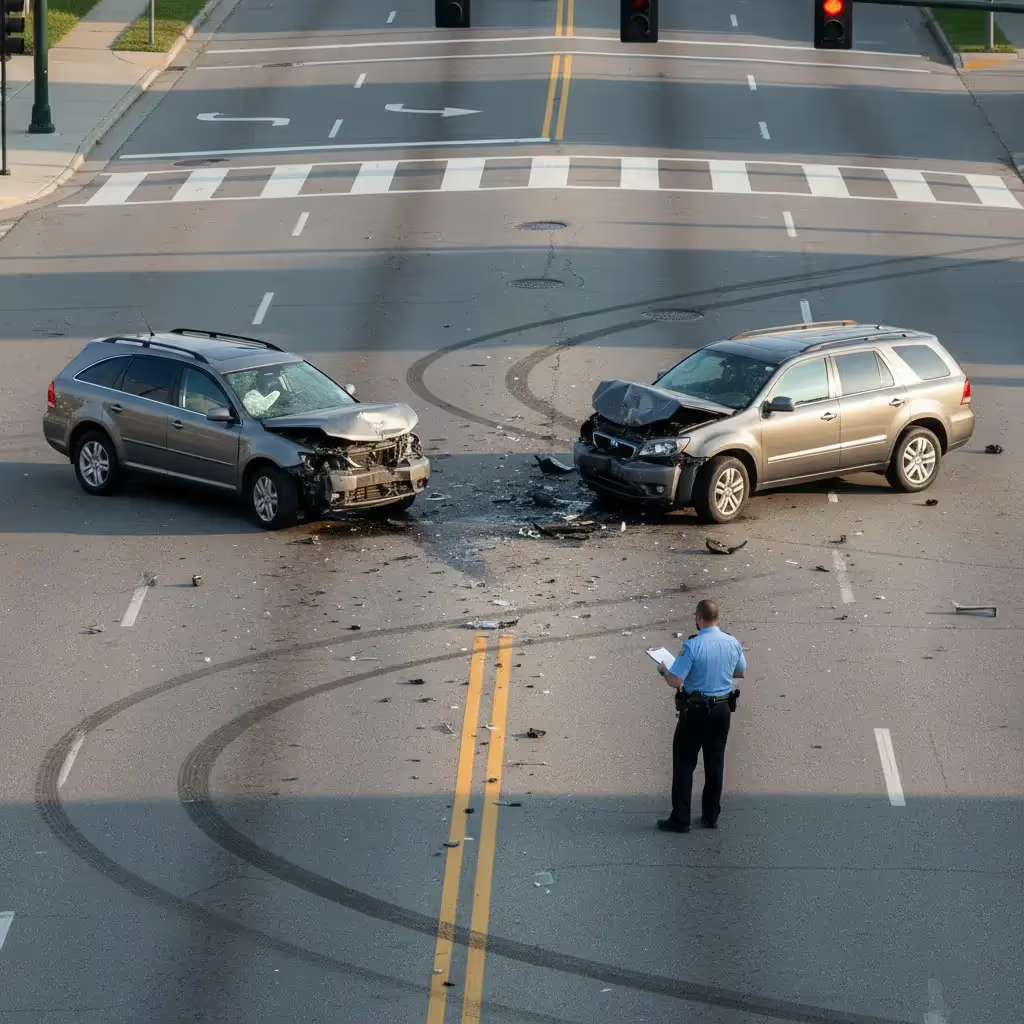
Officers study vehicle positions, skid marks, debris, and the intersection layout before forming an opinion on fault.
At-a-glance: typical steps
- Secure the scene. Check for injuries, call EMS, and clear traffic if possible.
- Document physical evidence. Note vehicle positions, debris, skid marks, and road conditions.
- Capture the layout. Take photos and draw a diagram of lanes, directions of travel, and impact points.
- Interview people involved. Ask drivers and witnesses what they saw and did before impact.
- Apply traffic laws. Compare the evidence with right‑of‑way rules and other statutes and decide whether to issue citations.
- Complete the crash report. Fill in codes, checkboxes, a diagram, and a narrative that explain the officer’s opinion about how the crash happened.
The 3‑Bucket Fault Evidence Model
One simple way to understand an officer’s process is to group what they see into three “buckets” of evidence:
- 1. Physical evidence. Skid or yaw marks, debris patterns, vehicle resting positions, and crush damage show speed, direction, last‑second braking or steering, and where and how the vehicles hit, and officers note road and traffic conditions such as construction, lane closures, signals, and signs.
- 2. Statements. Officers record statements from each driver and any passengers or witnesses, paying attention to lane position, speed, distractions (like phone use), suspected impairment or fatigue, and comments about weather, visibility, or unexpected hazards.
- 3. Traffic laws and citations. Finally, officers apply your state’s traffic code. They may issue citations for violations (for example, running a red light or following too closely) and check boxes for contributing factors such as distraction, speeding, or impairment.
Together, these three buckets form the officer’s initial opinion about fault. On many forms this appears as a “primary contributing factor” or a narrative note such as “Unit 1 failed to yield.”
Common patterns officers see
- Rear‑end crashes: The trailing driver is often listed as the primary contributor for following too closely or inattention, unless sudden stops or other hazards change the picture.
- Left‑turn collisions: The turning driver is frequently cited if they crossed the path of oncoming traffic without a clear gap or ignored a signal.
- Intersection and lane‑change crashes: Officers look at right‑of‑way rules, stop signs and signals, and lane markings to decide who should have yielded.
Even when the report focuses on one driver as the main contributor, insurers may still assign partial responsibility to the other driver under comparative negligence rules. For a deeper dive into how adjusters read these details, see our guide to fault in car accident reports.
What’s really inside a police crash report
Forms vary by state, but most crash reports organize the same key details. Knowing what each section covers makes it easier to spot errors.

Reviewing the printed crash report line by line can help you catch errors in narratives, diagrams, and codes.
Diagrams, narratives, and driver actions
Most reports include:
- Basic info and parties: Date, time, location, road and weather conditions, and the drivers, vehicles, and insurers involved.
- Crash diagram: A simple sketch showing lanes, directions of travel, impact points, and where vehicles ended up.
- Narrative: A short written description of how the officer believes the crash happened.
- Contributing factors / actions: Checkboxes or codes describing each driver’s apparent actions, such as following too closely or running a red light.
If you’d like a deeper breakdown, our guide on what’s in a police accident report walks through these sections line by line.
Codes for injury level, vehicle damage, and more
To keep thousands of reports consistent, agencies often use numeric codes for:
- Injury levels (no injury, possible, minor, serious, fatal)
- Vehicle damage location and severity
- Where each person was sitting and whether belts or child seats were used
- Whether airbags deployed or anyone was ejected
A single wrong digit can change how serious your injuries or damage look on paper, so compare these codes against your medical records and repair estimates once you have the report in hand.
Can a police report be wrong about fault?
Yes. Officers usually arrive after the crash and must work quickly on a busy roadway, often with limited information. Mistakes and gaps are more common than most people think.
Problems you might see include:
- Wrong basics, such as plates, VINs, lane, direction of travel, or intersection name
- Missing, mixed‑up, or extremely short witness statements
- Injury levels recorded as “possible” or “minor” even though symptoms worsened later
- Narratives that skip over hazards like icy patches, debris, or poor signal timing
It helps to separate factual errors (for example, the wrong direction of travel or date) from judgment calls (such as whether you were speeding or following too closely). Agencies are much more willing to correct clear factual mistakes or add missing details than to rewrite the officer’s opinions.
Even when the opinion doesn’t change, adding better photos, medical documentation, or witness statements to the file can still influence how insurers and attorneys interpret the report. For more detailed next steps, see what to do if your report is wrong.
How to fix report errors before they hurt your claim
Step‑by‑step: requesting a correction or supplement
- Get a complete copy of the report.
Don’t rely on an insurance summary. Request it directly from the agency or use Accident Report Help to have the official PDF delivered to your inbox. - Read it slowly and mark issues.
Highlight wrong dates, locations, directions, or descriptions that don’t match your photos, dash‑cam footage, or recollection. - Gather supporting documents.
Collect crash scene photos, medical records, repair estimates, EDR (“black box”) data if available, and written witness statements. - Contact the records or traffic unit listed on the report.
Ask about their process for an amended or supplemental report and whether they require a form, letter, or in‑person statement. - Be specific and respectful.
For each factual issue, explain what is wrong, what you believe is correct, and which document backs you up. Our dedicated guide explains how to request a corrected report step by step. - Share any corrections with your insurer.
If the agency updates the report or accepts a supplemental statement, send copies to every insurance company involved and confirm they added them to your claim file.
When to talk with an attorney
You may want legal advice from a licensed attorney in your state if:
- Anyone involved has serious injuries or long‑term medical needs
- The crash involved a commercial vehicle, rideshare, or multiple cars
- A loved one died in the collision
- You live in a contributory negligence state where small percentages of fault can have big consequences
- An insurer is denying your claim largely based on the police report
An attorney can explain how your state treats fault, what claim deadlines apply, how to organize your injury documentation, and whether challenging the report or the insurer’s decision makes sense in your situation.
This article is for general information only and is not legal advice. Laws and procedures vary by state. For guidance on your specific case, talk with a qualified attorney licensed where the crash occurred.
How to get a copy of your police accident report
Requesting directly from the agency
If you know which department responded (city police, county sheriff, or state highway patrol), you can usually:
- Visit the department’s website and look for “Records,” “Accident Reports,” or “Public Records.”
- Provide the date, location, your name, and, if you have it, the report or case number.
- Pay a small copy fee online, by mail, or in person and wait for processing, which can range from a few days to several weeks.
Many states explain their crash report request process on official transportation or public safety sites. For example, Florida’s Department of Highway Safety and Motor Vehicles describes how to request crash reports and notes that they may take up to about 10 days to become available and usually require a per‑report fee.
For more on typical timelines, our guide on how long reports take walks through typical release windows by agency.
Using a report retrieval service
When you’re hurt, out of work, or dealing with repair shops, chasing down records from an unfamiliar agency can feel like one task too many. A retrieval service can take that off your plate.

Many drivers now request police accident reports online instead of visiting a records counter in person.
At Accident Report Help, drivers, passengers, insurers, and law firms submit basic crash details — name, date, city, and plate or VIN if known — and our team locates the right agency, handles the request and official fee, keeps you updated, and issues a refund if the report can’t be released.
Accident Report Help offers coverage across all regions and works directly with local police departments, county offices, and State Police agencies nationwide, so you don’t have to learn each agency’s system on your own. Ready to see what your report actually says about fault? Use our find my report tool to get started in a few minutes.
If your crash happened in Central Florida, you can also use our Orlando accident reports page for location‑specific guidance.
FAQs: Fault, police reports, and insurance decisions
1. Is the driver who gets the ticket always at fault?
No. As explained above, a ticket is one piece of evidence, not a final ruling. Insurers and courts look at all of the evidence before deciding how fault is split.
2. Will fixing my police report change the insurance company’s decision?
Sometimes. Correcting obvious factual errors or adding missing details can lead an adjuster to reconsider, but an updated report doesn’t guarantee the decision will change.
3. What if no police report was ever filed?
You can still file an insurance claim using photos, repair estimates, medical records, and written statements. In some areas you can later submit a walk‑in or self‑report; check your local police or DMV site for that process.
4. How long do I have to get my report?
Most agencies keep crash reports for years once they’re digitized, but it’s still best to request yours as soon as it’s available so you can check it for errors and share it while details are fresh.
5. Where can I learn more about crash data and safety trends?
The National Highway Traffic Safety Administration’s CrashStats portal publishes detailed national crash statistics and safety fact sheets. Many state DOT or DMV sites also release annual crash fact books and dashboards.