Car Value After Accident: Get a Police Crash Report Before You Settle
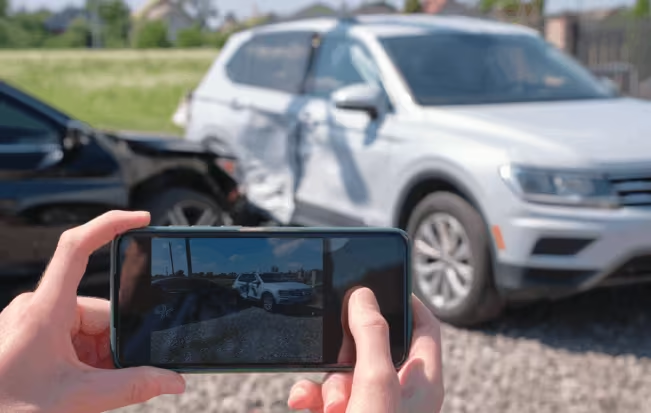
A moderate crash can reduce your car’s value even after quality repairs.
If you’re worried about your car value after accident and staring at a settlement offer that feels light, you’re not alone. Many drivers know their car is worth less now but feel stuck because they don’t have the right paperwork—especially the official police crash report. In many cases, you can request your police crash report online instead of calling multiple agencies.
This guide focuses on those messy situations, including out-of-state crashes where you’re not even sure which agency has the report. You’ll see how that report connects to a diminished car value claim, how to get it from any state, and how to build a simple Diminished Value Packet—police report, repair docs, photos, and value estimates—before you sign anything with an insurer, dealer, or lawyer.
Quick note: This article is for general information only and is not legal, financial, or insurance advice. For questions about your rights or deadlines, speak with a licensed attorney in your state.
TL;DR: Police reports & diminished car value, in plain English
- Your car usually loses market value after a significant crash, even with quality repairs.
- A police crash report is one of the key documents insurers, lawyers, and dealers review when deciding how much to offer.
- If the crash happened out of state, different agencies may hold the report, and each state has its own request rules.
- Getting the official report number and a clean PDF copy is the foundation of your Diminished Value Packet.
- Accident Report Help helps drivers in all 50 states request police crash reports from the correct agency.
Why your car is worth less after an accident, even after repairs
Once your Vehicle Identification Number (VIN) is linked to an accident, that history usually follows the car for life. Vehicle history companies such as Carfax and used-car dealers treat “accident reported” as a red flag because buyers worry about hidden frame damage, paint mismatch, or future issues.

Dealers and buyers often discount vehicles with an accident in their history.
Insurers and dealers know this “stigma damage” affects what people will pay, so they factor it into offers. Industry examples and consumer guides show that even moderate damage on a mid-priced vehicle can mean hundreds or thousands of dollars in lost value, while serious structural or airbag-related crashes can lead to double‑digit percentage losses at resale.
Myth: Perfect repairs erase accident history
High-quality repairs can make a car safe and drivable again, but they don’t erase digital accident records or buyer concerns. History reports, dealership inspections, and online pricing tools still flag prior crashes, which is why a diminished value claim exists separately from repair costs.
“Repairs fix the damage. A diminished value claim addresses the lost market value that repairs alone don’t restore.”
To make that claim stick, you need more than a feeling that your car is worth less. You need documents that show what happened, who was involved, and how severe the crash really was. Your official police crash report sits at the center of that picture.
What is a diminished car value claim?
A diminished car value claim (also called a diminution of value claim) is a request for extra compensation because your car is worth less on the open market after a crash, even after proper repairs.
Think of it this way:
- Pre‑accident value: What your car was worth right before the crash.
- Post‑repair value: What buyers or dealers will realistically pay now that the VIN shows an accident.
- Diminished value: The difference between those numbers.
Whether you can recover that difference depends on your state’s rules, the type of claim (first-party vs. third-party), and the evidence you bring. Consumer resources like Forbes diminished value guide, Bankrate diminished value math, and ValuePenguin diminished value explain how insurers commonly approach these payouts using a “17c” style formula that applies a percentage cap to your car’s value and then adjusts for damage severity and mileage.
Across those examples, serious structural or airbag‑related crashes can reduce a vehicle’s value by double‑digit percentages, which is why documentation matters. Insurers and dealers usually take you more seriously when you show up with a clear set of documents, sometimes called a simple Diminished Value Packet:
- A complete police crash report from the correct agency.
- Repair estimates and final invoices.
- Good, clear photos of the damage and repairs.
- Market value estimates from tools like Kelley Blue Book® or local dealers.
Quick example (illustrative only): Suppose your car’s pre-accident value is $25,000. A 17c‑style approach that starts at 10% of that value, then applies a moderate‑damage factor and a mileage factor, could land around $1,000 in estimated diminished value.
Real outcomes vary by state law, policy language, and negotiation, but a well‑organized Diminished Value Packet gives you something concrete to discuss instead of accepting the first number that appears in a letter.
If you’re not sure which department created your report or how long it may take to be ready, our detailed police report timing guide explains common paths and wait times.
Why your police crash report matters so much for a diminution of value claim
A police crash report is more than a formality—it’s the official record of what happened, when, where, and to whom. Insurers, attorneys, and even dealers lean on it to decide whether to negotiate or hold the line on offers that account for diminished value.
Key details in your report that affect car value
Your report often includes:
- Names and contact information for drivers, passengers, and witnesses.
- Insurance information and policy numbers.
- Vehicle descriptions and VINs.
- Location, time, and road conditions.
- Officer’s narrative and diagram of the crash.
- Citations issued or notes on contributing factors.
- Initial description of visible damage and whether the vehicle was towed.
When you ask for a higher payout due to diminished value, adjusters compare what you’re saying now with what the officer documented then. If those details match up, your story carries more weight.
How missing or wrong reports stall your claim
Having a clean, complete PDF of the correct report from the correct agency changes the tone of conversations with insurers. You’re no longer guessing—you’re pointing to official facts.
Out-of-state crash? How to get the right police report from any state
Out-of-state accidents create a special headache: the officer may be from one agency, but the records division might sit in a completely different office—or another city entirely. You might be left wondering:
- Was this handled by city police, a county sheriff, or state highway patrol?
- Does this state use a private vendor portal like LexisNexis or BuyCrash?
- Can I request online, or do I have to mail a paper form?
- What if I’ve lost the little card or slip the officer gave me?

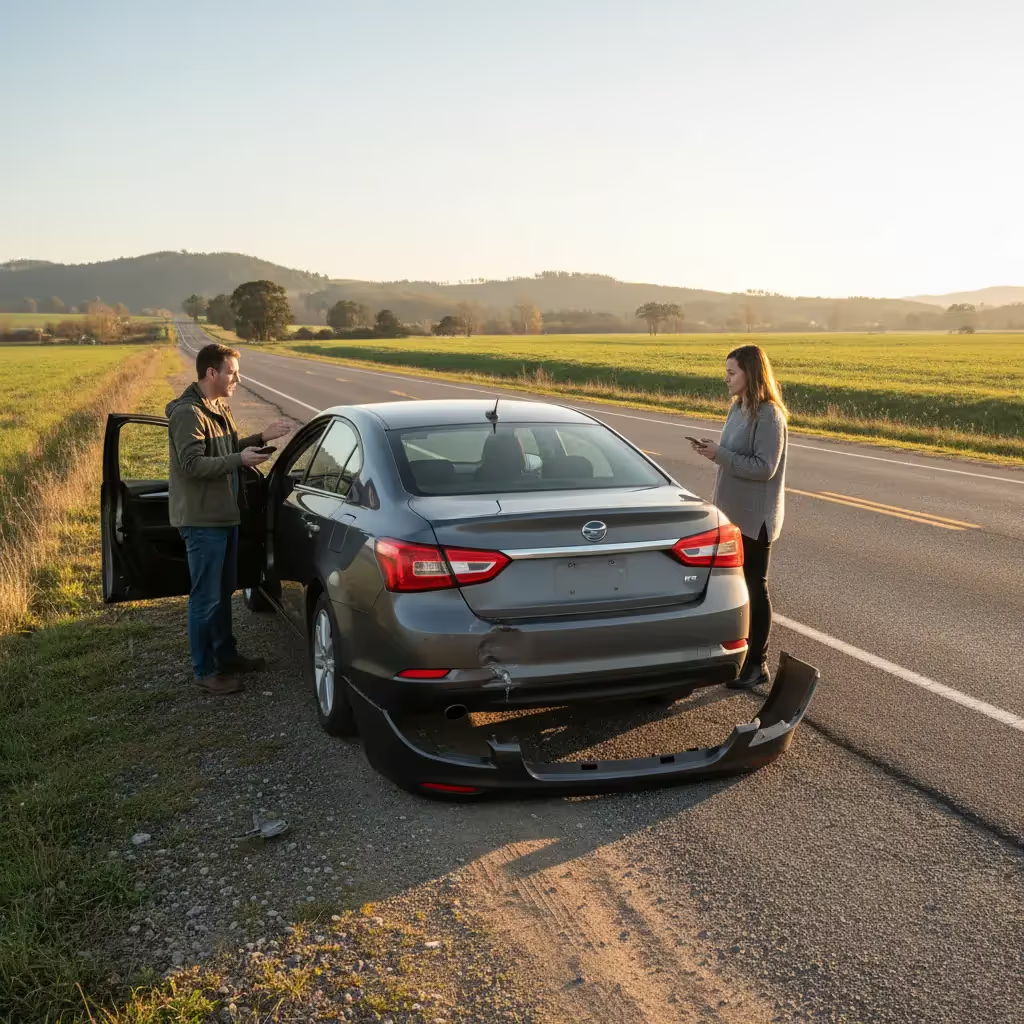
Out-of-state crashes can make it harder to track down the correct police report.
Each state has its own rules about who can get a report and how. Many treat you as an “involved party” and let you order it online; others ask for a notarized form, a copy of your ID, or proof of interest as a vehicle owner, attorney, or insurance representative. For common timelines and release practices, see our in-depth police report timing article or the broader guide on how to get a police report when you’re far from the crash state.
A simpler route: let a specialist track it down
Instead of spending hours guessing the right portal, many drivers hand this task to a retrieval service like AccidentReportHelp.com. You share the basics—date, location, vehicles, and any clues you have—and the team:
- Identifies the likely reporting agency (city, county, or state).
- Checks which system that agency uses for crash reports and submits the right form with the proper fee.
- Tracks status until the report is released and emails you a secure PDF copy.
That support can be especially helpful if your accident was in a major metro area such as an Orlando accident report search or you need a Chicago accident report while you’ve already flown home.
If you want a deeper overview of how state insurance regulators view auto claims and consumer rights, the National Association of Insurance Commissioners offers consumer guides by state.
Step-by-step: use your police report to support an auto diminished value claim
Once you have your report, the goal is to turn scattered documents into one organized Diminished Value Packet you can share with insurers, dealers, or attorneys.
Step 1: Check the basics on the report
Confirm the report lists:
- Your full name and correct contact information.
- Your vehicle’s year, make, model, and VIN.
- The correct insurance company for each driver.
- Date, time, and location of the crash.
If there’s a major mistake (wrong car, wrong VIN, missing driver), note it and talk with your attorney or the officer’s records department about possible corrections or supplements. For a deeper walkthrough of what each section means, see our guide to reading your police report.
Step 2: Highlight details that support severity
Diminished value is usually taken more seriously when damage is more than minor. Your report may show this through:
- A diagram indicating a hard rear-end or side-impact collision.
- Notes that the vehicle was towed from the scene.
- References to airbag deployment or suspected frame damage.
Mark those passages so you can point them out when you discuss value.
Step 3: Gather your Diminished Value Packet
Create a single packet or digital folder that includes:
- The full police crash report (and any supplements).
- Photos of pre-crash condition if you have them.
- Photos of post-crash damage and final repairs.
- Initial repair estimate and final invoice.
- Market value estimates (KBB printouts, dealer trade-in offers, etc.).
This organized Diminished Value Packet makes it much easier to show, in one place, what the car was worth before the crash and what informed buyers will pay now.

An organized Diminished Value Packet makes negotiations with insurers much clearer.
Step 4: Talk with the at-fault insurer (or your attorney)
Before you accept a settlement that could close the door on later claims, ask:
- Does this offer include diminished value, or just repair costs?
- How did you calculate that part of the offer?
- Have you reviewed my police report and supporting documents?
In many states, once you sign a broad release, you may not be able to reopen the claim. If you’re unsure about your rights or timing, this is the moment to speak with a property damage or personal injury attorney in the state where the crash happened.
Step 5: Keep copies and claim numbers organized
Save your report PDF, claim numbers, and key emails in a single folder (cloud storage is ideal). Months or years later, if a dealer cuts their offer because of the accident history, you’ll have a record of how the insurer handled diminished value.
If you misplace the report, services like AccidentReportHelp.com can help you re-request it from the agency as long as the state still maintains access.
Common questions about car value after an accident and police reports
1. Do I need a police report to make a diminished car value claim?
Not always—but it usually helps. A police report gives adjusters and lawyers an official snapshot of what happened and how serious the crash was, which can make your diminished value claim easier to discuss and document.
2. What if the officer never filed a full report?
In some minor fender-benders, officers only issue an exchange-of-information slip instead of a full report. You can still rely on photos, repair records, and statements, but insurers may be less open to a higher diminished value number without an official crash report, so it’s smart to ask a local attorney how your state treats these situations. If you’re truly dealing with no police report, you may need to rebuild the evidence from other records.
3. My crash was months ago. Is it too late to get the report?
Usually not. Many agencies keep crash reports for years, though older files may move into archives or state systems. It’s still worth requesting a copy—especially before you negotiate trade-in value or sign a final settlement—and a retrieval service can help track it down if the crash was in another state. Our police report timing guide explains typical release windows and archive practices.
4. Will my own insurer help me get the report?
Sometimes. Your insurer may already have a copy in the claim file, but they might not share it quickly or completely. Getting your own official copy directly from the agency or through a retrieval service like AccidentReportHelp.com gives you more control over what you can review and share.
5. How much money are we really talking about?
There’s no one-size-fits-all number; it depends on your vehicle and the crash details—age, mileage, pre-crash value, damage severity, repair quality, and local market all matter. In the main section above, you saw how a common insurer formula starts with a capped percentage of your car’s value and then adjusts for damage severity and mileage. Using your Diminished Value Packet—police report, repair docs, photos, and market quotes—helps you and your attorney judge whether the insurer’s diminished value offer is in a reasonable range for your specific car.
How AccidentReportHelp.com makes report retrieval easier
If you’re dealing with an out-of-state crash, a missing report number, or just limited time, it can be easier to let a specialist handle the process through AccidentReportHelp.com.
- We work with police, sheriff, and highway patrol systems in all 50 U.S. states to identify the right agency for your crash.
- You submit one short online form; we place the request, pass through only the official agency fee, and monitor status until release.
- We email your official crash report PDF as soon as the agency posts it, backed by a money‑back guarantee if the report can’t be retrieved.
Key takeaway
Your police crash report is more than paperwork—it’s the backbone of how insurers, lawyers, and dealers view your accident and your car’s value. Getting the correct report from the right agency, even in another state, gives you solid footing to discuss any diminished value before you accept a settlement that closes the books for good.