
Crash Report Car Safety Features: Hidden Details That Speed Claims
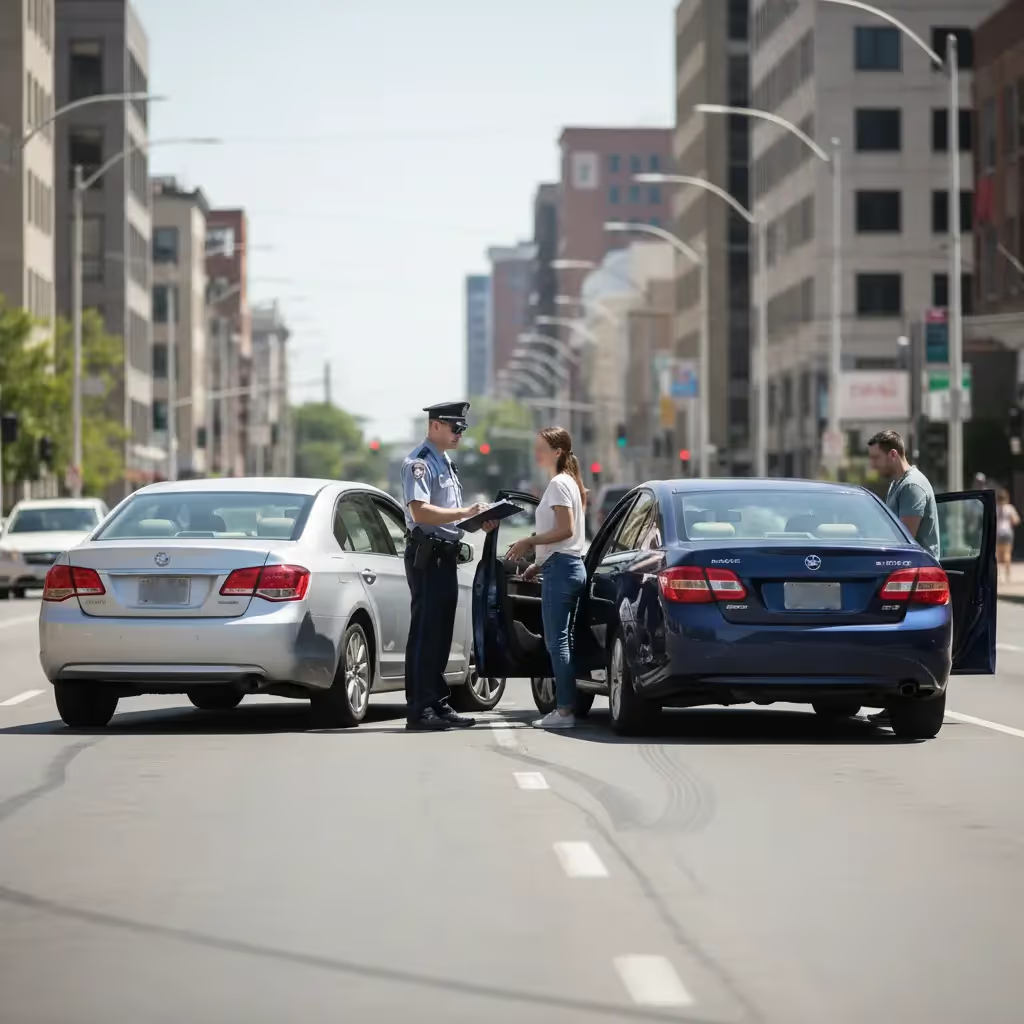
A police crash report captures more than just who hit whom – it also records key safety features on each vehicle.
After a crash, most people focus on the photos, the tow truck, and the calls from insurance. The police crash report feels like paperwork you’ll “get to later.” But buried in that report is a quiet hero: the line (or box) that lists your car safety features. That little section can say a lot about what happened in the seconds before impact — and how insurers and medical payers look at your claim.
If you’ve never given that box a second glance, you’re not alone. Officers fill out these forms every day; drivers usually see them once in a lifetime. Yet those short notes about airbags, braking systems, and stability control can support fault arguments, speed up payouts, or raise useful questions about defects and recalls.
TL;DR: Why the safety section of your crash report matters
- That tiny safety-tech box can support your version of how the crash happened.
- Systems like auto brake, auto cruise control, and stability control may be listed by name or code.
- Clear, accurate safety details can help insurance adjusters and medical payers move faster.
- If something looks wrong, you can ask questions or share extra documentation.
- You can find your official crash report instead of calling multiple departments.
What your police crash report really says about your safety tech
A standard police accident report has only a few spots where safety systems show up: checkboxes, short codes, or a brief narrative. It doesn’t read like a car manual, but to an experienced adjuster or attorney, those tiny notes speak loudly.
For example, a report might show:
- “Front, side airbags deployed”
- “ABS, ESC present”
- “Driver assist: auto brake / collision mitigation”
- “Cruise control engaged” or “adaptive cruise”
Each of those details helps answer questions such as: How hard was the impact? Was the driver using driver-assistance technology? Did the vehicle have modern crash-avoidance systems that might have changed the outcome?
On many reports, a single checked box about braking or stability control tells an adjuster more than three paragraphs of written notes.
Why safety-tech details matter for insurance and medical payouts
Insurance companies, medical payers, and sometimes courts lean heavily on what’s inside your police report. Safety-system notes may influence how they look at:
- Fault and responsibility
Suppose your report shows that your auto brake system activated before a rear-end collision. That supports the idea that you reacted, your system tried to slow the car, and the crash still happened. In a disputed case, that can help your team argue that another driver following too closely, not you, set the stage for the crash.
- Injury patterns
Airbag deployment, seat-belt use, and stability control all affect how your body moves during a collision. When a doctor, claims professional, or lawyer sees that your injuries match the safety-tech notes, that alignment can support your medical bills.
- Vehicle defects and recalls
Sometimes, a broken auto brake system, faulty sensor, or outdated software update plays a role. If the officer notes “suspected brake failure” or “collision mitigation inoperative,” that can raise questions about defects. Your lawyer might combine that with federal safety recall data when deciding what to do next.
Bottom line: even short safety-tech notes can support your story and make it easier for decision-makers to connect the dots.
Common safety features you’ll spot in a crash report

Modern vehicles record activity from systems like auto brake, lane assist, and stability control that may be noted in your crash report.
Every state’s report form looks a little different, but many use similar language for the same systems. Here’s what you might see and why it matters.
Airbags and seat belts
Expect simple lines such as “airbag deployed / not deployed” and “restraint used.” It may feel basic, but those two details often shape how injury claims are viewed. If the report shows you were belted, that generally helps confirm that you took reasonable steps to protect yourself.
Auto brake system (forward-collision or AEB)
Modern vehicles often include some form of automatic emergency braking. On the report, this might show up as:
- “Auto brake system”
- “AEB” or “CMBS” (collision mitigation braking system)
- “Front crash prevention present”
If the officer writes that the auto brake system engaged — or that you reported a malfunction — that becomes a point of discussion with insurers, especially in rear-end or intersection crashes. Many modern cars include automatic emergency braking, one of several driver assistance technologies highlighted by NHTSA. Studies from the Insurance Institute for Highway Safety and NHTSA have found that it can cut rear-end crashes roughly in half compared with similar vehicles without it.
Auto cruise control (adaptive cruise control)
Traditional cruise control just holds speed. Auto cruise control (often called adaptive cruise control) uses sensors to maintain distance from the car ahead. On a crash report, you might see terms like “adaptive cruise,” “intelligent cruise,” or a quick note like “cruise engaged.”
Why does that matter? If auto cruise control was active in highway traffic, your claim file may include questions about whether sensors detected the slowing vehicle in front of you, whether you overrode the system, or whether another driver cut in suddenly.
Electronic stability control and Vehicle Stability Assist (Honda)
Electronic stability control (ESC) helps keep a car from skidding or spinning out. On many Hondas, this system is branded as Vehicle Stability Assist (VSA). Officers may write:
- “ESC present”
- “Stability control on”
- “Vehicle Stability Assist Honda” or simply “VSA”
In rollover, spin-out, or wet-road crashes, that little ESC/VSA notation can be a clue. If stability control was present and working, a sudden swerve by another driver or a patch of oil may better explain why the car lost grip.
Want more details on how these systems work? The Insurance Institute for Highway Safety offers clear explanations of common driver-assistance technologies.
Other driver-assistance features
Reports sometimes mention:
- Lane-keeping assist or lane-departure warning
- Blind-spot monitoring
- Rear cross-traffic alert
- Parking sensors or backup cameras
These notes can matter in sideswipes, backing crashes, and parking-lot incidents. They can support your claim that you checked mirrors and used your tech, even if another driver still caused the impact.
How officers actually record safety features at the scene
At the scene, officers rely on what they can see and what drivers report to document safety systems accurately.
Most officers don’t have time to scroll through every menu on your infotainment screen. Instead, they rely on:
- What they can see (airbags, warning lights, skid marks)
- Your statement and the other driver’s statement
- The VIN and vehicle type, which hint at standard equipment
- Training on the state’s crash-reporting form
Some officers write specific brand names like “Vehicle Stability Assist Honda.” Others stick to generic codes like “ESC.” That’s why your clear, calm explanation at the scene — “My automatic braking activated and I still hit them” — can influence what ends up in the report.
If your crash has already happened and you never saw the officer write anything down, don’t panic. The finished report is what matters, and you can request it after the fact through your local agency or a nationwide accident report retrieval service.
What to check when you get your crash report (quick checklist)
Once you have the official report, set aside a few minutes to review the safety-tech sections.
Safety-tech checklist
- Are airbags listed correctly (front, side, curtain) and marked “deployed” or “not deployed” as you remember?
- Does the report note seat-belt use for each seating position that matters to your claim?
- Is your auto brake system shown as present? If it activated, is that mentioned anywhere?
- If you were using auto cruise control, does the narrative or checkbox section reflect that?
- For Honda owners: do you see “Vehicle Stability Assist,” “VSA,” or a generic ESC/stability-control note?
- Are there any references to defects, recalls, or suspected mechanical failures?
You don’t have to turn into an engineer. Your goal is simply to spot big mismatches between what happened and what the report says, especially about safety systems that clearly played a role.
What to do if safety features are missing or wrong
Mistakes happen. Officers are human, and crash scenes are hectic. If you notice missing or incorrect safety-tech notes, you have a few options:
- Gather your own documentation. Owner’s manual pages, dealership printouts, or screenshots from your vehicle app can confirm which systems your car has.
- Share concerns with your insurer. When you talk with the adjuster, you can say, “My car has automatic emergency braking and it activated — the report doesn’t mention that, but here’s documentation.”
- Ask about a supplemental statement. In some states, you may be able to submit a short written statement or correction request to the investigating agency. Response times and rules vary.
- Talk with a lawyer if you have one. They can advise you on whether a correction request makes sense in your situation.
Whatever you do, keep copies of everything. If you used Accident Report Help to obtain your report, store the PDF with your emails, medical bills, and claim notes so your paper trail stays in one place.
How to get your official crash report fast

You can request your official police crash report online instead of calling multiple departments.
You can ask the investigating agency for your report directly or use our online accident report service. Many people start with their local police department, only to learn the report is actually held by a county sheriff, state highway patrol, or another city. That often means more phone calls, more forms, and more waiting. For a deeper look at how long reports usually take, see our police report timing guide.
If you’d rather hand that legwork to someone else, Accident Report Help can help you:
- Figure out which agency holds your report
- Submit the request correctly the first time
- Track the status until the report is released
- Receive a secure PDF copy by email, usually within a short time after the agency posts it
You pay only the official agency fee, and if the report can’t be released, they offer a money-back guarantee. That way, you can spend your energy on recovery and next steps instead of chasing paperwork.
FAQs: car tech, crash reports, and claims
Do car safety features really affect my insurance claim?
They can. Nothing replaces the full picture — photos, medical records, witness statements — but a report that shows working safety systems may support your version of events. For example, if your auto brake system engaged and you still hit a car that cut you off, that detail can help show how little time you had to react.
Will my Honda Vehicle Stability Assist be listed by name?
Sometimes it is, sometimes it isn’t. You might see “Vehicle Stability Assist Honda,” just “VSA,” or a generic “ESC present” note. If stability control played a big role — say, keeping your vehicle from rolling over — it’s worth flagging that for your insurer or attorney.
What if my auto cruise control or auto brake system malfunctioned?
Tell the officer at the scene if you safely can, and repeat it when you speak with your insurer. If you later realize there may have been a malfunction, mention it during follow-up conversations and keep records of any dealership visits or recall notices. That information may matter if product defects become part of the discussion.
Is this article legal or medical advice?
No. This guide is for general information only and doesn’t replace advice from a lawyer, doctor, or other licensed professional who knows your specific situation. For full details, read our terms and disclaimer.
Key takeaway
The safety section of your police crash report may look like a small cluster of boxes and codes, but it carries real weight. When it accurately reflects systems like your auto brake system, auto cruise control, and stability programs such as Vehicle Stability Assist Honda, it can support your story and help move claims and medical payouts along.
If you haven’t seen your report yet, getting a clear copy is the first step. Once it’s in your hands, those “hidden” safety details become one more tool to help you move forward.