Can a Police Report Be Changed After an Accident?
This guide is for general information about U.S. crashes, not legal advice. Accident Report Help is a private report‑retrieval service, not a law firm or government agency.
A police crash report is the officer’s written snapshot of what happened at the scene, but it can sometimes be corrected or clarified.
TL;DR
- You usually can’t rewrite an officer’s opinions, but clear factual mistakes can often be corrected or clarified.
- The key is evidence: photos, medical records, and witness info that show what the report got wrong.
- Even if the police won’t change it, you can submit your own statement and evidence to insurers.
- Start by getting a clean copy of your crash report—our Find My Report tool can help.
You finally read your crash report and your stomach drops: the direction of travel is wrong, your neck injury is missing, or the officer hints you were partly at fault. Now you’re staring at an official‑looking document that doesn’t match what you remember.
The good news: the report usually isn’t carved in stone. In many situations, the answer to can a police report be changed after an accident is yes for clear factual mistakes, as long as you move quickly and back everything up with evidence. This guide walks through how to do that step‑by‑step, how to protect your insurance claim, and how our Find My Report service fits into the process if you still need a copy.
What a Police Accident Report Actually Does (and Doesn’t) Do
A police crash report is the officer’s written snapshot of the scene and what people told them. It usually includes:
- Who was involved and how to contact them
- Vehicle, insurance, and location details
- A diagram and short narrative of how the collision happened
- Codes for weather, road conditions, and possible contributing factors
Insurance adjusters lean heavily on these forms when they first decide fault and claim value. Many states use standardized crash forms (for example, North Carolina’s DMV‑349) and detailed coding manuals so officers record information consistently; North Carolina’s DMV‑349 crash report forms and instructional manual are one example. Nationwide, the National Highway Traffic Safety Administration estimates there were about 6.1 million police‑reported traffic crashes in 2023, showing how often these forms are used (NHTSA 2023 Traffic Safety Facts summary).
Still, the report is only one piece of evidence. Officers can mishear, mistype, or overlook things, and later insurers or courts may treat the report as helpful background—not the final word on who is right.
Can a Police Report Be Changed After an Accident?
In many cases, yes—at least for straightforward errors. Most departments let officers file an amended or supplemental report when new, credible information comes in, such as a corrected license plate number or a newly documented injury.
What usually cannot be changed is the officer’s judgment call about fault. If they wrote that you “failed to yield” or checked a box making you the contributing driver, they are rarely required to reverse that unless the new evidence is very strong, as noted in this Bryant Law Center explainer on changing police reports.
So your leverage is in two areas:
- Pointing out clear factual mistakes backed by documents, and
- Adding your own statement and evidence, so anyone reviewing the file sees both versions.
Common Types of Police Report Errors
1. Factual mistakes or missing details
These are usually the easiest to fix because they’re objectively wrong or incomplete. Common examples include:
- Misspelled names or wrong contact, vehicle, or insurance information
- Wrong date, time, intersection, or direction of travel
- Injuries, witnesses, or road hazards that never made it onto the form
You can often correct these by asking the officer to add a short supplemental narrative or by submitting your own statement with supporting records, similar to the steps in this Galloway Jefcoat FAQ on correcting accident‑report errors.
2. Judgment calls and conclusions about fault
These are the hardest to change. They include which driver “failed to yield,” ran a red light, was “following too closely,” or who the officer believes caused the collision overall. You may not be able to flip those conclusions, but strong photos, video, witness statements, and expert opinions can reduce how much weight insurers give them.
How to Correct a Police Report Step‑by‑Step
The REPORT method
Use this quick framework to remember the steps:
- R — Retrieve the full report.
- E — Examine it like an adjuster.
- P — Prepare supporting evidence.
- O — Outreach to the officer or records unit.
- R — Request corrections in writing.
- T — Tell your side in a supplemental statement if allowed.
Step 1: Get a complete, legible copy of your report
Before you can spot errors, you need a clean copy of the full report—not just a one‑page “exchange of information” slip. Many states release crash reports through a central DMV or DOT portal for a small fee, while some cities and highway patrols use their own systems; for example, North Carolina publishes statewide crash forms and statistics through its Crash Facts & Reporting portal. If you’re still waiting on a report, our guide on how long reports take explains typical timelines.

Review your full police accident report carefully so you can spot any factual errors or missing details.
If you’re not sure which agency handled your crash or you don’t have the case number, Accident Report Help can track it down using basics like your name, crash date, and location, then deliver the official PDF by email through our Find My Report tool.
Step 2: Read it the way an adjuster will
Set aside a few quiet minutes and read every line, including the diagrams and any codes. Adjusters tend to focus on:
- The narrative and sketch of how the crash occurred
- Contributing‑circumstances boxes (speeding, distraction, following too close)
- Injury boxes and any note about EMS transport
- Citations or violations listed for each driver
Make a short list of anything that looks wrong or incomplete and note where it appears (box number, page, or paragraph).
Step 3: Gather proof of the error
Officers are busy, and they’re much more likely to correct a report when you bring hard proof instead of just an argument. Helpful evidence can include:
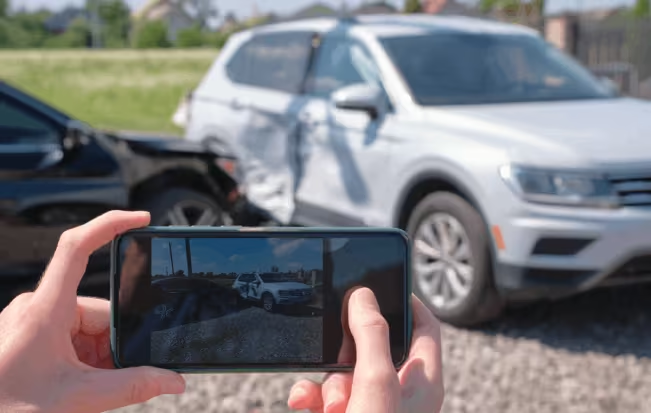
- Photos or video of the scene, vehicles, and traffic signals
- Medical records showing crash‑related injuries and dates
- Written witness statements or contact information that was left out
In some states, official crash‑report manuals even encourage supplemental reports when new information becomes available—which is exactly what you’re providing; see, for instance, the North Carolina DMV‑349 law‑enforcement crash‑report manual.
Step 4: Contact the reporting officer or records unit
Next, call the non‑emergency number for the agency listed on the report and ask for the reporting officer or the records division. Keep it calm and respectful:
- Identify the report number, date, and location
- Briefly explain the specific error or missing detail
- Ask how they prefer to receive your evidence (email, online form, or in person)
Many departments let officers file a short amended or “supplemental” report to fix factual mistakes or add clarifying details.
Step 5: Submit a clear written request and keep a paper trail
Whether you send an email, letter, or online form, your request should:
- List each error in the report and what the correct information should be
- Attach copies of your supporting documents and photos
- Include your full contact information
Some agencies will ask you to sign a short affidavit swearing that your corrections are accurate. Keep copies of everything you send and any replies you receive; your lawyer or insurer may need that later.
Step 6: Add your own supplemental statement if allowed
If the officer is unwilling to change certain parts of the report, ask whether you can add a written statement to the file. In some states, drivers and passengers can file a separate supplemental crash report or affidavit that becomes part of the official record alongside the original form, as described in this Wallace Pierce guide to amending North Carolina police reports.
Use this statement to calmly explain:
- What you saw and did before, during, and after the crash
- Any key facts the officer missed or misunderstood
- Which parts of the original report you disagree with and why
Stick to facts, not speculation. Assume a judge, jury, or adjuster might read every line.
Will Asking for Changes Hurt My Insurance Claim?
When you’re honest and consistent, asking for corrections usually helps rather than hurts. Insurers expect some cleanup once people see the finished report and are used to drivers flagging typos, missing injuries, or incorrect diagrams, as noted in this FCHC Law article on errors in accident reports.

Insurance adjusters rely on crash reports, but they also review any clarifications and evidence you provide.
What raises eyebrows is a dramatic shift in your story with no supporting evidence—for example, changing from “I wasn’t hurt” to “I have permanent disability” months later, without medical records in between. That’s why gathering proof before you request changes matters so much.
“You’re not trying to rewrite history; you’re trying to make sure the written history matches what actually happened.”
Even if the police decline to amend the form, you or your lawyer can still send your evidence and a short written explanation directly to the adjuster so it becomes part of the claim file, a strategy also suggested in this Morgan & Morgan overview on changing police reports.
When You Probably Need a Lawyer’s Help
You can usually request routine corrections on your own. It’s wise to talk with an experienced car‑accident lawyer in your state if:
- Anyone in the crash had serious injuries or a long hospital stay
- The report blames you and you strongly disagree
- A commercial vehicle, rideshare, or government vehicle was involved
- The other driver’s insurer is already using the report to deny or lowball your claim
A local attorney knows your state’s evidence rules and can handle back‑and‑forth with both the police and insurers while you focus on getting better.
What to Do If the Department Won’t Change the Report
Sometimes, despite your best efforts, the officer or department will not amend the report. That doesn’t mean you’re out of options. You can:
- Make sure your written statement and exhibits are in the police file and in your claim file
- Have your lawyer challenge the report’s accuracy during settlement talks or, if necessary, in court
- Ask the adjuster to weigh your photos, medical records, and witness statements more heavily than a brief, one‑time scene investigation
Many courts treat police reports as hearsay unless they fit into a specific exception, so your live testimony and other evidence can matter more than the officer’s checkboxes. Bryant Law Center’s discussion of changing police reports notes that even when the form stays the same, strong supporting evidence can still carry the day. The bottom line is to build a solid trail of accurate documentation, even if the original report never changes.
How Accident Report Help Fits Into the Process
Correcting mistakes starts with having the right document in your hands. Accident Report Help is a nationwide service that helps drivers in all 50 states locate and retrieve their official police accident reports.

Accident Report Help makes it easier to find and download the official police report you need to request corrections.
- Confirm which police, sheriff, or highway‑patrol agency holds your crash report
- Request the official report on your behalf, even without a case number
- Deliver a secure PDF by email once the agency releases it
If an amended or supplemental report is later added, you can request an updated copy so your records match what the agency has on file. For crashes in larger cities, our city pages—such as this guide to NYC accident reports—can also help you understand local report portals before you start.
FAQs
How long do I have to ask for a correction?
There’s no single nationwide deadline, so it’s safest to ask for corrections as soon as you spot an error—ideally within a few days or weeks—while memories and evidence are fresh. If you’re unsure about time limits in your state, call the records unit or talk with a local injury lawyer.
Can I change a police report if I was partly at fault?
You usually can’t erase an honest admission that you made a mistake, but you can still correct factual errors or add clarifying details. Focus on objective points—like your actual speed, lighting conditions, or a missing witness—so insurers see the full context, not just the original checkboxes.
Do I need the report number to get my crash report?
Not always. Having the report or case number can speed things up, but many agencies can still find your crash report using your name, crash date, and location. Accident Report Help can run the same kind of search nationwide and retrieve the official report for you through our Find My Report service.
Will updating the report change my traffic ticket too?
Usually, no. The officer’s crash report and your citation are related but separate; correcting the report might support your argument in traffic court, but it doesn’t automatically change or cancel a ticket. If you received a citation, talk with a local traffic or injury lawyer about how the updated report might affect your options.
AI disclosure: This article was drafted with the help of AI technology and reviewed by the Accident Report Help editorial team for clarity and accuracy.
Legal disclaimer: This content is for informational purposes only and does not create an attorney‑client relationship or replace advice from a licensed lawyer in your state.