
Personal Injury Attorney Guide to Police Crash Reports | Accident Report Help

Personal injury attorneys rely on police crash reports as the first anchor document in most motor vehicle claims.
Your intake team signs a promising rear‑end collision, but by mid‑afternoon, your paralegal is still on hold with different agencies trying to track down one basic document: the police crash report. For any personal injury attorney, that bottleneck is familiar.
This guide gives personal injury firms a simple three‑step system—the Crash Report Playbook for Personal Injury Attorneys - to get police crash reports from the right agency in any state with less phone tag. You will see where reports usually live, what intake details your staff should collect on day one, and when it makes sense to hand the process to a concierge service such as Accident Report Help.
TL;DR: Fast path to your crash report for personal injury firms
For personal injury firms, the Crash Report Playbook for Personal Injury Attorneys boils down to three steps:
- Step 1: Get complete intake data: exact location, agency at scene (if known), report or incident number, and towing info.
- Step 2: Use the roadway type to guess the likely agency (city, county, state police, or turnpike authority), then confirm.
- Step 3: Request online when possible, calendar follow‑ups, or send the case through a report retrieval concierge to save staff time.
Why the crash report matters so much to injury cases
Police crash reports are hardly perfect, but they are still the first “anchor” document in most motor vehicle claims. They shape how adjusters set reserves, how defense counsel frames liability, and, in truck cases, how a motor carrier’s insurer reacts before you ever send a demand.
According to the National Highway Traffic Safety Administration (NHTSA), there were an estimated 6.1 million police‑reported traffic crashes in 2023 across the United States.1 For each of those, some law enforcement officer completed a detailed report that records core facts such as:
- Crash date, time, and precise location
- Drivers, vehicles, insurance, and citation details
- Injuries, EMS transport data, and officer observations or narrative
Getting that document early lets you quickly assess liability, available coverage, and how closely the officer’s account lines up with your client’s story—so you know sooner how much to invest in the case.
Step 1: Intake details that make report requests painless
The biggest time‑waster for many firms is not the government portal; it is incomplete intake. If your team skips key questions up front, they end up guessing at spellings, dates, and locations later.
The Report‑Ready Intake Checklist: Intake Questions Every Personal Injury Attorney Should Standardize

A standardized intake checklist helps your team capture every detail needed to request the police crash report quickly.
- Full legal names and dates of birth for each client
- Exact crash date and time
- Precise location: intersection, mile marker, direction of travel, nearest city
- Whether police came to the scene and, if so, which agency (city, county, state police, highway patrol, etc.)
- Any card, exchange slip, or incident number given by the officer
- Whether anyone was cited and for what offense
- Where each vehicle was towed and by which company
- Hospital or ambulance name, if clients were transported
Many firms keep this as a one‑page intake form in the fee‑agreement packet or build it into their case‑management software, tied to a short workflow or an external guide. Pairing it with a simple online crash report request form lets staff trigger the next step in seconds.
“If you cannot spell the client’s last name or pinpoint the crash location, both the clerk and your staff will burn time hunting for a report that is already sitting in a database.”
Step 2: Figure out which agency actually has the report
This is where the chase usually starts. Your client says, “The trooper took the report,” but the state patrol has nothing. The sheriff thinks it was inside city limits; the city says the highway is state jurisdiction.
Use the road type to guess the likely agency
While every state is a little different, this rough guide holds true in much of the country:
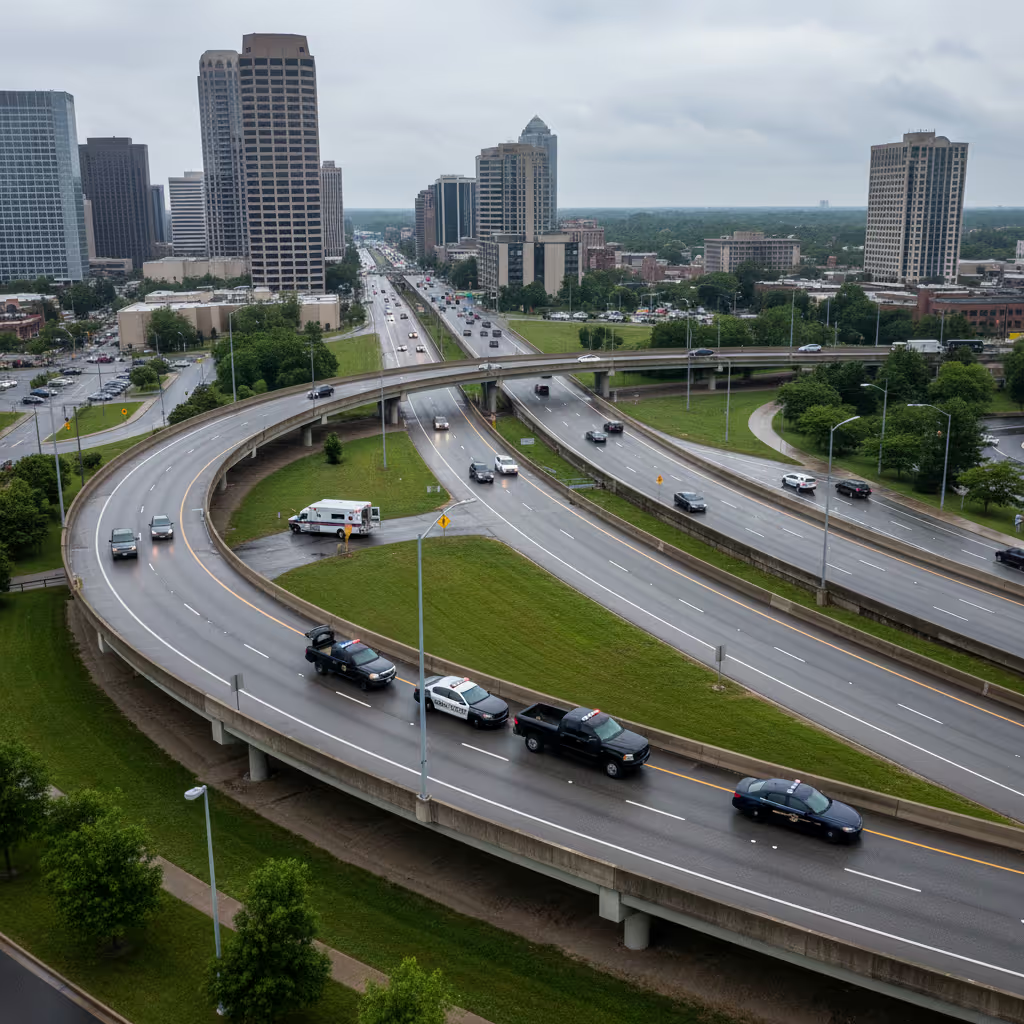
Crashes that draw city police, state troopers, and EMS can leave multiple agencies involved in the final police crash report.
Use your client’s photos, GPS pins, or hospital intake paperwork to nail down the location. From there, most agencies will at least tell you, “That is actually handled by the state police,” or direct you to the correct portal.
Watch for multi‑agency and cross‑border crashes
Some wrecks, especially those involving commercial trucks, draw multiple agencies. A trooper might handle the main report while a local officer manages traffic or assists with translation. In border areas, it is not unusual for officers from two states to respond.
For those cases, ask clients:
- Did you see more than one type of uniform or patrol car?
- Did any officer mention that “the report will be filed with the state” or “with TxDOT/DMV”?
- Did a tow operator or hospital staff tell you which agency would handle paperwork?
If your team regularly runs into dead ends, keep a short reference list by state and roadway type, and bookmark a public‑facing crash report FAQ or city‑specific guides like our Houston accident report help page. Services like AccidentReportHelp.com use internal reference tools to match crashes to the right agency or portal; your equivalent can be a simple spreadsheet or in‑house wiki.
Step 3: Request the report the smart way
Once you know the likely agency, the rest comes down to method. Each state leans on a mix of online systems, mail‑in forms, and in‑person requests.
Common ways states release crash reports
- Directly from the agency – Some police departments and sheriff’s offices handle their own public‑records desk and will email or mail reports on request.
- Through a state portal – Many states route crash reports through centralized systems, such as New York’s DMV crash‑report portal and the Texas Department of Transportation’s Crash Report Online Purchase System for CR‑3 reports.25
- Via a third‑party vendor – Many states contract with commercial platforms that sell certified copies.
- By mail or in person only – A handful of smaller agencies still rely on paper requests and in‑office pick‑up.
Across these systems, you will typically need some combination of:
- Client identifiers: name, date of birth, and at least one plate number or VIN
- Crash date and approximate time
- Crash location (county, city, intersection, or mile marker)
- Report, incident, or case number (if available)
- Proof that you or your firm represent an involved party
Cut down on manual chasing with a concierge service
If your staff spends hours each week inside unfamiliar portals, consider routing some requests to a report‑retrieval concierge such as AccidentReportHelp.com. You or your client submit the same intake details described above; the service locates the correct agency, submits the request using that agency’s preferred method, and tracks it until the PDF is available.
That approach is especially useful for out‑of‑state, multi‑agency, or high‑volume matters—see “When it makes sense to outsource report retrieval” below for specific use cases. For files you handle in‑house, document your steps in the case notes and keep a single reference (an internal SOP or an external guide such as the crash report FAQ) so your team is not reinventing the process every time.
Special issues for truck and commercial crashes
If you handle truck and commercial cases as a personal injury attorney or lawyer for truck accident victims, you already know: commercial wrecks generate more paperwork and more chances for key documents to fall through the cracks.
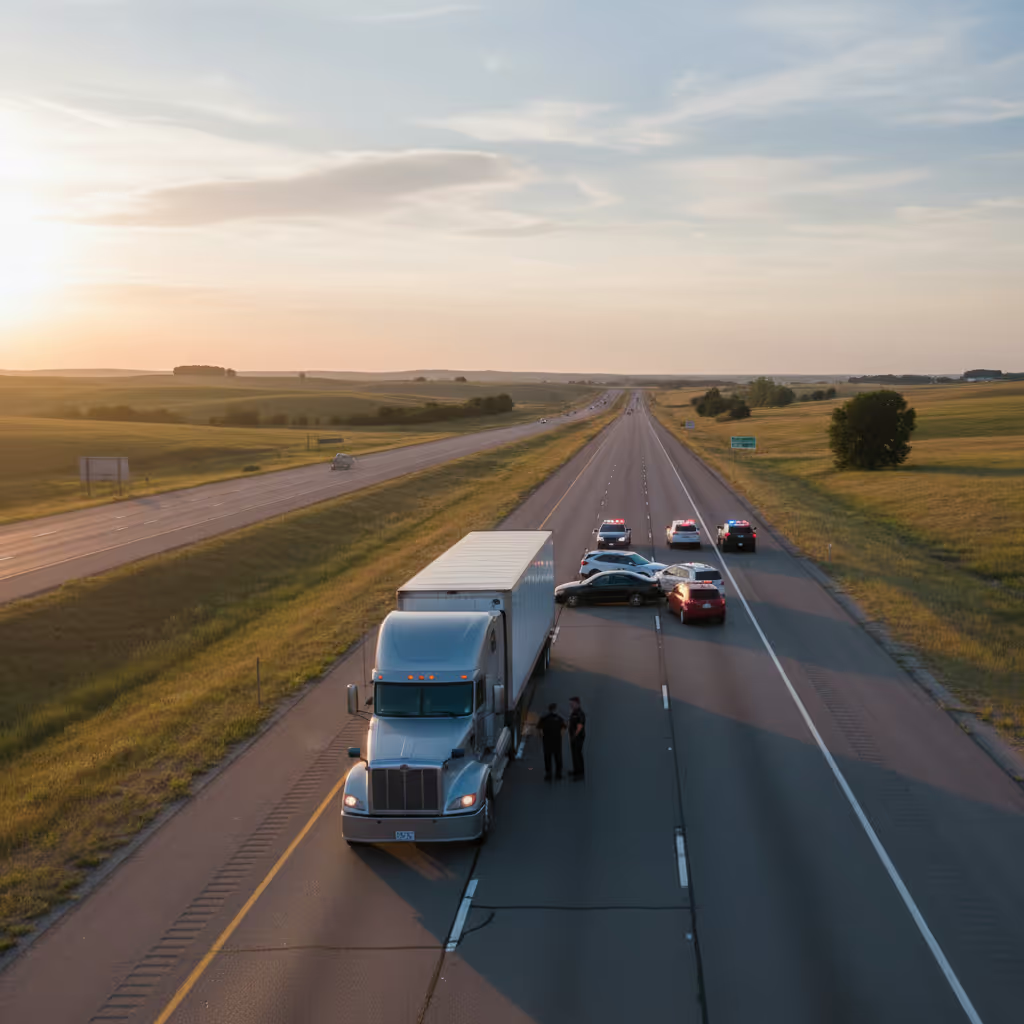
Truck and commercial crashes often produce more complex police crash reports that point to deeper evidence and multiple insurance layers.
What is different in a truck crash report?
Truck and bus crashes often use the same basic form as passenger vehicles, but they usually add:
- Carrier name and U.S. DOT number
- Hazardous materials data
- Weight, configuration (e.g., tractor‑trailer, doubles), and cargo
- Driver hours‑of‑service and logbook flags
- Special checkboxes for federal reporting programs
For your case, that single report can point you to deeper evidence: electronic logging‑device data, maintenance records, and company safety policies. Getting it early lets you send preservation letters quickly and speak knowledgeably to the adjuster who is staring at the same document.
Practical tips for truck‑case reports
- Ask clients whether a different team (e.g., state commercial‑vehicle enforcement) showed up after the initial officer.
- Request both the primary report and any supplemental or reconstruction report, if available.
- Note every carrier or broker name that appears; they may lead to additional insurance layers.
Because truck wrecks so often cross county and state lines, this is where a report‑retrieval service with nationwide coverage can save real time—especially for firms that market themselves as trucking accidents attorneys and routinely handle cross‑border crashes.
State‑by‑state quirks to keep on your radar
Crash reports sit inside state‑specific public‑records rules. Three variables drive most of the differences:
- Waiting periods: Many states release reports within about 7–30 days, but large systems like New York’s DMV crash‑report portal can show a longer lag between crash date and online availability.2
- Eligibility rules: Some states limit access to involved drivers, their representatives, and listed insurers, and may provide redacted copies to the general public.
- Certification requirements: Courts or insurers sometimes ask for a “certified” copy with a seal or electronic attestation, which can require a slightly different request path or fee.
Instead of memorizing all 50 systems, keep a short reference for your most common states and rely on trusted external guides that track updates to portals and eligibility rules. For big‑picture context on how police crash reports feed national safety data, NHTSA’s Crash Report Sampling System is a useful overview.3
Common questions from injury firms
How long does it usually take to get a police crash report?
Most agencies release crash reports within about 7–30 days of the collision, although large statewide systems can take longer. Once a report is posted to an agency or DMV portal, you can usually download it the same day or receive it by email through a retrieval service.
Can a personal injury lawyer get a crash report from another state?
Usually, yes. States generally allow involved drivers, their insurers, and their legal representatives to purchase crash reports regardless of where they live, as long as you supply enough identifying information and follow that jurisdiction’s eligibility rules.
What if the police crash report is wrong or incomplete?
Police crash reports are not the final word. If there is a serious error—such as listing your client as “uninjured” despite a hospital transport—you can ask the officer for a supplemental report, supply supporting records, and then use your own evidence and experts to challenge the form if it is not corrected.
What if no report was taken?
Some minor crashes never receive a police‑completed report, but many states require the driver to submit a self‑report form (for example, New York’s MV‑104 for qualifying crashes).4
When it makes sense to outsource report retrieval
Keeping report requests in‑house can work for purely local crashes. But for a personal injury attorney handling multi‑state or high‑volume work, a dedicated police accident report service can free up meaningful staff time.
Good candidates for a concierge service
- Out‑of‑state crashes: Your firm represents a client hurt while traveling in another state.
- Multi‑vehicle or truck cases: You suspect multiple reports, supplements, or mixed local‑PD and state‑police involvement.
- High‑volume practices: Intake is humming, but staff is bogged down by portal logins and phone queues.
- Language barriers: Your client speaks limited English and struggles to answer agency follow‑up questions.
What a concierge service typically handles
With a nationwide service like Accident Report Help, you or your client complete a short encrypted form with the intake details you already collect. The service then:
- Identifies the correct police, sheriff, or highway‑patrol agency and request method
- Submits the request, tracks status, and emails a certified PDF copy within about 24–72 hours of agency posting
- Passes through the official agency fee (often between $5 and $25) and backs the request with a money‑back guarantee if the agency will not release the report
Because coverage is nationwide, you can use the same workflow for a fender‑bender down the street and a truck crash across the country—while keeping your team focused on liability, medical treatment, and case strategy.
One attorney quoted in AccidentReportHelp.com’s testimonials reports recommending the service to several clients because it reliably delivers reports faster than going through public channels. That kind of turnaround lets his staff focus on case work instead of spending hours on calls and unfamiliar portals.
Key takeaway
Getting a police crash report should not feel like a part‑time job for your staff. With the Report‑Ready Intake Checklist, a simple way to pinpoint the right agency, and the three‑step Crash Report Playbook for Personal Injury Attorneys for requesting reports online or through a concierge, you can turn a frustrating chore into a fast, predictable task.
Whether you are handling a sprain case down the street or a multi‑state truck collision, the fundamentals are the same: gather precise facts, reach the correct custodian of records, and let a reliable system—inside your firm or through a nationwide crash report service.
Disclaimer: This article is for general informational purposes only and is not legal, medical, or financial advice. Reading it does not create an attorney‑client relationship. AccidentReportHelp.com is a private service, not a law firm, and not affiliated with any government or law‑enforcement agency.