What Happens If You Don't Have a Police Report?
Disclaimer: This article is for general informational purposes only and is not legal or insurance advice. For advice about your situation, speak with a licensed attorney or your insurance company.
Your car is in the shop, your neck is sore, and now the insurance company wants paperwork you don't have. Maybe the police never came, or everyone treated it as “no big deal” and just exchanged information. Now you’re wondering: What Happens If You Don't Have a Police Report after a car accident—does your claim die, or can you still move it forward?

Many drivers still get repairs and medical bills covered without a report; you just have to work harder to prove what happened. This guide explains what no report really means for your claim, common police report timing issues, how to rebuild the evidence, and where a report retrieval service like AccidentReportHelp.com fits in if a report exists but you don’t have a copy yet.
TL;DR: No Police Report Doesn’t Automatically Kill Your Claim
- You can usually file an insurance claim even without a police report.
- Without one, insurers may question the story more or offer less.
- You can “rebuild” the evidence using photos, witnesses, records, and timelines.
- If a report exists, services like AccidentReportHelp.com can request it from the right agency.
Do You Lose Your Claim Without a Police Report?
Not automatically. In most situations, you can still file an insurance claim without a police report and, in some states, even a personal injury claim. Many low‑speed crashes are never reported to law enforcement.
What changes is how much proof the insurer wants. A clear report with matching driver stories is easy to resolve; a report plus conflicting stories and timeline gaps is slower and more contentious.
No police report doesn’t close the door on your claim – it just raises more questions that you’ll need to answer with other evidence.
Why Police Reports Matter So Much
A police crash report is essentially the “official story” of what happened, from a neutral third party. Adjusters and attorneys lean heavily on it because it usually includes details like the ones below (for a deeper breakdown, see Nolo’s overview of police report basics):
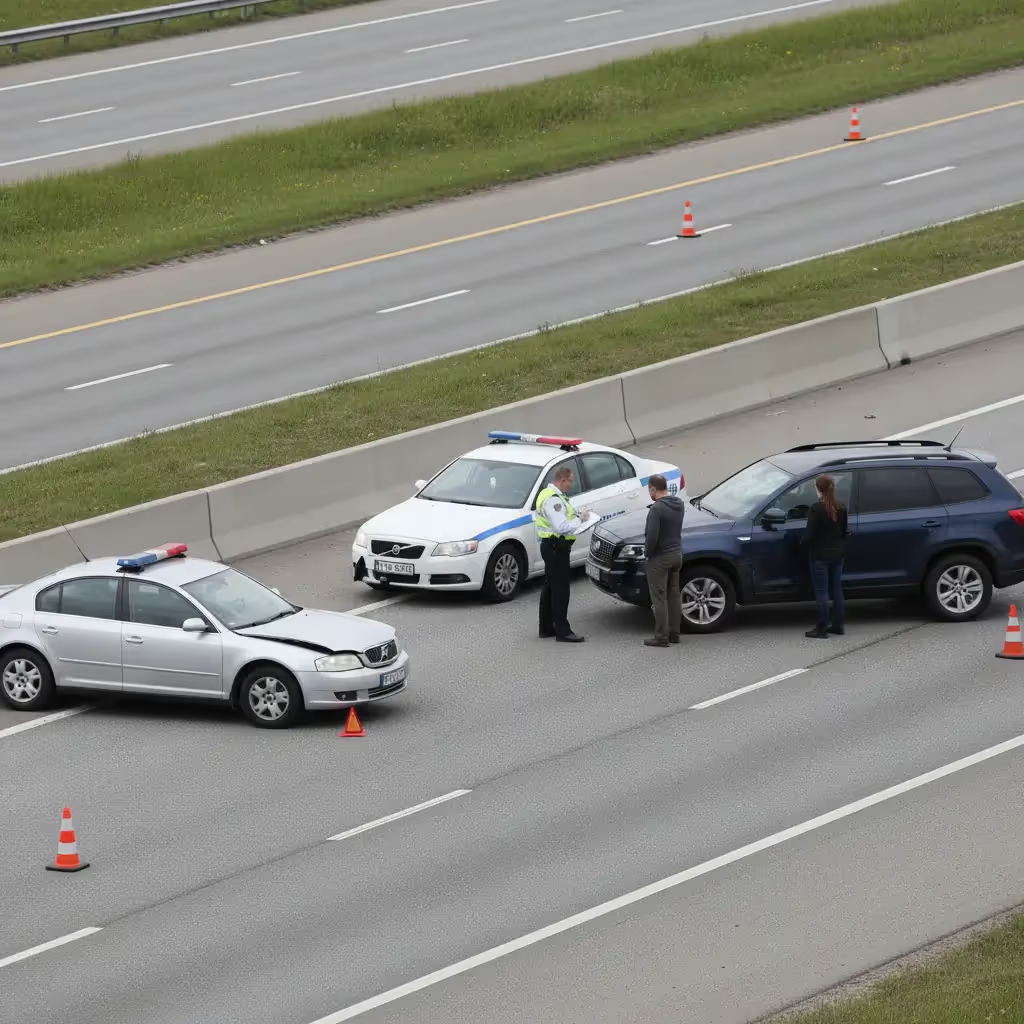
- Basic crash facts: date, time, exact location, weather, and road conditions
- Driver, passenger, and insurance information for everyone involved
- Diagrams and officer narrative describing how the crash occurred
- Any tickets, suspected violations, and key driver or witness statements
When that report lines up with your photos, medical records, and vehicle damage, your story is easier to believe. Without it, the insurer has less neutral evidence, which can:
- Slow down the claim while they investigate and request more statements
- Give the other driver room to change their story later
- Result in lower or more heavily disputed settlement offers
No Report at the Scene vs. You Just Don’t Have a Copy
Before you assume there is no report, it helps to separate two different situations:
Scenario A: The police never came, and no report was taken
This happens with minor property damage, especially in parking lots or private driveways. Each state has its own rules about when you must report a crash, often based on injury, death, or estimated damage. If the crash didn’t meet those thresholds or you simply didn’t call, there may be no report.
Scenario B: An officer responded, but you don’t have the report yet
In many roadside crashes, the officer writes up a report later, files it with their agency, and you’re given a card with a report number or agency name. If you lost that card or never got one, the report might still exist – you just don’t have a copy.
This is where a retrieval service can save you a lot of time. Instead of calling every police, sheriff, or highway patrol office that might have been involved, you can use AccidentReportHelp.com to track down the correct agency and deliver the report once it’s released. For city‑specific directions, local guides like the Houston accident report and Austin crash report pages walk through the process step by step.
How to Rebuild the Evidence After a Car Accident
If you’re truly in Scenario A – no officer, no ticket, no report number – that doesn’t mean “no evidence.” It just means you’ll build your case from other pieces, using a simple five‑step plan.
Use this 5-step Evidence Rebuild Checklist when there’s no police report, and you still need to prove what happened.

Step 1: Write down your own detailed timeline
As soon as you can, write out everything you remember while it’s still fresh:
- Where you were coming from and going to, plus street names or landmarks
- Traffic lights, stop signs, and approximate time of day
- How fast you were driving and what you saw just before impact
- What the other driver did or said right after the crash
This early “memory dump” can be powerful if stories shift later.
Step 2: Track down witnesses and contact information
If you grabbed names or numbers at the scene, reach out soon and ask if they’ll briefly confirm what they saw. If you didn’t, think about nearby businesses, homes, or parking lots—people sometimes remember a bystander saying, “I work at that store; they have cameras.” That can be your next lead.
Step 3: Collect photos, video, and digital clues
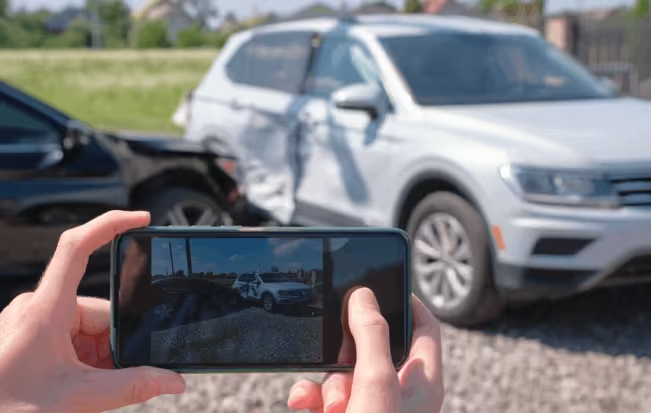
Photos and video can stand in for a lot of what would have appeared in a police report. Useful items include:
- Pictures of all vehicles from multiple angles
- Close‑ups of damage, skid marks, and debris
- Traffic lights, signs, or lane markings at the scene
- Screenshots from dash cams, home cameras, or business security systems
- Phone records showing 911 calls around the time of the crash
Step 4: Pull medical and repair documentation
Medical and repair paperwork is how you prove the crash caused real costs:
- Emergency room or urgent care visit notes
- Primary care or physical therapy records
- Diagnostic imaging reports (X‑rays, MRIs, CT scans)
- Body shop estimates and final invoices
Lawyers and insurers rely heavily on these records; legal resources like FindLaw’s car accident section explain how they’re used in injury claims.
Step 5: Check for 911, traffic, and business records
Depending on where the collision happened, there may be:
- 911 call logs confirming that a crash occurred at a certain time and place
- Traffic camera footage, especially at busy intersections
- Parking lot or storefront cameras from nearby businesses
Many of these records are time‑sensitive. If you think there may be video, contact the business or government agency as soon as you can, or ask an attorney’s office to send a preservation letter on your behalf.
Can You Still File an Insurance Claim Without a Police Report?
Yes. You can almost always report the crash to your insurer, share the details you have, and open a claim even if no officer ever came to the scene.
It becomes tougher when:
- The other driver now denies fault or blames you
- The crash was a hit‑and‑run or there’s a long delay before you seek medical treatment
- Injuries turn out to be more serious than they first seemed
In these situations, organized evidence matters. Free resources like the Insurance Information Institute’s guide on what to do after a car accident and its claim documentation tips can help you double‑check that you haven’t missed key steps.
Tips for talking with the adjuster when there’s no report
- Stick to facts you can back up with evidence.
- Keep a simple log of every interaction.
- If you’re unsure, say you’ll check your notes and follow up.
- Keep your story consistent over time.
Should You File a Late or “Walk-In” Police Report?
Some jurisdictions let you file an accident report later—online or at the station—especially for minor crashes where officers didn’t respond. Others have time limits or don’t accept late reports at all, so check the rules where you live.
General guidelines:
- Confirm your state’s requirements. Many DMV or Department of Public Safety sites explain when drivers must report crashes and how to file a self‑report; for example, Oregon posts its state crash reporting requirements online.
- Be honest about the delay. If you report days later, the officer may only be able to record your statement, not independent observations.
- Don’t exaggerate to “force” a report. Inaccurate details can hurt your credibility with insurers or in court.
When available, a late report still creates an official record of the crash date, location, and parties involved, even if it carries less weight than an on‑scene report.
When to Talk With a Lawyer
You don’t need a lawyer for every minor fender bender, but it can be helpful when:
- You were hurt and need ongoing treatment
- A loved one was seriously injured or killed
- The other driver is uninsured or underinsured
- The insurance company is denying your claim or dragging things out
- The lack of a police report is turning into the main excuse for low offers
Most personal injury attorneys offer free initial consultations. They can tell you how much the missing report matters under your state’s law and help you request any records that might still exist.
How Accident Report Help Can Still Help You
Here’s a twist many people don’t expect: there might be a police crash report even if you don’t have one in your hands. Maybe you left by ambulance, the other driver called 911 after you drove away, or the state highway patrol—rather than city police—handled the crash.

Accident Report Help was built for exactly this gap. Instead of guessing which agency has your report or wrestling with unfamiliar government portals, you can:
- Fill out a short online form with the crash details you know.
- Let the team identify the correct law enforcement agency and submit the request.
- Get your certified report securely by email once the agency releases it.
If no report exists, reputable retrieval services will tell you and won’t charge you. If you want to confirm either way, you can request your accident report and then focus on building the rest of your evidence.
Key Takeaways: Keeping Your Claim Alive Without a Police Report
- No police report usually doesn’t kill your claim. Many insurance claims still move forward, especially for minor crashes.
- The trade‑off is more work. Photos, witnesses, medical and repair records, and your own detailed notes become even more important.
- See whether a late or self‑filed report is allowed in your state, particularly after more serious collisions.
- Talk with an attorney if you’re hurt, blame is disputed, or an insurer is using the missing report as an excuse to delay or underpay.
- Make sure there truly is no report. A service like Accident Report Help can search the right agencies and confirm whether an official crash report exists.
If you’re stressed and unsure what to do next, taking one small step, like writing down your timeline, gathering your records, or starting a report search, can bring a lot more clarity.