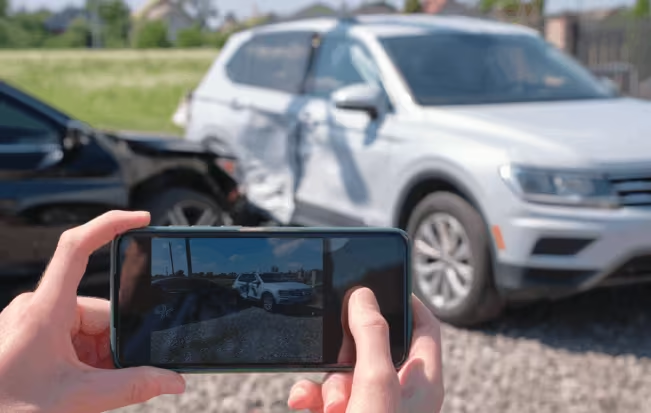
How to Get Police Report Number After a Car Accident
If you’re trying to figure out how to get police report number details after a crash, this guide walks through simple steps you can take yourself, plus an option that handles most of the legwork for you.

It’s usually possible to get your police report number remotely, even if you’re already back home in another state.
TL;DR: Quick Steps
- Gather the key crash details: date, time, exact location, and people/vehicles involved.
- Figure out which agency likely responded (city police, county sheriff, or state police/highway patrol).
- Call, email, or use that agency’s online portal to ask for your crash report and police report number.
Note: This article is for general information only, not legal advice. It was prepared with the help of an AI assistant and reviewed by our content team.
At a Glance: “Locate Your Report Number” Framework
This guide is built around a simple three-step framework you can use in almost any state:
- Gather crash details. Date, time, location, and who was involved.
- Identify the likely agency. City police, county sheriff, or state police/highway patrol.
- Contact records. Call, email, or use the agency’s crash-report portal to get your police report number and a copy of the report.
Step 1: Gather the Details You Already Know
Before you contact any agency, take a few minutes to write down the basic facts of the crash. Clear, specific details make it much easier for a records clerk to find the right report.

Having dates, locations, and driver information in one place speeds up your police report search.
Key details to write down
- Date and time window of the crash
- Exact location (intersection or mile marker) plus the city and county and type of road (street, county road, interstate, or state highway)
- Names of drivers and, if available, license plate numbers
- Any injuries or ambulance response
- Officer name, badge number, or business card you received
- Any temporary case, incident, or event number you were given
Step 2: Figure Out Which Agency Likely Responded
In many areas, several agencies overlap. A wreck on “Main Street” could be handled by city police, the county sheriff, or state police, depending on the exact spot.
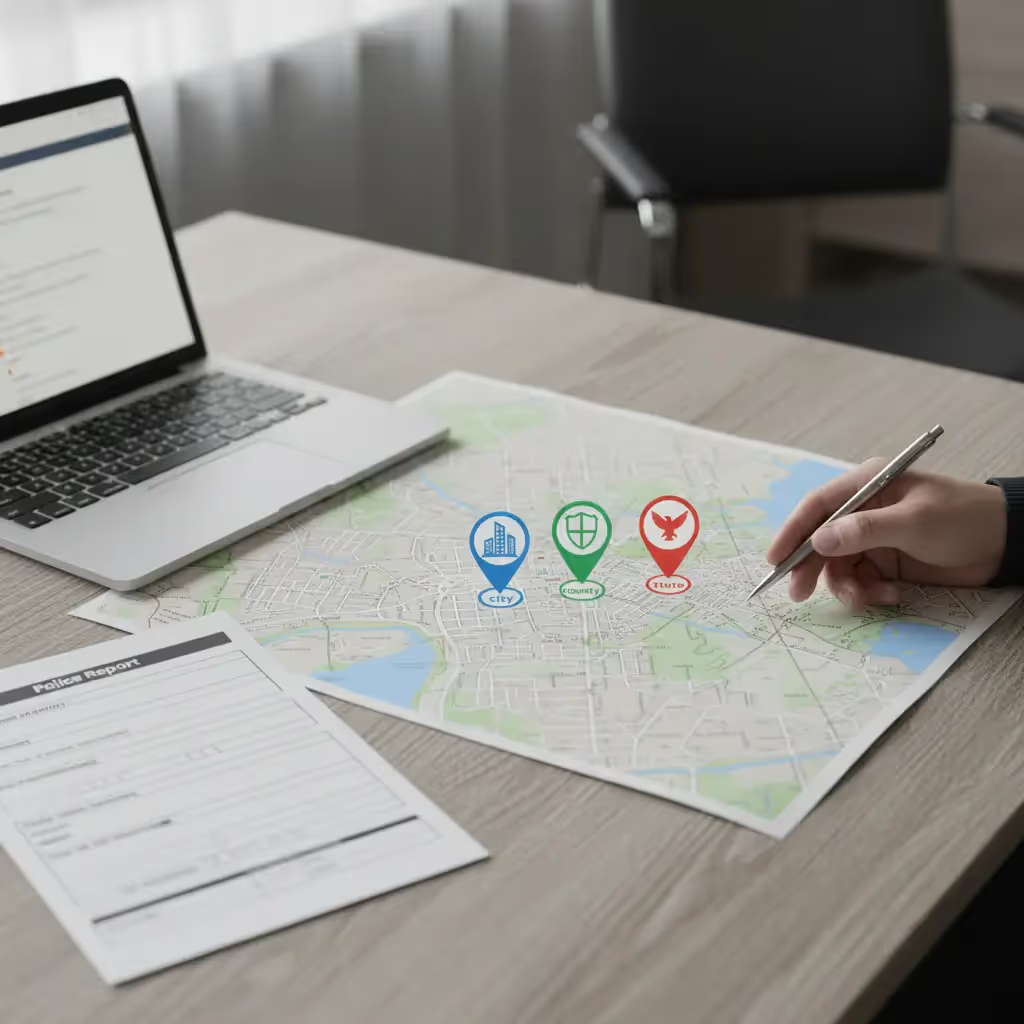
Matching your crash location to the right agency is the key to finding the correct police report number.
When it’s probably the city police
- The crash happened inside city limits on a local street.
- You saw patrol cars marked with the city’s name and “Police.”
- Any card or paperwork lists a specific Police Department for that city.
When it might be the county sheriff
- The crash was on a rural road or outside city limits.
- Vehicles were marked “Sheriff” or “County.”
- 911 dispatch mentioned the “sheriff’s office.”
When state police or highway patrol usually respond
- The crash happened on an interstate, freeway, or state highway.
- Units were marked “Highway Patrol,” “State Police,” or similar.
- It was a major crash (serious injuries, fatality, or a multi‑vehicle pileup).
Many state police and highway patrol agencies host online crash‑report portals, either themselves or through vendors. These systems can be helpful but confusing if you are not certain which agency took the report.
To give a sense of scale, data from NHTSA’s 2023 Traffic Safety Facts summary shows there were more than 6 million police‑reported traffic crashes in the United States in 2023, so having the right agency and report number matters when you deal with insurance or any follow‑up.
If your crash happened in a major city, you may also find a city‑specific Chicago accident report guide or similar resource that explains how local portals work.
Step 3: Contact the Agency from In or Out of State
Once you know the likely agency, contact its records office. Most departments can help you by phone, email, mail, or an online crash‑report portal, even if you now live in another state.
Start with the records or “reports” division
On the agency’s website, look for a link or phone number labeled “Records,” “Reports,” “Public Records,” or “Crash Reports.” Some states provide official portals, such as the Florida traffic crash report portal. When you call or email, be ready with:
- That you were involved in a motor vehicle collision
- The date, time window, and exact location of the crash
- Whether there were injuries and if an ambulance responded
- Names and license plates for the vehicles involved
- Any temporary case or incident number you were given
Then ask: “Can you help me locate the crash report and the police report number connected to this incident?”
If you’re calling from out of state
Let the clerk know you no longer live nearby. Many agencies can email or mail the report once they verify your identity and collect any fee. For example, the Massachusetts RMV crash‑report page notes that requests can take several weeks and include a non‑refundable search fee, and other states use similar timelines and costs.
Using online portals carefully
Many agencies use online crash‑report portals that search by last name, date, and city. If a search fails or you keep hitting dead ends, switch to a direct call or email so a records clerk can confirm you’re in the right system and, if needed, walk you through online crash report help instead of guessing through forms.
When a Report Retrieval Service Makes Sense
If you are injured, busy, or far from where the crash happened, calling agencies and learning each state’s rules can be a lot to manage.

A report retrieval specialist can handle the calls and follow‑up so you don’t have to manage every agency yourself.
A dedicated retrieval service like AccidentReportHelp.com lets you share your crash details once while a specialist identifies the right agency, submits the request, tracks it, and delivers the official report PDF.
Example: A driver from Texas was rear‑ended in a rental car on an interstate in Georgia and went home before the report was ready. A retrieval specialist contacted the likely agencies, confirmed the correct case number, and emailed her report so she could focus on medical appointments and insurance calls.
If that sounds like the kind of help you want, you can start here: Find My Report.
What If There Is No Police Report?
Sometimes there simply is no police accident report:
- Officers were never called to the scene.
- Dispatch decided a unit wasn’t needed.
- The crash was minor and both drivers left without waiting.
Even then, the department might still have records such as a 911 call log, a brief incident report, or video footage, depending on local policies.
On your side, keep your own photos, notes, and timelines together — a simple system for organizing crash details makes it easier for an attorney or adjuster to understand what happened, even without a formal report.
Police Accident Reports vs. Arrest Records
A traffic accident report is not the same as an arrest record or full criminal history.
- A crash report explains how the collision happened, road conditions, vehicle damage, and any citations.
- An arrest record focuses on arrests, charges, and case outcomes.
If your real question is about someone’s criminal history — for example, whether another driver was arrested for DUI — you’ll usually need to search court or criminal‑records systems instead. The federal starting point is USA.gov’s criminal records page.
FAQ: How do I get a police report number in tricky situations?
How do I get a police report number if I’m out of state now?
Start by calling or emailing the records division of the agency that most likely handled your crash and share your full name, date of birth, crash date and time, and the exact location. In many places they can then locate your report, give you the report number, and email or mail a copy once you pay any fee.
What if I don’t know which police department responded?
Work outward in circles: city police for crashes firmly inside city limits, then county sheriff for rural roads, then state police or highway patrol for interstates and state highways. If you are still not sure, call a local records clerk and ask which agency normally handles crashes at that exact location.
How long after the crash can I still get the report?
In most places, crash reports stay on file for years, though public portals may only show recent ones. If an online search comes up empty, ask the records clerk directly — older reports may be stored in separate systems or archives. For example, the Massachusetts Crash Program explains that the RMV continues searching its database for requested reports for up to 90 days after a crash, and other states use similar time frames or archive systems.
My case involves criminal charges. Will the crash report show everything?
A collision report may mention citations or suspected offenses (like DUI), but it usually doesn’t replace full arrest or court records. For those, you may need to request documents from the court, state criminal history unit, or another agency that handles criminal records.
Can AccidentReportHelp.com get my report number for me?
In many cases, yes. When you request help through AccidentReportHelp.com, a specialist uses your accident details to locate the right law enforcement agency, submit the request, track it, and send you the official report along with the police report number.
Next Step: Get Your Report Started Today
Tracking down your police report number after a crash shouldn’t feel like a second job. With a clear list of facts, a short round of calls, or help from a dedicated retrieval service, you can usually get what you need without burning hours on hold.
If you’d like a hand, you can share your crash information once through the Accident Report Help Find My Report tool. From there, a specialist works to connect you with the correct agency’s official report so you can move forward with your insurance claim, medical bills, and next steps with more confidence.