Can You Claim Car Accident Without Police Report?
TL;DR
- If you’re wondering, “can you claim car accident without police report,” the answer is often yes for minor crashes and sometimes no for serious ones.
- States have laws about when crashes must be reported (usually any injury or property damage over a dollar threshold). Missing a required report can bring fines or license issues.
- When there’s no report, strong photos, witness statements, medical records, repair estimates, and your own written account often stand in as proof.
- For serious injuries, hit‑and‑runs, or disputed fault, not having a report can weaken your case and in some policies it can lead to denial.
- If you decide you need the official crash report, you can either track it down through the right police, sheriff, or highway patrol agency—or let AccidentReportHelp.com find and deliver it for you.
If you walked away from a crash and later found out there’s no police paperwork, it can feel like you wrecked your chance at a payout.
In reality, the answer is “sometimes yes, sometimes no.” It depends on how serious the crash was, what your state requires, what your policy says, and what other proof you have. This guide walks through when claims still work, when missing paperwork causes problems, and how to get the right crash documentation fast if you decide you want it.
“A missing police report does not automatically kill your claim—but ignoring your state’s reporting rules might.”
Quick answer: can you file a claim with no police report?
In most states, you can file a car insurance claim without a police report, especially for minor accidents. Large insurers like Progressive say a report isn’t usually needed for small “fender‑bender” type crashes, though it can make things smoother with an adjuster.1 Legal guides from sites like FindLaw say the same: companies will still open a claim, but they may ask for more documentation to verify what happened
The key is to separate three issues:
- State law: Did your state require you to report this crash because of injury or damage?
- Insurance rules: Does your policy say you must report certain crashes to police (for example, hit‑and‑run) to use coverage?
- Evidence: Without an officer’s report, do you still have enough proof to convince an adjuster or, later, a jury?
When a police report is legally required (and when it isn’t)
Every state has its own crash‑reporting rules, but most require you to report crashes that cause injury or death or more than a set amount of property damage (often $500–$2,000). Some states want that report sent to law enforcement, while others require a form to the DMV or transportation department, sometimes even when an officer already wrote a report.3
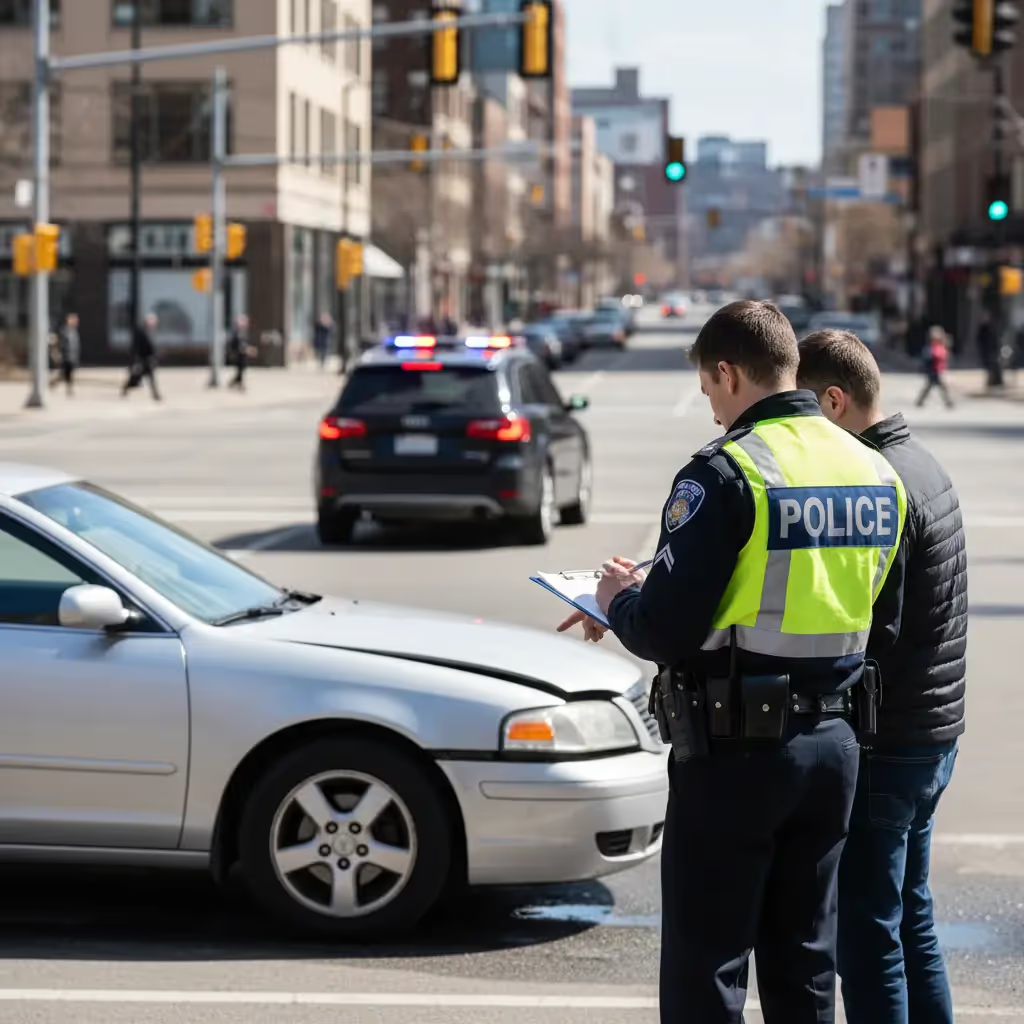
Typical triggers include any injury, property damage likely above your state’s dollar threshold, hit‑and‑run crashes, government or commercial vehicles, or suspected drunk or drugged driving, and skipping a required report can mean fines, license problems, or even SR‑22 “high‑risk” insurance filings in some states.4
State reporting law is separate from insurance claim rules; missing a required report might not bar payment, but it can give the insurer arguments to delay or reduce your claim.3
5 times your claim can still work without a police report
1. Small, clear‑cut fender‑benders
In low‑speed crashes with no injuries, many departments won’t send an officer unless traffic is blocked or drivers are arguing. Insurers handle these every day without formal reports, relying on what you collect at the scene.
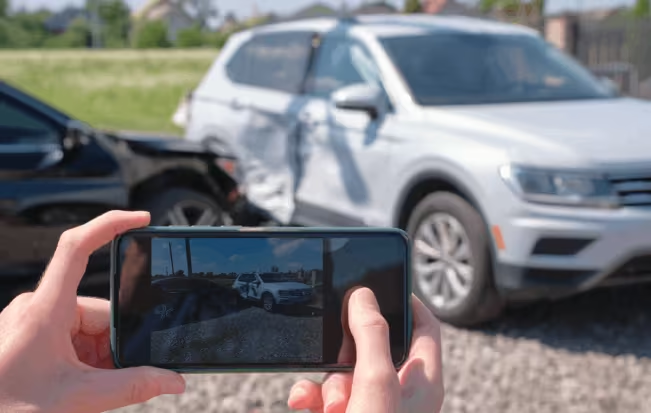
- Photos of both cars, the scene, and any skid marks
- Names, phone numbers, and insurance details for every driver
- Any neutral witnesses and a short written summary you make the same day
2. Wrecks on private property (like parking lots)
Police often say, “We don’t take reports for accidents on private property,” especially in store lots or apartment complexes. Your insurer knows this and will usually accept other proof instead.
- Security camera footage from the lot, if available
- Any written incident report from the property owner
- Photos that show lane markings, signs, or blind spots
3. Single‑vehicle crashes with your own coverage
If you hit a guardrail, deer, or mailbox and only your car was damaged, your collision or comprehensive coverage may apply even if no officer came out. Insurers will want photos, repair estimates, and a consistent explanation, but an official report isn’t always required.
4. Delayed injuries after a “minor” crash
You might feel fine at the scene, turn down an ambulance, and only later notice neck or back pain. A missing report makes the claim harder, but not impossible.
- Get medical care promptly once you realize you’re hurt.
- Use medical records that tie your symptoms to the crash.
- Write a clear timeline of how your symptoms developed.
5. After‑the‑fact reports or DMV crash forms
Even if no officer came at the time, some agencies let you file a late, walk‑in, or online crash report or DMV accident form. It’s not as strong as a same‑day officer investigation, but it still creates official documentation your insurer can reference.
If that’s an option where you live, do it as soon as you can and keep a copy handy for your claim.
3 times missing a report can badly hurt your claim
1. Serious injuries or wrongful death
When someone is seriously hurt or killed, every detail is going to be scrutinized: fault, speed, conditions, prior medical history, and more. In that setting, a police crash report (and sometimes a full reconstruction) carries a lot of weight for both insurers and courts.
If there’s no report because nobody called, you can still pursue a claim, but the other side may argue that the crash “couldn’t have been that bad” or that the story changed later. In cases this serious, speaking with an experienced local attorney is usually wise.
2. Hit‑and‑run or uninsured motorist claims
Many auto policies say you must report hit‑and‑run crashes to law enforcement quickly to use uninsured or underinsured motorist coverage. If you never report the incident, the insurer may point to that contract clause and refuse to pay.
If you were hit by someone who fled:
- Call police as soon as you safely can, even if time has passed.
- Tell your insurer exactly when and how you reported it.
- Keep copies or screenshots of any online or written reports.
3. Crashes that clearly met your state’s mandatory reporting rules
Suppose your state requires reporting any crash with more than $1,000 in damage or any injury, and you left the scene without calling anyone. If the other driver later files a report and your name never appears, you may have both:
- A potential ticket or license issue for failing to report, and
- An insurance company that wonders why you didn’t speak up at the time.
Again, this doesn’t automatically end your claim, but it gives the insurer arguments you’d rather they didn’t have. That’s one reason it helps to know your state’s basic reporting requirements and file any required forms quickly.
What you can use instead when there’s no report
A police crash report is just one kind of evidence. When it’s missing, you can still build a strong file with other proof like the items below.2

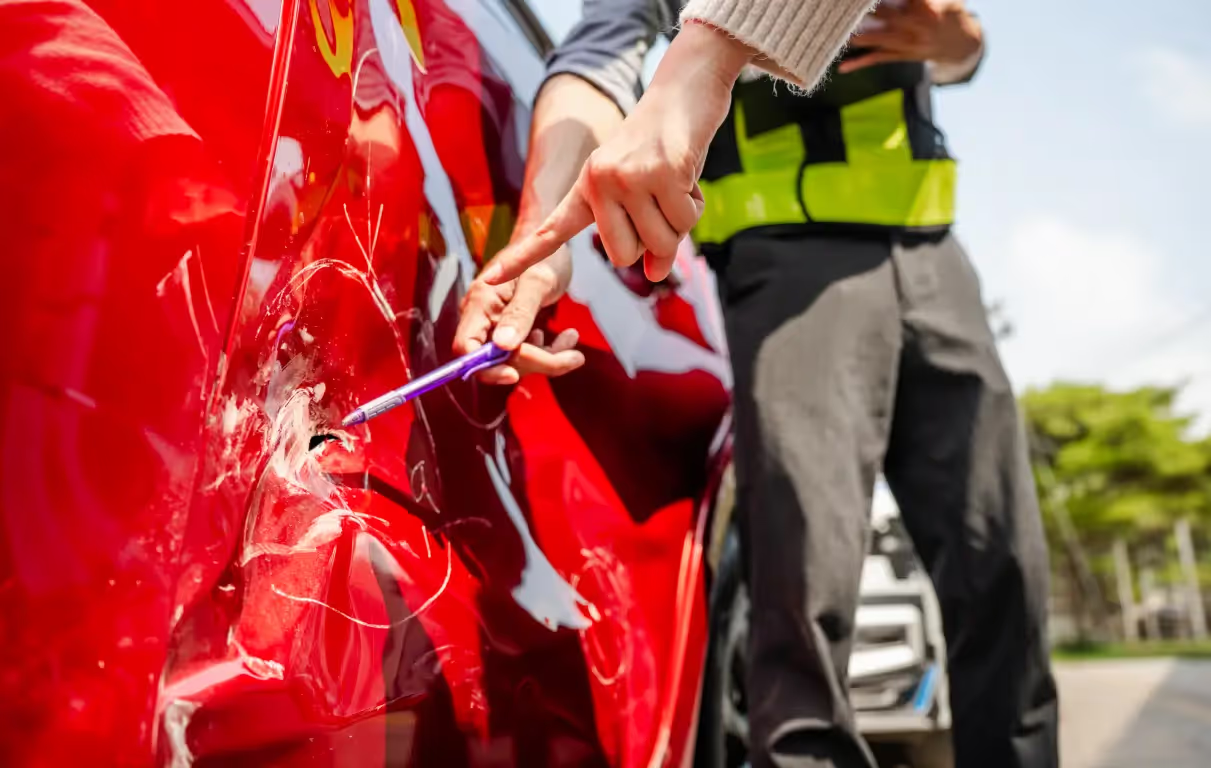
- Photos and video – Vehicles, license plates, skid marks, debris, traffic lights, weather, and your injuries.
- Witness statements – Names, contact info, and short statements from people who saw the crash.
- Medical, billing, and work records – ER records, urgent care notes, follow‑up visits, therapy, prescriptions, plus employer notes about missed time or changed duties.
- Repair estimates and photos – Body shop estimates and before/after photos of the damage.
- Dashcam or surveillance footage – Your own camera, nearby homes or businesses, or traffic cameras if you can get them.
One underrated piece of evidence is your own written narrative. As soon as you can, write out what happened—time, location, lane, traffic, weather, how you felt, and anything the other driver said. Clear, same‑day notes show your memory before stories start shifting.
How to get the right crash report fast (if one exists)
Sometimes the problem isn’t that no report exists—it’s that you can’t find it. Maybe you moved, lost the case number, or you aren’t even sure which agency handled the crash. Here’s a simple way to track it down:

- Figure out which agency likely wrote it.
Typically:- Inside city limits – city police
- On a county road – county sheriff
- On a highway or interstate, state highway patrol or state police
- Also consider campus, tribal, or toll‑road police.
- Gather the basics.
These details speed the search:- Driver names
- Date and approximate time of the crash
- Nearest intersection or mile marker
- Vehicle plate numbers or VINs
- Any incident or case number you were given
- Check the agency or state crash‑report portal.
Many departments sell reports online, either directly or through vendors like LexisNexis or BuyCrash. Others still require in‑person or mail requests; your state DMV or DOT site usually links to the right place. - Use a nationwide retrieval service if you’re stuck.
We help you request your report from the correct police, sheriff, or highway patrol agency and have a copy delivered when it’s available. Review the online form for current pricing and service terms before you submit your request.
Once you have the report, send a copy to your insurer, your medical provider’s billing team, and any attorney helping you so everyone is literally working from the same page.
What to do today if you don’t have a report yet
Here’s a quick checklist:
- Write out a detailed account of the crash.
- Gather photos, video, medical records, and repair estimates in one folder.
- Confirm whether your state required a report for this crash.
- If a report exists but you never got it, request it yourself or submit the details through Accident Report Help.
- If no officer came, call the non‑emergency line to ask whether a late report or self‑reporting form is allowed.
- For serious injuries, hit‑and‑runs, or fault disputes, consider a free consultation with a local personal‑injury lawyer.
FAQs
Can you file an insurance claim without a police report?
Yes, in many cases you can. Insurers regularly process claims—especially minor fender‑benders—even when no officer came to the scene. They simply lean more on your photos, statements, and other documentation instead of a report.
This also covers the common worry, “Can you make an insurance claim without a police report after a minor accident?” As long as you exchanged information, documented the scene, and report the claim within your policy’s time limits, most companies will still consider it.
Can you still get a police report days or weeks after the crash?
If officers came to the scene, yes. Reports often take several days to be written, approved, and uploaded, and agencies usually keep them for years, so a short delay is rarely a problem.
If no one ever responded, some departments let you file a “counter report” or online report later; others don’t. Calling the non‑emergency number—or using a service like Accident Report Help—can quickly tell you what’s allowed in your area.
Do you always need a lawyer if there was no police report?
Not always. Many small, property‑damage‑only claims are handled directly with the insurer. But when you have significant injuries, missed work, a hit‑and‑run, or a serious dispute about fault, getting advice from a local injury attorney is usually a smart move.
The bottom line
Not having a police report feels scary, but it doesn’t automatically slam the door on your insurance or injury claim. What matters most is:
- Whether your state required a report for this crash,
- What your policy says about notifying police, and
- How strong your other documentation is.
If you decide you want the official crash report—or you just want someone else to handle the chase—you can start a report search in a couple of minutes using our Find My Report form. We track down the right agency, request the record, and send the official PDF straight to your inbox so you can focus on healing and handling your claim, not paperwork.
Legal & medical disclaimer: This article is for general information only and is not legal, insurance, or medical advice. Laws and policies differ by state and insurer. For advice on your situation, speak with a licensed attorney or other qualified professional in your area.
AI assistance disclosure: This article was prepared with the help of AI and reviewed by AccidentReportHelp.com’s editorial team for accuracy and clarity.
Sources