
Accident Report Laws: 50-State Deadlines & How to Get Reports
After a serious car crash, the clock starts ticking. Between medical appointments and insurance calls, tracking down the exact state rules on accident reports can feel like one thing too many. This guide breaks down how Accident Report Laws work across the U.S., which deadlines really matter, and the simplest ways to get your official police crash report, even if the wreck happened in another state.
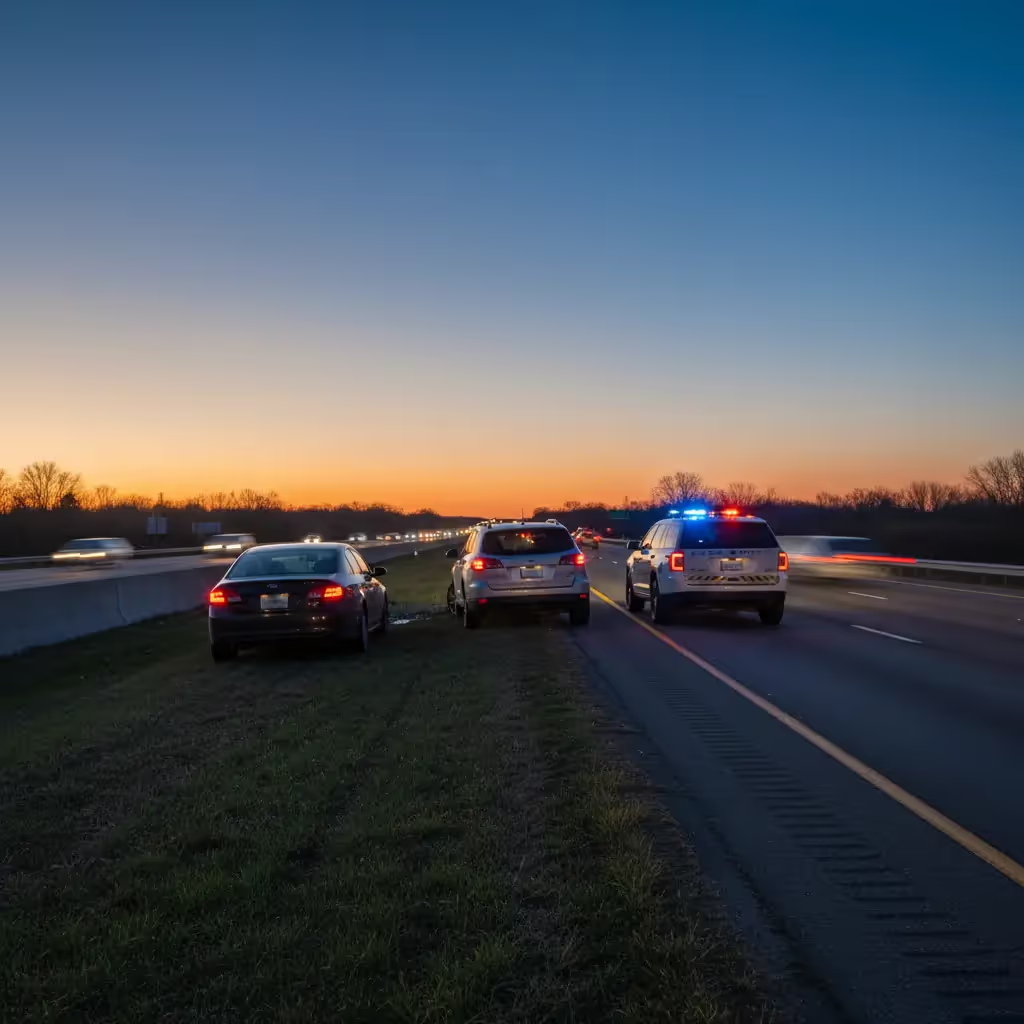
A minor highway crash with police on scene, the kind of incident that triggers state accident report laws.
If you already know you need a copy of your police crash report, you can skip straight to the easy option: Find My Report
TL;DR: The short version
- Two ticking clocks: one for legally reporting the crash, and another for requesting a copy of the police report.
- Reporting deadlines: most states require injury or major‑damage crashes to be reported to police right away and to the DMV within about 5–30 days once damage passes a set dollar amount.
- Access rules: drivers, passengers, vehicle owners, insurers, and attorneys can usually get a copy, but public‑records and residency rules vary by state.
- Out‑of‑state crash? You almost never need to travel back. Reports are usually available online, by mail, or through a retrieval service.
- Need it handled for you? Share a few crash details and AccidentReportHelp.com will request the correct report from the right agency in any state.
For timing‑only questions, see our detailed police report timelines guide.
After a crash, you’re usually racing two clocks: reporting it and getting the official report.
What “accident report laws” actually cover
The phrase “accident report laws” usually refers to three things:
- When you must report a crash to police or the Department of Motor Vehicles (DMV) after injury, death, or a certain amount of property damage.
- How long agencies keep crash reports and who is allowed to see them.
- Which public‑records rules apply when someone other than a driver (for example, a journalist or a business) asks for a copy.
In real life, that boils down to questions like:
- “Do I legally have to report this, or can we just swap insurance?”
- “My crash was in Florida, but I live in Ohio now—will Florida even send me the report?”
Because rules differ by state—and sometimes by city—people often end up bouncing between websites, phone trees, and paper forms.
50‑state crash reporting deadlines (police & DMV)
Every state sets its own rules for when a crash has to be reported to law enforcement and, in many cases, separately to the DMV or a similar agency. Those triggers usually turn on:
- Whether anyone was injured or killed
- Whether a vehicle was towed
- Estimated property damage (for example, over $500 or $1,000)
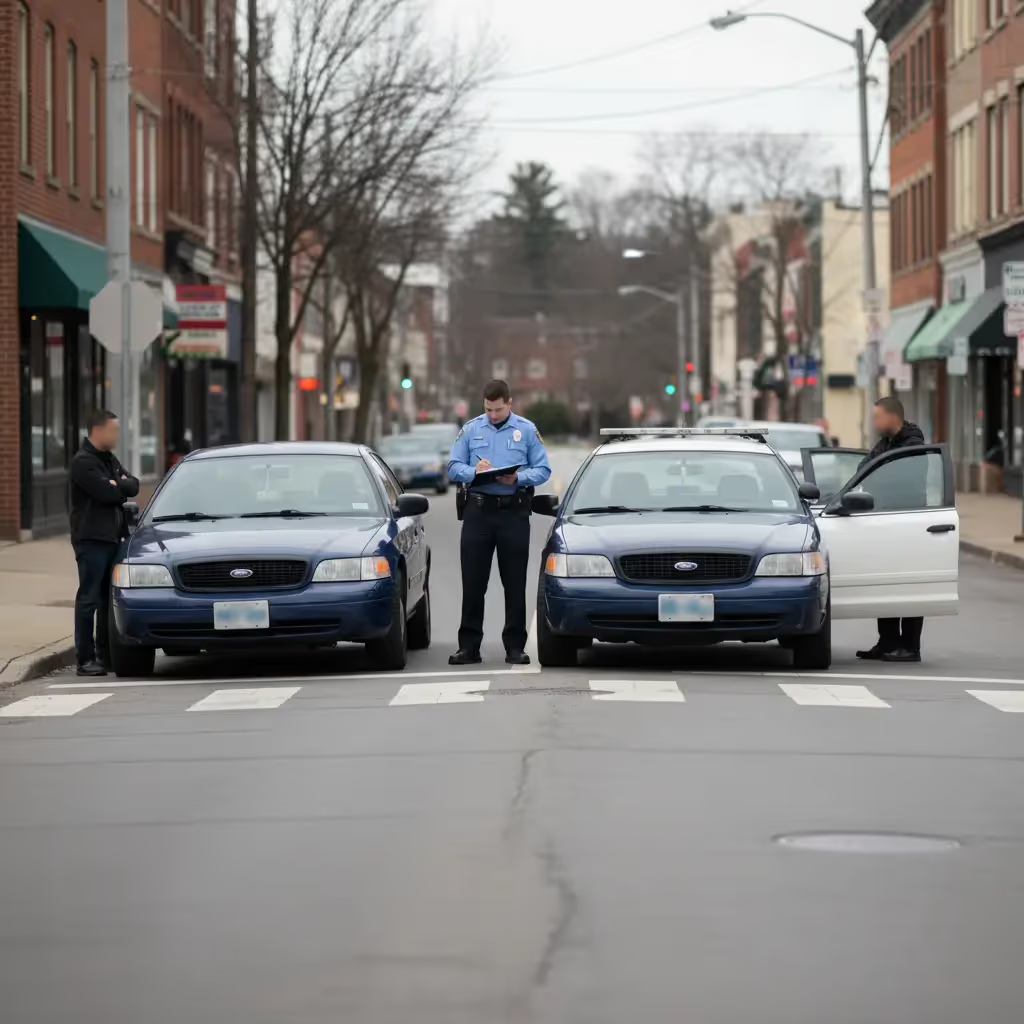
Police documenting a roadside crash, a key step that starts official accident reporting timelines.
Typical police reporting deadlines
Across the country, serious crashes with injury or death generally must be reported to police immediately or within about 24 hours. Many states also expect you to call police right away if property damage crosses a set dollar amount, even if nobody looks badly hurt. Overviews like FindLaw’s guide to car accident reporting requirements summarize common rules, but you should always confirm details on your state’s official site.
Typical DMV/self‑report deadlines
On top of contacting police, many states expect drivers to file a written crash report with the DMV (or similar agency) within 5 to 30 days in serious cases, even when an officer already wrote up a report. A few states give longer windows—sometimes several months—for specific insurance‑related forms. A helpful reference is Enjuris’ state‑by‑state accident reporting chart.
The big takeaway: if your wreck involved an ambulance, a tow truck, or damage that makes your stomach drop, assume your state expects formal reporting and check its DMV or state police website for exact deadlines.
If your crash happened in a large metro, you might also use a local portal; for example, our Houston crash report lookup guide shows how one city handles report requests on top of state‑level rules.
Who can get a copy of a police crash report?
Once the officer files the report and the agency processes it, most states let these people request a copy:
- Drivers listed in the report
- Passengers and injured pedestrians
- Registered owners of the vehicles
- Parents or legal guardians of minors involved in the crash
- Next of kin in fatal crashes
- Auto insurance companies and adjusters
- Attorneys with signed permission from a person in the report
Some states also sell “redacted” reports to anyone, with private data (addresses, phone numbers, VINs) removed. Others limit access more tightly during an active criminal investigation—for example, if the crash involved DUI or a possible vehicular crime.
New York law, for instance, generally lets people with an interest in the report obtain a copy unless releasing it would interfere with a criminal case, as explained in New York’s open‑records guidance on accident reports.
If you’re unsure whether you qualify, you can still start a report request and our team will confirm eligibility with the agency.
Are accident reports public record?
Police crash reports sit at the intersection of traffic law and public‑records law. That’s why you’ll sometimes see very different answers when you search “Are accident reports public record in <your state>?”
Most states: public, with privacy and investigation limits
In many states, accident reports are treated as public records, but agencies can:
- Redact sensitive details (like Social Security numbers or medical information)
- Hold back the report while an active criminal investigation is underway
- Require a simple form and small fee for copying and processing
As one example, New Jersey’s Open Public Records Act describes a general right to access government records, including many police records, with specific exceptions for things like ongoing investigations and privacy, as summarized in this overview of the New Jersey Open Public Records Act.
States that limit requests to residents
A handful of states say only state residents have a formal right to some records under their public‑records act. Tennessee’s law, for instance, says records “shall be open” for inspection by citizens of Tennessee, though in practice agencies can still choose to share records more widely, as noted in summaries of the Tennessee Open Records Act.
In real life, that can mean an out‑of‑state driver is asked for extra documentation, has to submit the request by mail, or needs to work through an in‑state representative. Services like AccidentReportHelp.com can step in here by staying on top of the agency’s current request process and handling the details for you.
For most families, the starting point is still the standard written accident report—the document your insurance company, medical providers, or attorney usually want to see first, and the type of record our nationwide report help service focuses on.
How to get your report after an out‑of‑state crash
Imagine you were rear‑ended on vacation in Florida, but you live in Ohio. The trooper handed you a card with a report number, you flew home, and now the insurance company is asking for “the official police report.” The steps below work for that scenario—and for most crashes in other states.
You can usually request an out‑of‑state accident report online from home using basic crash details.
Step 1: Gather the details you already have
- Date and time of the crash
- City, county, and state
- Road or intersection name
- Name of the investigating agency (city police, sheriff, state police, or highway patrol)
- Report or case number from any card or paperwork the officer gave you
- License plate or VIN for your vehicle, if handy
Step 2: Find the right agency’s report portal
Some states run crash reports through a central state police or DMV system; others leave it to each local agency. To track it down, search for:
- “<State name> state police crash report”
- “<City> police accident report request”
- “<County> sheriff crash report portal”
Many agencies let you request reports online with a credit or debit card. Others use mail‑in forms or require a written letter. In tourist hubs, city‑specific guides—like our Orlando accident report page—walk drivers through local portals step by step.
You almost never have to travel back to the crash state just to get a copy of your accident report.
Step 3: Confirm eligibility and fees
Expect a small official fee—often in the $5–$25 range—to cover copying and system costs. Some agencies charge a different rate for certified copies, which attorneys and courts sometimes request.
Step 4: Submit and track the request
Agencies usually won’t release a report until the officer finishes and approves it, which can take a few days for simple crashes or several weeks in serious, multi‑vehicle, or DUI cases. If you live in another state, it’s easy to lose track of where your request stands or whether it reached the right office.
If you prefer not to manage that back‑and‑forth, you can use a retrieval service such as AccidentReportHelp.com, which submits the request through the correct portal and tracks it until the report is available.
Common headaches with accident report laws
After helping many people track down police crash reports, a few patterns show up again and again—especially when the crash happened in another state.
- Wrong agency: The report is actually with the state police or highway patrol, but the driver is calling city police (or vice versa).
- No case number: The driver never got the report or case number, so the agency has to search by name, date, and location—slow and error‑prone.
- Residency or eligibility questions: States with resident‑only public‑records rules, or tighter privacy rules in serious crashes, ask for extra paperwork before releasing anything.
- Delays and archives: Reports tied to DUI, fatalities, or older crashes may be held while an investigation is active or moved into long‑term storage with a different request process.
These issues rarely mean you can’t get your report, but they can turn a quick task into weeks of emails and voicemails—on top of injuries, work, and family obligations.
When to loop in a lawyer or insurance pro
A police crash report is only one piece of your larger claim or case. Consider talking with a licensed attorney in the state where the crash happened—or at least your insurance adjuster—if:
- Someone was seriously hurt or killed
- You’re being blamed for a crash you don’t believe you caused
- The other driver’s insurer is denying or low‑balling your claim
- You’re facing a license suspension or potential criminal charges
This article is for general informational purposes only and is not legal, medical, or professional advice. Laws change frequently, and only a licensed attorney or doctor who reviews your specific situation can give you advice about your rights, options, or treatment.
How Accident Report Help makes this easier
AccidentReportHelp.com focuses on one thing: helping you request official police crash reports from the correct agency in any U.S. state. We stay current on agency portals and request processes as they change so you don’t have to track every portal, form, or fee schedule yourself.

A dedicated support team can manage complex, multi‑state accident report requests on your behalf.
- Nationwide coverage: We identify which city, county, or state agency holds your report and follow that agency’s preferred request method.
- One simple form: You share your crash details once, instead of trying to decode multiple government sites.
- Status tracking: We monitor your request, follow up on delays or misrouted requests, and let you know when the report is ready.
- Money‑back guarantee: We pass through any required agency fee and refund our service fee if your report cannot be released.
If you’d like to let someone else handle the legwork while you focus on healing and next steps, you can start here: Find My Report
FAQ: Accident report laws & multi‑state crashes
Can I get a police report from another state if I don’t live there?
Usually, yes. Most states let drivers, passengers, vehicle owners, and their insurers or attorneys request a report even if they live elsewhere. A few states have resident‑only public‑records rules in some situations, which can add steps, but a local representative or a dedicated retrieval service can often help.
Will my accident report automatically go to my insurance company?
Not always. Some insurers routinely pull the report themselves, but others expect you or your attorney to send them a copy. Ask your adjuster whether they plan to order it or need you to forward the report.
Is AccidentReportHelp.com a law firm or government website?
No. AccidentReportHelp.com is a private, nationwide accident‑report retrieval service that helps you request official records from the proper law‑enforcement or state agency. We do not issue or maintain government records, are not a law firm and are not affiliated with any government, law‑enforcement, or state agency, and do not provide legal, medical, or professional advice. Using this site or submitting a form does not create an attorney–client relationship. For full details, see our Terms & Conditions.
Key Takeaways
- You’re usually dealing with two clocks after a crash: one for legally reporting it and another for requesting the official police report.
- Most states expect serious crashes to be reported to police right away and to the DMV within a set window, and access to reports is generally limited to people with a connection to the crash.
- Out‑of‑state crashes almost never require you to travel back; you can request the report remotely through state portals, local agencies, or a retrieval service.
- If injuries are serious, fault is disputed, or you’re facing license or criminal issues, consider speaking with a lawyer in the crash state in addition to your insurer.
- A dedicated retrieval service like AccidentReportHelp.com can handle multi‑state report requests across all 50 states so you can focus on medical and legal decisions instead of paperwork.